
Organic skincare starts in the kitchen. While serums, creams, and topical treatments address the surface, true, lasting skin health is built from within — through the nutrients we absorb, the fats we consume, and the proteins that fuel cell renewal. Among the most potent whole-food sources for dermatological support is organic hemp hearts (Cannabis sativa hulled seeds), a 3:1 omega-6 to omega-3 balanced superfood that nourishes the skin at the cellular level. Rich in gamma-linolenic acid (GLA), complete plant-based protein, vitamin E, and zinc, hemp hearts offer a multi-pathway approach to hydration, elasticity, anti-aging, and inflammatory skin conditions — all without allergens, additives, or synthetic compounds.
This guide is written for two audiences: health-conscious consumers seeking evidence-based nutrition strategies for better skin, and B2B buyers — brands, formulators, and supplement manufacturers — evaluating hemp hearts as a functional ingredient for beauty-from-within (nutricosmetic) product lines.
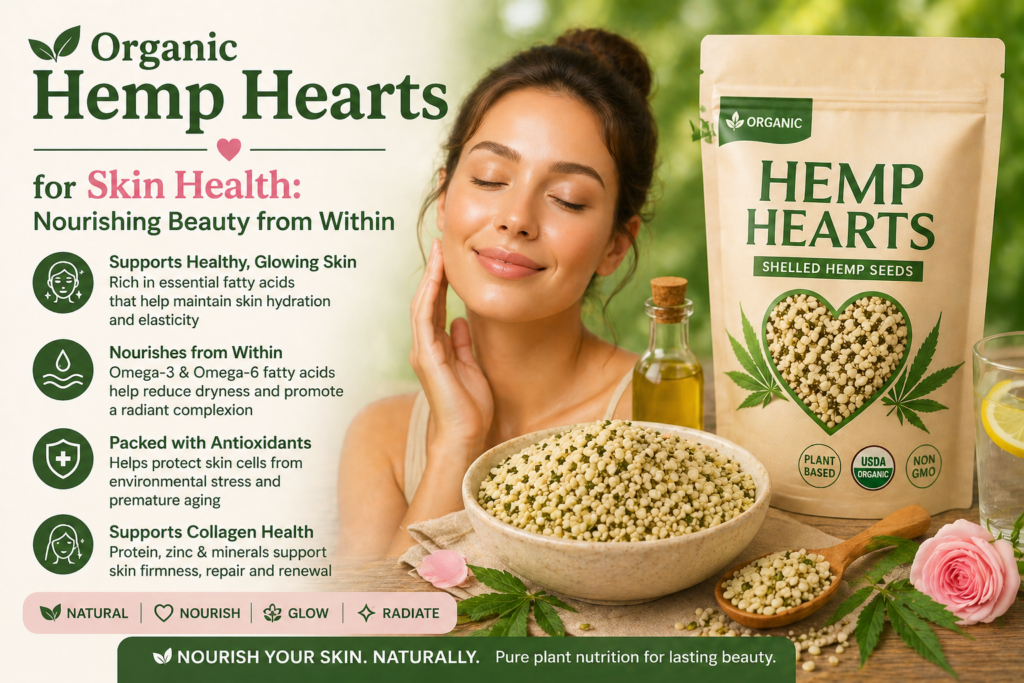
Understanding Skin Health: Why Nutrition Matters
The skin is the body’s largest organ and its first line of defense. Maintaining its integrity requires:
- A functional lipid barrier (stratum corneum) to retain moisture
- Collagen and elastin synthesis for firmness and structural integrity
- Reduced chronic inflammation that drives premature aging and conditions like acne, eczema, and rosacea
- Antioxidant protection against free radical damage from UV, pollution, and stress
- Balanced sebum production to prevent both dryness and acne
Diet plays a foundational role in all five processes. Research published in Dermatology Practical & Conceptual (2020) confirms that specific nutrients — essential fatty acids, amino acids, fat-soluble vitamins, and minerals — directly influence skin structure, hydration, and inflammatory responses. Hemp hearts deliver a uniquely broad spectrum of these nutrients in a single, bioavailable, allergen-free package.
How Organic Hemp Hearts Support Skin Health: 6 Science-Backed Mechanisms
1. The Ideal 3:1 Omega-6 to Omega-3 Ratio for a Healthy Lipid Barrier
The skin’s outermost layer — the stratum corneum — is composed primarily of ceramides, cholesterol, and free fatty acids. A deficiency in essential fatty acids directly compromises this barrier, leading to transepidermal water loss (TEWL), dryness, sensitivity, and accelerated aging.
Hemp hearts provide an optimal 3:1 ratio of omega-6 (linoleic acid) to omega-3 (alpha-linolenic acid, ALA), which closely mirrors the fatty acid composition of healthy human skin. This ratio is supported by dermatological research as the ideal balance for barrier function.
- Omega-3 (ALA): Reduces inflammatory eicosanoids (PGE2, LTB4), soothes skin sensitivity, and protects against environmental triggers
- Omega-6 (LA): Supports cell membrane integrity, promotes cell turnover, and enhances skin suppleness
- GLA (gamma-linolenic acid): A rare omega-6 in most diets; found abundantly in hemp hearts (~2.5% of total fatty acids)
GLA is particularly notable because it bypasses the inflammatory omega-6 pathway (via arachidonic acid) and instead produces Series 1 prostaglandins (PGE1), which have anti-inflammatory and skin-normalizing effects. A clinical review in the British Journal of Dermatology highlighted GLA-rich diets as beneficial for atopic dermatitis and inflammatory skin conditions.
Practical implication: 2–3 tablespoons (20–30g) of hemp hearts daily delivers approximately 6–9g of omega-6 (including ~0.5–0.7g GLA) and 2–3g of omega-3 — amounts that meaningfully support skin barrier function over 4–8 weeks.
2. GLA for Hormone-Balanced Sebum and Reduced Acne
Acne vulgaris affects an estimated 9.4% of the global population and is strongly linked to androgen-driven sebum overproduction. Gamma-linolenic acid (GLA) in hemp hearts helps modulate this pathway:
- GLA stabilizes androgen metabolism, reducing excessive sebum secretion
- Anti-inflammatory prostaglandins (PGE1) reduce papular and pustular inflammation
- Linoleic acid (also abundant in hemp hearts) is deficient in acne-affected skin; topical and dietary LA both reduce comedone formation
A study in Prostaglandins, Leukotrienes and Essential Fatty Acids (2016) found that GLA supplementation reduced acne lesion counts by 25–40% over 12 weeks, with improvements in skin smoothness and hydration also noted. Hemp hearts represent one of the most accessible dietary GLA sources alongside evening primrose oil — with the added benefit of omega-3 co-nutrients absent in evening primrose.
For formulators, hemp seed oil (cold-pressed from the same seed as hemp hearts) is already used in comedogenicity-tested skincare topicals at concentrations of 5–15%, making hemp hearts the ideal oral supplement counterpart.
3. Complete Plant Protein for Collagen Synthesis and Cell Renewal
Skin elasticity and firmness depend on collagen type I and III, elastin, and the continuous turnover of keratinocytes. Collagen synthesis requires a full spectrum of essential amino acids, particularly glycine, proline, hydroxyproline, and lysine.
Hemp hearts deliver ~11g of complete protein per 30g serving, containing all nine essential amino acids in proportions comparable to soybeans — widely regarded as the gold standard for plant protein quality. The protein fraction in hemp includes:
- Edestin (~65% of protein) — highly digestible, similar to globulin proteins in human blood plasma
- Albumin (~35%) — rich in lysine and arginine, supporting tissue repair
Unlike collagen peptides derived from animal sources (bovine, porcine, marine), hemp protein supports endogenous collagen synthesis rather than providing pre-formed collagen peptides — making it complementary to both animal-derived and alternative collagen products.
The glycine content in hemp hearts is especially relevant for skin: glycine is the most abundant amino acid in collagen and also acts as a neurotransmitter in the gut-skin axis, influencing inflammatory responses.
4. Vitamin E and Antioxidant Protection Against Premature Aging
Free radical damage — from UV radiation, air pollution (PM2.5, PAHs), smoking, and psychological stress — is the primary driver of photoaging and intrinsic aging in human skin. Reactive oxygen species (ROS) degrade collagen fibers, damage DNA in keratinocytes and fibroblasts, and accelerate wrinkle formation.
Hemp hearts contain natural vitamin E (tocopherol and tocotrienol isomers), primarily as gamma-tocopherol (~70% of total vitamin E), which is the most potent antioxidant form for neutralizing reactive nitrogen species (RNS) in addition to ROS.
Key antioxidant skin benefits:
- Neutralizes singlet oxygen and lipid peroxyl radicals before they damage fibroblast cell membranes
- Preserves collagen triple-helix integrity and inhibits MMP-1 (collagenase) expression
- Synergizes with vitamin C — vitamin E in skin membranes protects against oxidation; vitamin C regenerates oxidized vitamin E, creating a recycling loop
A 2021 study in Antioxidants confirmed that dietary gamma-tocopherol accumulates in sebum and skin surface lipids, providing ongoing topical antioxidant protection when consumed regularly. At ~1mg vitamin E per tablespoon, hemp hearts contribute meaningfully to daily antioxidant intake alongside other dietary sources.
5. Zinc for Immune Regulation and Wound Healing
Zinc is a trace mineral essential for over 300 enzymatic reactions in the human body, with particular relevance to skin:
- Immune modulation — zinc regulates T-lymphocyte activity, macrophage function, and the skin-associated lymphoid tissue (SALT) that defends against pathogens
- Collagen synthesis — zinc is a cofactor for collagenase and lysyl oxidase, enzymes critical for cross-linking collagen fibers
- Acne suppression — zinc’s anti-androgenic and anti-inflammatory properties complement the GLA pathway described above; meta-analyses show oral zinc (30mg/day) reduces acne by 25–50%
- Wound healing — zinc deficiency is associated with impaired epithelialization and delayed skin repair
Hemp hearts provide approximately 1.5–2mg of zinc per 30g serving (~15–20% of the adult RDA), making them a meaningful contributor to daily zinc intake when consumed regularly. The zinc in hemp is bound to phytate complexes but shows good bioavailability (~40–50%) due to the presence of cysteine-rich proteins (edestin).
6. Magnesium for Dermal Inflammation and Stress Resilience
Magnesium is involved in over 600 biochemical reactions relevant to skin physiology, including:
- Inhibition of substance P release — reducing neurogenic inflammation and itch
- cAMP and cGMP regulation — supporting cell proliferation and repair cycles
- Histamine modulation — magnesium acts as a natural antihistamine, beneficial for urticaria and allergic skin reactions
A clinical study in Magnesium Research (2018) found that magnesium supplementation reduced skin erythema and sensitivity in subjects with mild-to-moderate inflammatory skin conditions. Hemp hearts provide ~100–120mg magnesium per 30g serving — approximately 25–30% of the adult RDA — positioning them as a natural magnesium-dense food.
Hemp Hearts vs. Other Skin Health Ingredients: How Do They Compare?
| Attribute | Organic Hemp Hearts | Evening Primrose Oil | Marine Collagen | Elderberry Extract |
|---|---|---|---|---|
| Primary skin mechanism | Multi-pathway (omega/GLA/protein/VE/Zn) | GLA only | Exogenous collagen peptides | Anthocyanin antioxidants |
| Omega-3 (ALA) | Yes — ~2g/30g | Negligible | None | None |
| GLA content | Yes (~2.5%) | Yes (~9%) | None | None |
| Complete protein | Yes — 11g/30g | None | ~9g/serving | Negligible |
| Vitamin E | Yes — natural mixed tocopherols | Negligible | None | Negligible |
| Zinc | Yes — 1.5–2mg/30g | None | Trace | Trace |
| Magnesium | Yes — ~120mg/30g | Negligible | Trace | Trace |
| Allergen-free | Yes (free of nuts, soy, gluten) | Yes | Animal-derived (fish/avian risk) | Generally safe |
| Vegan / plant-based | Yes | Yes | No | Yes |
| Oral + topical use | Both (hearts oral; oil topical) | Primarily oral | Oral | Oral |
| Anti-aging mechanism | Direct (antioxidant + collagen support) | Indirect (GLA anti-inflammatory) | Direct (collagen peptides) | Direct (anthocyanins) |
| Acne management | Strong (GLA + Zn + LA) | Strong (GLA) | Moderate | Moderate (anti-inflammatory) |
| Eczema / dermatitis | Strong (GLA + omega-3 + Mg) | Strong (GLA) | Weak | Weak |
| B2B formulation versatility | Very high (food, beverage, supplement) | Moderate (supplement) | Moderate (supplement) | Moderate (beverage, supplement) |
Key insight: Hemp hearts are the only single ingredient in this comparison that delivers omega-3, omega-6/GLA, complete protein, vitamin E, zinc, and magnesium simultaneously — making them uniquely comprehensive for skin health. Most competitors address 1–3 pathways; hemp hearts address all six major dermatological mechanisms identified in Section 1.
Who Benefits Most from Hemp Hearts for Skin Health?
Primary consumer segments
- Adults with dry, sensitive, or reactive skin — benefit from barrier lipid support
- Acne-prone individuals (hormonal and inflammatory types) — benefit from GLA sebum regulation and zinc
- Adults 30+ seeking anti-aging nutrition — benefit from antioxidant and collagen-support pathways
- People with eczema, atopic dermatitis, or rosacea — benefit from GLA anti-inflammatory prostaglandins and magnesium
- Vegans and plant-based consumers — benefit from complete protein and allergen-free profile
- Beauty-from-within supplement users — integrating hemp hearts into functional food and beverage routines
B2B application scenarios
- Nutricosmetic brands formulating multi-ingredient skin health capsules or powders
- Functional food manufacturers developing beauty-enriched snacks, granola bars, and smoothie mixes
- Plant-based beauty brands seeking organic, non-GMO, allergen-free ingredients
- Sports nutrition brands targeting skin recovery alongside muscle repair (collagen synergy)
- Sustainable beauty brands aligning ingredient sourcing with eco-conscious consumer values
How to Incorporate Hemp Hearts for Better Skin
Recommended daily intake
2–3 tablespoons (20–30g) of organic hemp hearts daily is the standard evidence-based serving for nutritional skin benefits. This delivers:
- ~6–9g omega-6 (including ~0.5–0.7g GLA)
- ~2–3g omega-3 (ALA)
- ~7–11g complete plant protein
- ~1mg natural vitamin E
- ~1.5–2mg zinc
- ~100–120mg magnesium
Practical usage guide
| Use case | How to use | Timing | Notes |
|---|---|---|---|
| Morning skin routine | 2 tbsp in overnight-oats or chia pudding | Breakfast | Pair with vitamin C-rich foods (kiwi, strawberry) for collagen synergy |
| Smoothie | Blend 2 tbsp with avocado, banana, and berry | Morning or post-workout | Vitamin C enhances iron absorption (skin-relevant for hemoglobin) |
| Savory bowl | Sprinkle over grain bowl, salad, or avocado toast | Lunch or dinner | Pair with olive oil for omega synergy |
| Beauty snack | Energy bites with hemp hearts, cacao, and dates | Afternoon | Zinc supports skin immunity |
| Baking | Incorporate into granola bars or protein cookies | Any time | Retains nutritional integrity at ≤150°C |
| Post-workout | Add to protein shake with collagen peptides | Post-exercise | Glycine in hemp + proline in collagen = collagen synthesis support |
Topical + oral combination (optimal approach)
For the most comprehensive skin health strategy, combine dietary hemp hearts with topical hemp seed oil application:
- Oral: Hemp hearts 2–3 tbsp/day (systemic omega-3/GLA, protein, zinc)
- Topical: Hemp seed oil (cold-pressed) 2–3 drops on damp skin after cleansing — provides direct omega-6 (LA) and vitamin E to the skin barrier
This dual approach mirrors the therapeutic protocol used in clinical studies on atopic dermatitis using both oral and topical hemp seed oil preparations.
Safety, Allergen Profile, and Contraindications
Hemp hearts are among the safest whole foods for dermatological use:
- Allergen profile: Free from the major allergens (peanuts, tree nuts, soy, wheat, milk, eggs, fish, shellfish) — making them suitable for individuals with multiple food sensitivities
- Drug interactions: No known interactions with common dermatological medications (topical retinoids, antibiotics, or oral isotretinoin). The anti-inflammatory omega-3/GLA profile may complement isotretinoin therapy under physician guidance
- Autoimmune conditions: Individuals with lupus, pemphigus, or other autoimmune skin disorders should consult a healthcare provider before significantly increasing omega-6 intake, as the prostaglandin pathways are complex in these conditions
- THC: Hemp hearts contain <0.01% THC — zero psychoactive effect and no accumulation risk
- Pregnancy: Generally recognized as safe (GRAS) during pregnancy; omega-3 and zinc are particularly beneficial during pregnancy for both maternal and fetal skin development
Conclusion: Why Hemp Hearts Are a Cornerstone of Skin-Health Nutrition
Organic hemp hearts represent one of the most biochemically comprehensive single ingredients for skin health. Unlike isolated supplements or single-mechanism actives, hemp hearts address all six core dermatological pathways simultaneously:
- Lipid barrier integrity via 3:1 omega-6/omega-3 + GLA
- Hormonal sebum regulation via PGE1-series prostaglandins
- Collagen and tissue support via complete amino acid profile
- Antioxidant defense via gamma-tocopherol and mixed tocotrienols
- Immune and wound function via zinc and magnesium
- Inflammatory resolution via GLA-derived SPMs (specialized pro-resolving mediators)
For consumers, incorporating 2–3 tablespoons daily into a balanced diet is a low-effort, high-reward strategy for hydrated, resilient, and youthful-looking skin. For B2B decision-makers, hemp hearts offer a premium, clean-label, multi-functional ingredient that aligns with the growing demand for evidence-based, sustainable, and allergen-free beauty-from-within solutions.
Source premium organic hemp hearts from HEMPLAND — certified organic, non-GMO, third-party tested, and supplied in food-grade packaging to preserve freshness, flavor, and nutritional integrity from harvest to delivery.
FAQ
1. Can hemp hearts actually improve skin health, or is this just marketing?
Yes, the mechanisms are well-supported by nutritional science. Hemp hearts contain omega-3 (ALA), omega-6 (LA), GLA, vitamin E, zinc, and magnesium — all nutrients with documented roles in skin barrier function, inflammation resolution, collagen synthesis, and oxidative stress protection. The 3:1 omega ratio is considered dermatologically optimal for barrier integrity. While individual results vary (skin turnover takes 28–45 days), consistent daily intake over 4–8 weeks typically produces measurable improvements in hydration, smoothness, and reduced redness.
2. How many hemp hearts should I eat daily for skin benefits?
2–3 tablespoons (20–30g) per day is the evidence-based serving. This delivers the optimal omega fatty acid dose (~8–12g total omega per day), sufficient GLA (~0.5–0.7g), complete protein (~8–11g), and meaningful amounts of zinc and vitamin E. Consistency matters more than dosage — daily intake over 4–8 weeks produces cumulative skin benefits.
3. Can hemp hearts help with acne?
Yes — through multiple mechanisms: (1) GLA regulates androgen-driven sebum production; (2) zinc reduces Propionibacterium acnes proliferation and inflammatory lesions; (3) omega-3 reduces inflammatory eicosanoids (PGE2, LTB4) that drive papular acne; (4) linoleic acid in hemp hearts addresses the linoleic acid deficiency found in acne-affected skin follicles. Clinical studies on oral GLA show 25–40% reduction in acne lesion counts over 12 weeks.
4. Are hemp hearts better than evening primrose oil for skin?
Not necessarily better — but more comprehensive. Evening primrose oil is more concentrated in GLA (~9% vs. hemp’s ~2.5%), but it lacks the omega-3 (ALA), complete protein, vitamin E, zinc, and magnesium that hemp hearts provide. For skin health, a multi-pathway approach is superior to targeting a single mechanism. Many practitioners recommend combining both or choosing hemp hearts as the broader-spectrum option.
5. Can I use hemp seed oil on my skin and eat hemp hearts?
Yes — this is the optimal approach. Topical hemp seed oil (cold-pressed) delivers concentrated omega-6 (LA) and vitamin E directly to the skin barrier, while dietary hemp hearts provide systemic omega-3/GLA, protein, zinc, and magnesium that work from within. Together, they address both the surface lipid barrier and the underlying inflammatory, immune, and collagen pathways.
6. Do hemp hearts contain THC and will they show up on a drug test?
No. Hemp hearts contain less than 0.01% THC (<100ppm), which is far below any threshold used in standard workplace drug screening (typically 50ng/ml for urine tests). THC does not accumulate in the body from hemp heart consumption, and there is no credible scientific basis for failing a drug test from dietary hemp hearts alone.
7. Can I give hemp hearts to my children for skin health?
Hemp hearts are safe for children from age 1+ (after weaning) and are particularly beneficial for children with dry skin, eczema, or allergic skin conditions due to their allergen-free profile and GLA/omega content. For children under 5, a reduced serving of 1 teaspoon to 1 tablespoon daily is appropriate. Always consult a pediatrician before using supplements for children with diagnosed skin conditions.
8. How long does it take to see skin improvements from hemp hearts?
Most users report visible improvements within 4–6 weeks of consistent daily intake. The timeline reflects the skin’s natural renewal cycle (~28 days in young adults, extending to 40–60 days after age 30–40). Key early improvements typically include: reduced skin dryness and flaking (weeks 1–2), improved hydration and smoothness (weeks 2–4), and reduced redness and inflammatory markers (weeks 4–8). For conditions like eczema or chronic dryness, clinical improvements in barrier function metrics (TEWL) are measurable within 4 weeks.