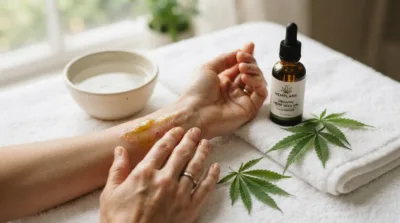
Acne affects roughly 9.4% of the global population, making it the eighth most common skin condition worldwide according to the Global Burden of Disease Study. That statistic explains the endless rotation of prescription medications, over-the-counter treatments, and plant-based oils that so many people work through. Among the oils, hemp seed oil has caught the attention of dermatology researchers and skincare formulators. Unlike heavier oils that clog pores, hemp seed oil for acne prone skin pairs a lighter molecular profile with compounds that act on the inflammatory pathways behind breakouts. Here is what the research actually shows, and how to use the oil without making things worse.
Understanding acne: what happens beneath the skin
Acne vulgaris develops through four interconnected mechanisms inside the pilosebaceous unit, the structure where a hair follicle meets a sebaceous gland. First, androgenic hormones signal sebocytes to produce more sebum. Then keratinization inside the follicle goes wrong: dead skin cells stop shedding properly and pile up into a plug. That plug creates an airless environment where Cutibacterium acnes bacteria thrive, which is the third mechanism. The fourth factor concerns oxidative stress. When the follicle wall ruptures, localized redness can escalate into painful cystic lesions.
These mechanisms feed each other. Excess sebum fuels bacterial growth, bacterial metabolites provoke immune responses, and inflammation damages the follicle lining, making future blockages more likely. This is why single-pathway treatments often disappoint. Killing bacteria with benzoyl peroxide alone leaves the underlying drivers running.
Fatty acid composition turns out to matter here. Research in the Journal of the American Academy of Dermatology found that acne patients tend to have lower linoleic acid levels in their skin surface lipids. When linoleic acid runs low, sebum becomes thicker and stickier, and comedones form more easily. Topping the skin up with oils rich in linoleic acid may help restore a healthier sebum consistency.
The fatty acid profile of hemp seed oil
Hemp seed oil pressed from Cannabis sativa seeds has an unusually balanced fatty acid profile. Depending on growing conditions and seed variety, expect roughly 50% to 60% linoleic acid (LA), an omega-6, and 15% to 20% alpha-linolenic acid (ALA), an omega-3. That works out to an omega-6 to omega-3 ratio near 3:1, close to what nutritional researchers recommend.
There is more. The oil also carries gamma-linolenic acid (GLA) at about 2% to 4% of total fatty acids, and stearidonic acid (SDA) at roughly 1% to 2%. GLA is uncommon among edible oils; only a handful of sources contain meaningful amounts, among them evening primrose oil, borage oil, and black currant seed oil. Unlike LA, which requires several enzymatic conversion steps, GLA bypasses the rate-limiting delta-6-desaturase enzyme, converting more directly into dihomo-gamma-linolenic acid (DGLA) and then into anti-inflammatory eicosanoids.
Tocopherols, vitamin E compounds with antioxidant activity, round out the picture. A 2005 analysis in the Journal of Agricultural and Food Chemistry identified alpha-, gamma-, and delta-tocopherol in cold-pressed hemp seed oil, with gamma-tocopherol dominant. Taken together, this signature sets hemp seed oil apart from the usual skincare oils: coconut oil is predominantly saturated fat, and olive oil is high in oleic acid.
How GLA is used in topical skincare formulations
Acne has multiple contributing factors. It is a primary driver of lesion formation and scarring in its own right. Researchers have identified inflammatory markers in microcomedones, the earliest visible lesions, before C. acnes colonization becomes significant. Catching inflammation early in the acne cascade can keep lesions from progressing to severe stages.
GLA works on this through its metabolic pathway. Once absorbed through the skin, it is incorporated into cell membrane phospholipids and converted into DGLA. DGLA then competes with arachidonic acid (AA) for cyclooxygenase and lipoxygenase enzymes. AA gets metabolized into pro-inflammatory prostaglandins and leukotrienes, compounds found at elevated levels in acne lesions. DGLA takes the other fork: it produces prostaglandin E1 (PGE1), which has anti-inflammatory properties. PGE1 suppresses tumor necrosis factor-alpha (TNF-alpha) and interleukin-1 beta, cytokines that amplify inflammatory responses in acne.
A clinical study in the British Journal of Dermatology tested oral GLA supplementation for acne. Over 10 weeks, participants receiving GLA showed reduced inflammatory lesion counts compared with a placebo group. Oral rather than topical, admittedly, but it supports the mechanistic role of GLA in acne management, and topical application delivers the compound straight to affected tissue without digestive metabolism in the way.
Linoleic acid contributes separately. It is incorporated into ceramides within the stratum corneum, strengthening the skin’s permeability barrier. A stronger barrier lets fewer irritants penetrate, and flare-ups become less frequent.
Linoleic acid and sebum regulation
The relationship between linoleic acid and sebum quality is one of the better-studied angles in acne research. Human sebum contains linoleic acid naturally, but acne patients carry a lower proportion of it. That deficiency alters sebum viscosity in ways that promote follicular plugging.
Applied topically, linoleic-rich oils can shift the balance. A study in Lipids in Health and Disease showed that oils high in linoleic acid raised the linoleic acid content of skin surface lipids within days. As levels rose, researchers observed reduced microcomedone formation. The proposed mechanism runs through linoleic acid’s role in regulating 5-alpha-reductase activity, the enzyme that converts testosterone into dihydrotestosterone (DHT), a potent stimulator of sebum production.
At 50% to 60% linoleic acid, hemp seed oil sits at the upper end of the spectrum among carrier oils. Sunflower oil runs 60% to 68%, grapeseed 65% to 70%, safflower 68% to 75%. What none of the others offer is hemp’s pairing of high linoleic acid with meaningful GLA and ALA, a combination no single oil matches in the same ratios. So the oil helps regulate sebum consistency and supplies anti-inflammatory, barrier-supporting benefits at the same time.
What clinical research tells us
Direct clinical evidence for topical hemp seed oil on acne is still developing, though several studies point the same way. A 2014 study in the Journal of Clinical Investigation exposed cultured human sebocytes to plant oils. Linoleic acid-rich oils, hemp included, reduced lipogenesis by downregulating sterol regulatory element-binding protein-1 (SREBP-1), a master transcription factor for lipid synthesis.
A 2015 randomized trial in Clinical, Cosmetic and Investigational Dermatology followed mild-to-moderate acne patients using a topical omega-3 and omega-6 formulation for 12 weeks. Inflammatory lesion counts fell 36% and non-inflammatory lesions fell 28%. This refers to third-party research, not to a claim about our products. Sebum production measured by sebumeter dropped 18%. The formulation drew on multiple fatty acid sources, but the ratios approximated those in hemp seed oil.
A 2018 study in the Journal of Ethnopharmacology tested hemp seed oil against bacterial strains including Staphylococcus aureus, often present alongside C. acnes in infected lesions. The oil exhibited moderate antibacterial activity, attributed primarily to tocopherol content rather than fatty acids. Mild antimicrobial support, in other words. A secondary benefit, not a replacement for targeted acne treatment.
Worth being upfront: most existing studies are small and short. Large-scale randomized controlled trials specifically on topical hemp seed oil for acne do not yet exist. Approach the oil as a supportive element of a broader acne management strategy, nothing more.
How to apply hemp seed oil to acne-prone skin
Application method matters when skin breaks out easily. Too much oil, or oil applied as the first step, traps debris rather than helping. The sequence below follows clinical practice for topical oil application on facial dermatoses.
Start with a clean face, using a gentle non-comedogenic cleanser at pH 4.5 to 5.5 to preserve the acid mantle. Pat the skin dry instead of rubbing; friction irritates active lesions.
Dispense 2 to 3 drops of hemp seed oil onto clean fingertips and warm the oil between them for several seconds. Warming lowers viscosity and helps the oil spread evenly.
Press the oil gently into the skin rather than rubbing. Pressing deposits oil without dragging or stretching, which matters when inflammatory lesions are present. Cover the active areas, but extend across the full face so the barrier gets uniform support.
Give it 2 to 3 minutes to absorb before applying other products. Using prescription treatments such as retinoids or benzoyl peroxide? Apply those first and let them dry, then apply the oil. It then functions as a buffer against medication-related irritation.
Starting with once-daily evening use lets you observe how your skin responds before committing to twice-daily application. Evening-only is also practical, since morning oil can interfere with makeup adherence or sunscreen film formation.
Prefer not to apply oil directly? Mixing 1 to 2 drops per pump of moisturizer is a reasonable starting ratio, with the caveat that this dilutes the concentration of active fatty acids reaching the skin.
Patch testing and sensitivity checks
Anything you put on acne-prone skin carries a risk of triggering new breakouts or contact irritation. Apply a single drop of hemp seed oil behind the ear or on the inner forearm twice daily for 3 days. No redness, itching, or bumps? Facial application is reasonable to try.
Even after a successful patch test, an initial breakout period is possible. Sometimes called purging, this occurs when oil accelerates cell turnover, pushing pre-existing microcomedones to the surface faster than usual. True purging resolves within 2 to 4 weeks. Breakouts persisting beyond that window, or appearing in areas that never normally break out, suggest the oil is comedogenic for that individual.
On ratings: hemp seed oil scores 0 on the standard 0-5 comedogenic scale, indicating low likelihood of pore clogging. The rating derives from the rabbit ear model, the industry standard for comedogenicity assessment. A 0 places hemp seed oil alongside argan oil and safflower oil, in contrast to coconut oil at 4 or wheat germ oil at 5.
Hemp seed oil vs other carrier oils for acne
Side-by-side comparison clarifies where hemp seed oil stands among the oils commonly recommended for acne-prone skin.
Jojoba oil is technically a liquid wax ester, not a triglyceride oil, which gives it excellent stability and a light texture. It is non-comedogenic and well tolerated, but contains very little GLA or ALA. Its benefits are primarily textural rather than biochemical.
Rosehip seed oil carries 40% to 50% linoleic acid plus natural retinoids, hence its popularity for acne scarring. Its linoleic acid content trails hemp seed oil’s, and it lacks GLA altogether. Rosehip is used for scar care; hemp seed oil for reactive skin.
Grapeseed oil, at 65% to 70% linoleic acid, has a light consistency and contains antioxidant proanthocyanidins. The catch: it is often solvent-extracted unless labeled cold-pressed, and it contains no GLA.
Argan oil is non-comedogenic and rich in vitamin E, with about 30% linoleic and 45% oleic acid. All that oleic acid makes it more occlusive, better suited to dry skin than oily skin.
Add it up: high linoleic acid, genuine GLA and ALA content, a 0 comedogenic rating, and light absorption. Few candidates compete with hemp seed oil for acne-prone skin.
Combining hemp seed oil with active ingredients
Hemp seed oil works alongside conventional acne treatments without interfering with their mechanisms.
With retinoids such as tretinoin, adapalene, or retinol, the oil reduces the dryness and peeling typical of retinoid initiation. Apply the retinoid to clean skin, wait 20 to 30 minutes, then apply the oil.
With benzoyl peroxide, the concern is hydration instead. Benzoyl peroxide can reduce skin surface lipids by 50% or more after a single application. Applying hemp seed oil once the peroxide has dried replaces what was lost.
Salicylic acid, a beta-hydroxy acid that exfoliates inside the pore, also goes on first. Give it 10 to 15 minutes on the skin before applying the oil, so exfoliation finishes before lipid replenishment begins.
For morning routines, apply the oil before sunscreen. Oil under sunscreen generally does not reduce UV protection, but oil over sunscreen can disrupt the protective film.
Common mistakes when using oils on acne-prone skin
Over-application tops the list. More than 3 to 4 drops can leave a residue that feels heavy and may trap environmental debris. A bottle used at 2 to 3 drops daily lasts 3 to 4 months, which is precisely why overuse goes unnoticed.
Using hemp seed oil as a makeup remover or first-step cleanser invites problems. Oil cleansing works for certain skin types, but acne-prone skin does better with a dedicated cleanser. The oil earns its place as a leave-on treatment after cleansing, not as a cleansing oil.
Skipping moisturizer because an oil is in the routine is a misconception. Oil provides fatty acids and occlusive properties; moisturizer provides humectants such as glycerin and hyaluronic acid that draw water into the skin. A routine combining both, with 2 to 3 drops of hemp seed oil, covers hydration and lipid support together.
Rancid oil is the quiet quality issue. Hemp seed oil’s polyunsaturated fat content oxidizes readily, and oxidized oil contains lipid peroxides that can stress skin. Cold-pressed oil in dark glass bottles, stored away from heat and sunlight, stays stable for 6 to 12 months after opening. When the mild nutty scent sharpens into something paint-like, oxidation has set in.
Choosing a quality hemp seed oil product
Product quality shapes outcomes. Cold-pressed extraction preserves fatty acid profiles and tocopherols by avoiding the heat used in solvent extraction or refining.
Organic certification indicates the hemp seeds were grown without synthetic pesticides. Because oil concentrates lipophilic compounds, pesticide residues on seeds can carry into the finished oil. Third-party testing for pesticides, heavy metals, and microbial contamination adds another layer of verification.
Packaging matters more than most shoppers assume. Hemp seed oil belongs in dark glass bottles, amber, cobalt blue, or opaque black, to block the light wavelengths that promote lipid peroxidation. Clear glass and plastic expose the oil during shipping, retail display, and storage.
Unrefined oil retains its natural green color from chlorophyll, a marker of minimal processing. Refined hemp seed oil is typically pale yellow or clear and has lost much of its tocopherol content. For skincare, unrefined, cold-pressed, organic cold-pressed organic hemp seed oil delivers the fatty acid and antioxidant content associated with skin benefits.
The bottom line on hemp seed oil and acne
The case for hemp seed oil as a skincare tool rests on chemistry you can trace. High linoleic acid addresses the sebum composition abnormality observed in acne patients. GLA is metabolised through the PGE1 pathway. A 0 comedogenic rating and light absorption make daily facial use realistic.
Evidence is still emerging, but what exists supports these mechanisms, showing measurable reductions in acne lesions and sebum production from omega fatty acid applications. Keep expectations calibrated: hemp seed oil is a supportive skincare ingredient, not a substitute for established treatments, and it performs best inside a consistent routine of gentle cleansing, appropriate active ingredients, and sun protection.
For more on working this oil into a daily regimen, read about how to incorporate hemp seed oil into a skincare routine. Interested in the bigger health picture? See how hemp seed oil supports cardiovascular function and review the complete nutritional breakdown of hemp seed oil.
For questions about HEMPLAND’s product selection or usage, contact us.
Hemp seed oil for acne: linoleic vs oleic spec sheet
| Attribute | Value | B2B Note |
|---|---|---|
| Linoleic acid (LA, omega-6) | ~55% | Supports clear pores |
| Oleic acid (omega-9) | ~10-12% | Light, fast absorb |
| LA:OA ratio | ~5:1 | Favorable for acne skin |
| Comedogenic rating | 0-1 (low) | Non-pore-clogging |
| GLA | 2-4% | Calms redness |
| Shelf life | 6-12 months refrigerated | Antioxidant stable |
*Source: USDA FoodData Central; COA varies by batch.*
Non-comedogenic use
Hemp seed oil’s high linoleic acid and low comedogenic rating make it suitable for acne-prone and oily skin at 2-6% in serums and light lotions. It moisturizes without occluding pores and supports the skin barrier. Add it in the cold phase below 40°C and combine with niacinamide for a B2B acne-care base. For barrier-repair formats see hemp seed oil for eczema.
Frequently asked questions
Q: Will it clog pores? A: No. With a comedogenic rating of 0-1 and a linoleic-dominant profile, hemp seed oil ranks among the safer facial oils for acne-prone skin.
Q: Where in a routine does it fit? A: As the last step of a PM routine, 2-4 drops on damp skin, or built into a light lotion at 2-6%. Avoid layering with heavy butters.
Q: Can sensitive skin use it? A: Generally yes; compare it in hemp seed oil vs carrier oils breakdowns and review who should not take hemp seed oil for internal-use notes.
Related reading
- Hemp seed oil vs carrier oils
- Hemp seed oil for eczema
- Who should not take hemp seed oil
Recommended Products
Organic Refined Hemp Seed Oil
100% Certified Organic • Non-GMO ingredient • Neutral Flavor • High Smoke Point 232°C
Related Posts