
Cold-pressed hemp seed oil represents a category of its own in the functional ingredient market. Unlike refined oils optimized for shelf stability and high-temperature cooking, cold-pressed varieties preserve the full nutritional spectrum of hemp seeds—making them suitable for applications where nutritional density and bioactivity matter more than thermal stability.
This guide examines the practical applications of cold-pressed hemp seed oil across supplement, food, cosmetic, and wellness product categories—providing B2B decision-makers with the technical context needed for product development.
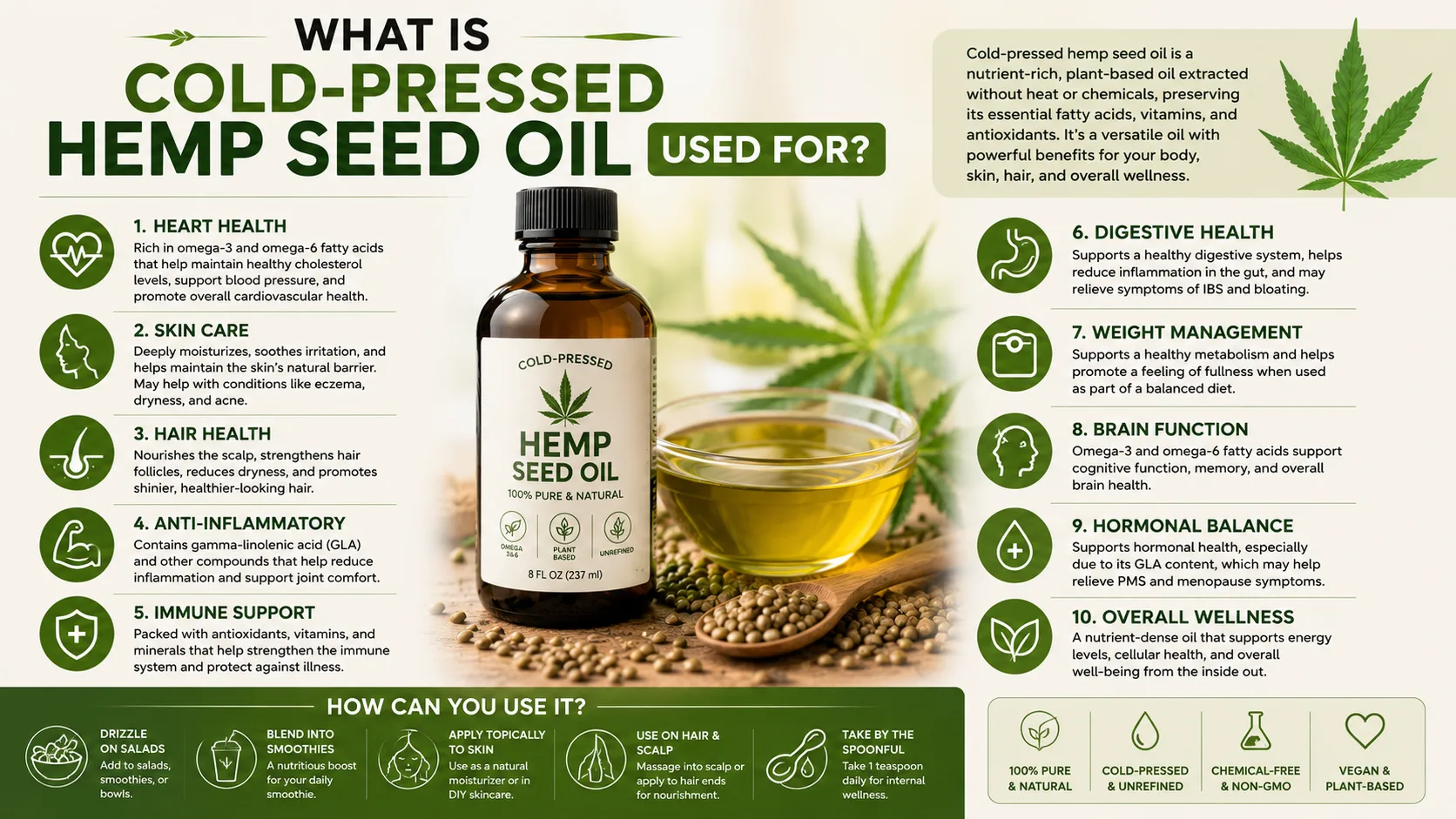
Understanding Cold-Pressed Extraction
The cold-pressing process uses mechanical extraction at temperatures below 40°C (104°F), preserving heat-sensitive nutrients that high-temperature refining destroys. This minimal processing approach maintains the integrity of:
- Essential fatty acids: Including the delicate omega-3 ALA that degrades under heat
- Gamma-linolenic acid (GLA): The rare omega-6 fatty acid with anti-inflammatory properties
- Vitamin E complex: Natural tocopherols that provide antioxidant protection
- Phytosterols: Plant compounds that support cholesterol management
- Chlorophyll: The natural pigment indicating minimal processing
The result is an oil with full nutritional functionality but limited thermal stability—appropriate for applications that leverage nutritional content rather than requiring high-temperature processing.
Application Categories for Manufacturers
1. Dietary Supplements
The supplement market represents the largest commercial application for cold-pressed hemp seed oil:
Omega-3 Softgels: Cold-pressed hemp oil provides balanced omega fatty acids in convenient softgel format. The 3:1 omega-6 to omega-3 ratio offers advantages over fish oil for plant-based positioning, though consumers seeking high-dose EPA/DHA should understand that ALA conversion to these longer-chain fatty acids is limited.
GLA Supplements: With 450-500mg GLA per tablespoon, hemp seed oil provides one of the few dietary sources of this anti-inflammatory fatty acid. Supplements targeting joint health, hormonal balance, or skin conditions benefit from GLA positioning.
Beauty-from-Within Formulations: The skin health benefits of hemp seed oil—supporting barrier function, reducing inflammation, and providing antioxidant protection—align with the ingestible beauty trend. Beauty supplements incorporating hemp oil target consumers seeking holistic approaches to skin, hair, and nail health.
Comprehensive Wellness Blends: Hemp oil combines effectively with complementary ingredients like fish oil (for EPA/DHA), curcumin (for additional anti-inflammatory support), and vitamin D (for synergistic wellness benefits).
2. Functional Foods
Cold-pressed hemp seed oil integrates into food applications where nutritional value takes priority over thermal processing:
Salad Dressings and Dips: The mild, nutty flavor profile complements vinaigrette-style dressings, hummus, guacamole, and other cold-application dips. The omega content adds functional positioning to everyday food products.
Granola and Trail Mix Products: Drizzled onto granola during production or incorporated into trail mix blends, hemp oil adds nutritional density while maintaining the crunchy texture consumers expect from these categories.
Nutritional Bars: Incorporated into energy bars, protein bars, and wellness snack bars, hemp oil contributes omega fatty acids and supports clean-label positioning when organic certification is maintained.
Plant-Based Spreads: As alternatives to dairy butter and margarine, plant-based spreads incorporating hemp oil target health-conscious consumers seeking alternatives with better fatty acid profiles.
3. Beverage Applications
Emerging functional beverage categories offer opportunities for cold-pressed hemp oil:
Wellness Shots: Small-format beverages delivering concentrated functional ingredients position hemp oil effectively for daily wellness support.
Protein Shakes and Meal Replacements: Hemp oil adds omega fatty acids to protein powders and meal replacement beverages, improving nutritional completeness for plant-based positioning.
Beauty Beverages: The ingestible beauty trend extends to beverages, with hemp oil contributing to formulations targeting skin health, hair quality, and nail strength.
4. Cosmetic and Personal Care
While not a direct food application, cosmetic use of hemp seed oil informs marketing claims and consumer education:
Topical Applications: Hemp seed oil’s skin barrier support, anti-inflammatory properties, and moisturizing capabilities make it valuable in natural skincare formulations.
Ingestible Beauty Positioning: The same skin health benefits from topical application translate to ingestible beauty supplements, creating marketing opportunities across both categories.
For formulators seeking reliable supply, HEMPLAND offers organic cold-pressed hemp seed oil processed to retain maximum nutritional value.
Nutritional Profile: Cold-Pressed vs. Refined
| Component (per 15ml) | Cold-Pressed | Refined |
|---|---|---|
| Omega-3 (ALA) | 2,700mg | 2,400mg |
| Omega-6 (LA) | 5,400mg | 5,600mg |
| GLA | 450mg | 380mg |
| Vitamin E | 3.9mg | 2.1mg |
| Phytosterols | 265mg | 180mg |
| Chlorophyll | Present | Absent |
| Flavor | Mild, nutty | Neutral |
The nutritional advantage of cold-pressed oils is significant for products where functional benefits drive consumer purchase decisions.
Cold-Pressed vs. Refined: Selection Criteria
Product developers should select cold-pressed hemp seed oil when:
- Nutritional claims drive positioning: Products making omega, GLA, or antioxidant claims benefit from cold-pressed preservation
- Clean-label positioning requires minimal processing: Consumers paying premium prices expect preserved nutrition
- Application temperature allows: Cold foods, room-temperature products, or post-processing addition
Refined hemp seed oil becomes appropriate when:
- High-temperature processing is required: Baking, frying, or high-heat production requires refined stability
- Neutral flavor is essential: Refined oil lacks the characteristic nutty note
- Extended shelf life is prioritized: Refined oils resist rancidity longer under challenging storage conditions
Our companion article on cold-pressed vs. refined hemp oil examines this decision in greater detail.
Quality Considerations for Manufacturers
Organic Certification: Essential for clean-label positioning and premium pricing support. Verify certification through recognized bodies.
Processing Specifications: Request documentation of extraction temperatures to confirm cold-pressed claims. Temperatures exceeding 40°C compromise nutritional quality.
Packaging Requirements: Cold-pressed oils require protection from light and oxygen. Dark glass, tin, or opaque plastic with minimal headspace extends shelf life. Clear packaging represents a quality concern.
Third-Party Testing: Certificates of analysis should document fatty acid profiles, peroxide values (rancidity indicator), and heavy metal testing.
Supplier Audits: For significant production volumes, consider supplier facility audits to verify processing practices and quality management systems.
Market Positioning Opportunities
Cold-pressed hemp seed oil supports multiple market positioning strategies:
Plant-Based Nutrition: The complete amino acid profile of hemp (from seeds) combined with omega fatty acids positions hemp oil within the dominant plant-based trend.
Anti-Inflammatory Positioning: Consumer awareness of chronic inflammation as a health driver creates opportunities for GLA-rich hemp oil in joint health, gut health, and general wellness categories.
Beauty-from-Within: The skin health benefits of omega fatty acids and vitamin E support ingestible beauty positioning—a high-growth category among health-conscious consumers.
Heart Health: Cardiovascular support claims align with mainstream consumer interest, though regulatory requirements for structure/function claims must be followed.
Sustainability: Hemp cultivation’s environmental benefits—minimal water requirements, soil improvement, and carbon sequestration—support sustainability positioning for eco-conscious consumer segments.
Formulation Tips for Product Developers
When incorporating cold-pressed hemp seed oil into formulations:
- Temperature management: Add hemp oil after thermal processing when possible, or reserve for cold-application products
- Packaging selection: Use opaque, airtight containers; consider nitrogen flushing for extended shelf life
- Antioxidant synergy: Combine with natural antioxidants like rosemary extract to extend shelf stability
- Flavor balancing: The mild nutty flavor pairs well with honey, lemon, herbs, and sweet preparations
- Emulsification: For beverage applications, appropriate emulsifiers ensure homogeneous distribution
- Dosage considerations: 1-2 tablespoons daily provides meaningful omega-3 and GLA intake; adjust formulations to deliver effective doses

Conclusion
Cold-pressed hemp seed oil serves diverse applications across supplements, functional foods, beverages, and beauty products. The nutritional preservation from cold-pressing—maintaining GLA, vitamin E, phytosterols, and omega-3 content—creates functional advantages over refined alternatives for applications where health benefits drive consumer value.
Product developers selecting cold-pressed hemp oil should prioritize organic certification, verify processing specifications, and ensure appropriate packaging and handling to maintain nutritional integrity throughout shelf life.
HEMPLAND (Shaanxi) Organic Agri-Tech Inc. supplies cold-pressed organic hemp seed oil to manufacturers and brands worldwide, with full organic certification and comprehensive quality documentation.