


As the global demand for plant-based proteins accelerates, manufacturers face a wide range of ingredient choices—pea protein, soy protein, rice protein, hemp protein, and, increasingly, organic pumpkin seed protein powder. Each plant protein offers unique benefits, but pumpkin seed protein is rapidly emerging as a standout option because of its exceptional nutrient density, digestibility, and clean-label attributes.
This article provides a detailed comparison between organic pumpkin seed protein powder and other mainstream plant proteins to help formulators, brand owners, and food manufacturers make informed decisions.
1. Nutrient Profile Comparison
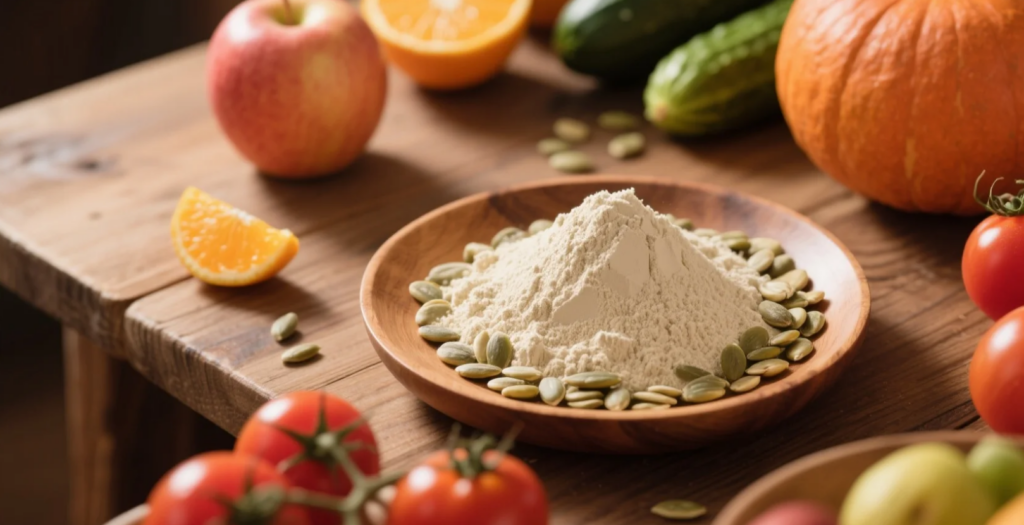
Organic Pumpkin Seed Protein Powder
Pumpkin seed protein offers a naturally balanced nutrition profile rich in:
- Magnesium
- Zinc
- Iron
- Antioxidants
- Healthy fats and polyunsaturated fatty acids
It also contains a well-rounded amino acid composition with good levels of arginine, tryptophan, and branched-chain amino acids.
Pea Protein
Pea protein contributes high arginine and BCAAs but lacks methionine. It is often fortified or blended to achieve a complete profile.
Soy Protein
Soy provides a complete amino acid profile, but its allergen status and GMO concerns limit its acceptance in clean-label and organic markets.
Rice Protein
Rice protein is hypoallergenic and well-tolerated but low in lysine, requiring blending with complementary proteins for balance.
Conclusion:
Pumpkin seed protein delivers a unique combination of minerals and amino acids that sets it apart, especially in natural and organic functional foods.
2. Digestibility and Allergen Considerations
Pumpkin Seed Protein
- Naturally easy to digest
- Low allergen risk
- Suitable for consumers with dairy, soy, or gluten sensitivities
Pea Protein
- Good digestibility
- May cause bloating for some users due to fermentable fibers
Soy Protein
- High digestibility
- Major allergen, limiting product placement
Rice Protein
- Excellent digestibility
- Very low allergen potential
Conclusion:
Pumpkin seed protein provides strong digestive tolerance similar to rice protein while offering better flavor and nutrient density.
3. Flavor and Sensory Properties
Pumpkin Seed Protein
- Mild, nutty flavor
- Easily masked in beverages and snacks
- Smooth texture when finely milled
Pea Protein
- Often described as earthy or grassy
- Requires masking agents in RTD beverages
Soy Protein
- Distinct “beany” taste
- Requires flavor modification
Rice Protein
- Gritty texture
- Can taste chalky in drinks
Conclusion:
Pumpkin seed protein’s mild flavor gives it a clear advantage in applications where sensory experience is critical.
4. Functional Performance in Food Applications
Pumpkin Seed Protein
Ideal for:
- Nutritional bars
- Bakery products
- High-protein cereals
- Smoothies and meal replacement drinks
- Plant-based dairy alternatives
It provides desirable emulsification, viscosity, and water-binding properties.
Pea Protein
Strong gelation and emulsification; best for meat alternatives and sports nutrition beverages.
Soy Protein
Highly functional but less clean-label; best for structured proteins.
Rice Protein
Limited binding and solubility; often used as a supplementary protein.
Conclusion:
Pumpkin seed protein balances performance with clean-label simplicity, making it ideal for premium functional foods.
5. Clean Label and Consumer Trust
Pumpkin Seed Protein
- Organic
- Non-GMO
- Allergen-free
- Minimal processing
- Sustainable crop profile
Today’s consumers prefer ingredient lists that are short, recognizable, and natural. Pumpkin seed protein fits perfectly into this clean-label movement.
Other Plant Proteins
- Pea protein is clean-label but requires heavy processing
- Soy protein is associated with allergens and GMOs
- Rice protein is clean but often blended due to amino acid limitations
Conclusion:
Pumpkin seed protein ranks among the most consumer-friendly plant proteins available.
6. Sustainability Comparison
Pumpkin seeds are a byproduct of pumpkin farming, making pumpkin seed protein a low-waste, sustainable ingredient.
- Low water usage
- Efficient land use
- Minimal environmental burden
Soy and rice require intensive agriculture, while pea protein is more sustainable but still involves significant processing.
Conclusion:
Pumpkin seed protein is superior for brands prioritizing sustainability and eco-friendly messaging.
Final Verdict: Why Choose Organic Pumpkin Seed Protein Powder?
Compared with pea, soy, and rice protein, organic pumpkin seed protein powder offers:
- A balanced nutrient profile
- Superior micronutrient density
- Excellent digestibility
- Mild natural flavor
- Clean-label suitability
- Low allergen risk
- Strong sustainability credentials
- Versatile functionality in food and beverage formulations
For manufacturers developing premium functional foods, clean-label nutrition products, and plant-based innovations, pumpkin seed protein stands out as a highly valuable and marketable ingredient.
Related Products

Organic Pumpkin Seed Protein Powder
Organic pumpkin seed protein powder offers ≥60% protein with unique sleep support, prostate health, and…

Organic Hemp Seed Protein Powder
Available in 70%, 75%, 80% protein levels and customized. All specifications support both conventional and…