
Protein supplementation has become standard practice for athletes, fitness enthusiasts, and health-conscious consumers seeking to optimize their nutritional intake. Among the crowded supplement aisle, whey protein dominates with its complete amino acid profile and rapid absorption characteristics. Yet growing segments of consumers actively seek alternatives due to dietary restrictions, ethical concerns, or simply a desire for variety. Organic hemp seed protein powder occupies a prominent position in this plant-based protein landscape, prompting a critical examination of whether it truly represents the best whey alternative.
This article provides a balanced comparison designed to inform both everyday consumers making personal health choices and B2B buyers evaluating protein ingredients for product development.
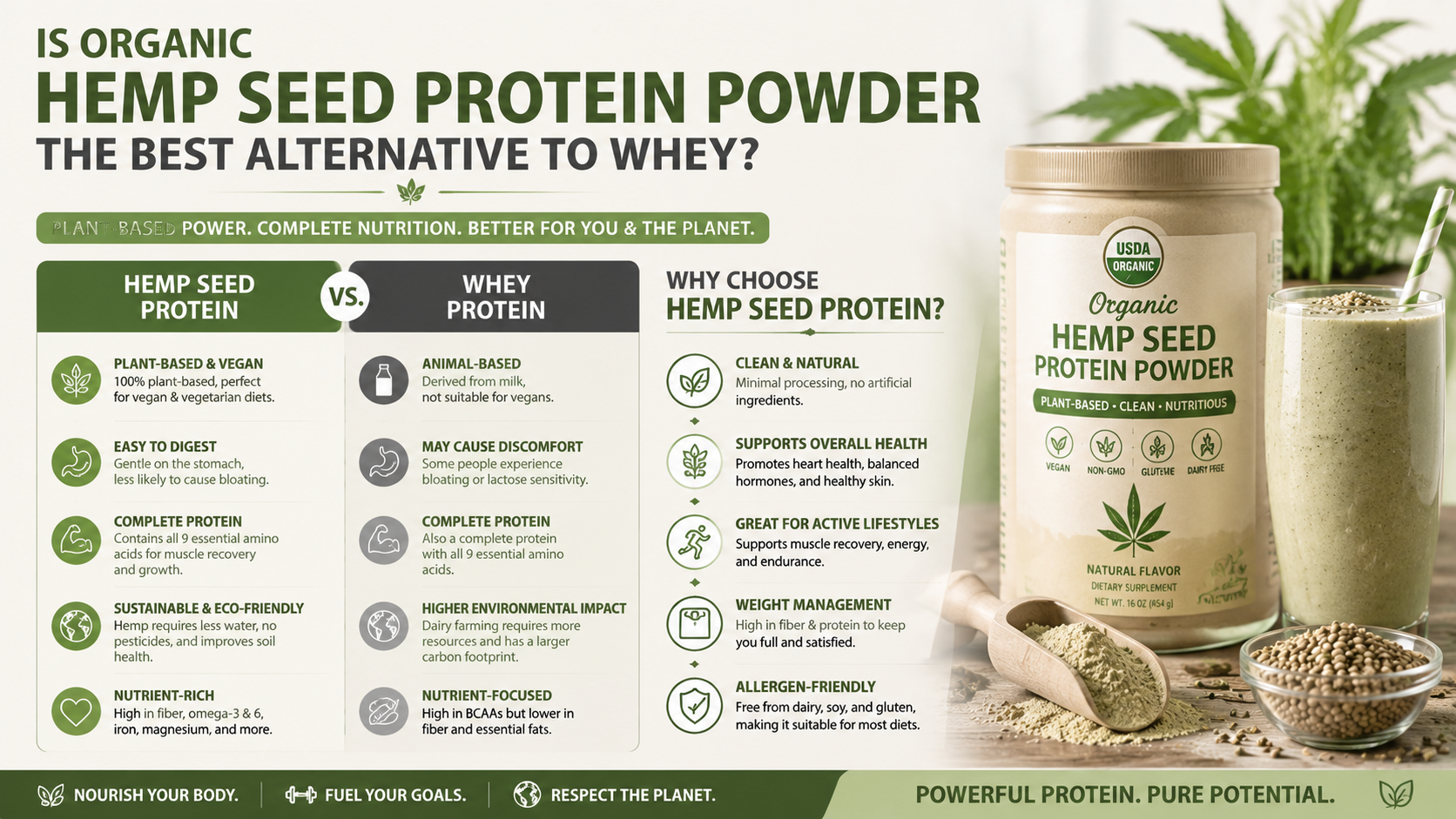
The Case for Hemp Protein
Hemp protein powder is derived from hemp seeds, the same plant that produces industrial hemp fiber and hemp seed oil. After cold-pressing for oil extraction, the remaining seed meal undergoes milling into a fine protein powder. The resulting ingredient contains approximately 50% protein by weight, with the remainder composed of dietary fiber and essential fats.
The nutritional profile of hemp protein presents several noteworthy characteristics. It provides all nine essential amino acids, though not in proportions matching human muscle protein needs as precisely as whey. More significantly, hemp protein contains above-average levels of arginine and branched-chain amino acids (BCAAs), which support muscle recovery and immune function. For consumers prioritizing overall health over maximum anabolic response, hemp protein delivers meaningful nutritional value.
Digestibility-adjusted scores reveal that hemp protein provides approximately 80-90% of the protein effectiveness of whey in supporting nitrogen retention. This gap, while measurable, may prove negligible for recreational athletes or those using protein supplementation as dietary insurance rather than aggressive muscle building. The practical implication: hemp protein adequately supports protein goals for most consumers, even if it lags whey in head-to-head athletic performance studies.
Understanding the Key Differences
Source and Processing
Whey protein originates from dairy milk during cheese manufacturing. Liquid whey, a byproduct of casein coagulation, undergoes filtration to concentrate protein content before spray-drying into powder form. This process has been optimized over decades, resulting in highly standardized products with consistent amino acid profiles and mixing properties.
Hemp protein production follows a simpler supply chain. Hemp seeds are cleaned, cold-pressed, and the defatted meal is milled into powder. Minimal processing preserves some of the seed’s original nutrient matrix, including fiber and omega fatty acids. For consumers concerned about food processing degree, hemp protein scores favorably. For manufacturers seeking ingredient consistency, this variability represents both a feature and a challenge.
Amino Acid Completeness
Nutrition science recognizes whey as a complete protein containing all essential amino acids in proportions closely matching human requirements. This completeness supports its reputation as an optimal post-workout supplement, where rapid amino acid availability drives muscle protein synthesis.
Hemp protein also provides all essential amino acids, qualifying it as a complete protein source. However, the relative proportion differs: hemp contains lower levels of leucine, the primary trigger for muscle protein synthesis, while containing higher levels of arginine, which supports cardiovascular health and wound healing. The practical translation: hemp protein supports muscle maintenance adequately but may not maximize muscle building response as efficiently as whey.
For consumers whose primary goal is general health, weight management, or moderate fitness improvement, hemp protein’s amino acid profile remains entirely suitable. The “best” alternative ultimately depends on individual goals rather than any universal ranking.
Digestibility and Absorption
Whey’s rapid digestion and absorption kinetics have been extensively documented. Liquid whey empties from the stomach quickly, reaching peak blood amino acid concentrations within 60-90 minutes of consumption. This pharmacokinetic profile supports whey protein’s reputation as the preferred post-exercise choice for maximizing muscle protein synthesis.
Hemp protein digests more slowly due to its fiber content and different protein structure. Amino acid appearance in bloodstream occurs more gradually, creating a different but not necessarily inferior metabolic response. Some nutrition researchers propose that slower protein digestion may promote satiety and support weight management goals more effectively than rapid absorption. For consumers using protein supplements as meal replacements or appetite management tools, hemp protein’s digestion profile may offer advantages.
Digestive Tolerance
A meaningful segment of consumers experiences gastrointestinal discomfort with whey protein, particularly whey concentrate which contains lactose. Symptoms including bloating, cramping, and flatulence can undermine supplement compliance and quality of life.
Hemp protein contains no lactose and is generally well-tolerated across diverse digestive systems. Its fiber content may promote gut regularity, though some consumers experience increased bowel movements initially. For individuals with dairy sensitivities or those seeking gentler protein options, hemp protein presents a viable solution without the digestive disruption associated with dairy-based supplements.
Allergen Considerations
Whey protein carries significant allergen labeling requirements as a dairy-derived ingredient. Consumers with milk allergies must strictly avoid whey-containing products, creating demand for hypoallergenic alternatives.
Hemp protein derives from seeds rather than dairy or common allergens, reducing cross-reactivity concerns. It qualifies as dairy-free, soy-free, and gluten-free when properly processed. This favorable allergen profile makes hemp protein attractive for formulations targeting sensitive populations, children’s nutrition, or consumers managing multiple dietary restrictions.
B2B Implications for Product Development
Formulation Flexibility
For manufacturers developing protein supplement products, hemp protein offers formulation advantages alongside challenges. Its naturally earthy, nutty flavor integrates reasonably well with common flavor systems including chocolate, vanilla, and fruit. However, achieving smooth texture and complete dispersion requires attention to formulation technique, as hemp protein can exhibit grittiness if inadequately processed.
The fiber content of hemp protein contributes to product differentiation opportunities. High-fiber protein products appeal to consumers seeking combined nutritional benefits. Manufacturing teams should account for fiber’s water-binding properties when designing batch formulas and processing parameters.
Clean Label Positioning
Consumer demand for clean-label products has intensified across supplement categories. Hemp protein’s simple production process and recognizable ingredient name support clean-label marketing claims. Products can prominently feature “organic hemp protein” without complex ingredient declarations or concerning-sounding additives.
The organic certification adds premium positioning potential. Organic hemp protein commands higher wholesale pricing while appealing to consumers willing to pay premiums for agricultural practices aligned with environmental values. For brands establishing organic or premium product lines, organic hemp protein represents a credible hero ingredient.
Cost and Supply Dynamics
Whey protein benefits from mature, high-volume dairy supply chains that keep ingredient costs competitive. Hemp protein pricing reflects smaller-scale production, organic certification requirements, and quality premiums for sensory and functional performance. At typical wholesale volumes, organic hemp protein costs approximately 40-60% more than comparable whey protein.
This cost differential shapes competitive strategy. Brands competing primarily on price face challenges with hemp protein formulations. Those competing on differentiation, dietary specialty, or premium positioning can justify higher ingredient costs through corresponding retail pricing. Margin analysis should guide formulation decisions, accounting for consumer willingness to pay in target segments.
Consumer Guidance: When Hemp Protein Makes Sense
Understanding appropriate use cases helps consumers make informed protein supplementation decisions.
Hemp protein makes excellent sense when:
- Eliminating dairy from the diet while maintaining adequate protein intake
- Managing irritable bowel syndrome or lactose sensitivity
- Seeking combined protein and fiber supplementation
- Prioritizing plant-based nutrition and environmental sustainability
- Supporting digestive health through dietary fiber intake
Whey protein may remain preferable when:
- Maximizing muscle protein synthesis for serious athletic performance
- Needing rapid post-workout amino acid delivery
- Prioritizing cost efficiency in protein supplementation
- Seeking the most protein per serving weight
Most consumers fall somewhere between these extremes. A reasonable approach involves using hemp protein during lower-intensity training periods, mixing both protein types throughout the week, or selecting hemp protein for morning smoothies while reserving whey for post-workout windows. HEMPLAND offers organic hemp seed protein powder with a complete amino acid profile, making it a viable alternative to whey for formulators and consumers alike.
Conclusion
Organic hemp seed protein powder represents a legitimate, effective alternative to whey protein for substantial consumer segments. It delivers complete protein nutrition with favorable digestibility, fiber content, and allergen characteristics that meet diverse dietary needs. For everyday consumers seeking plant-based protein options, athletes with dairy sensitivities, or health-conscious individuals prioritizing whole-food ingredients, hemp protein warrants serious consideration.
B2B buyers evaluating protein ingredients will find hemp protein best suited for product lines emphasizing plant-based positioning, organic certification, allergen-free claims, or premium natural positioning. Cost-conscious mass-market products may find whey protein’s economics more compelling, but differentiation-focused brands can leverage hemp protein’s unique characteristics to justify premium positioning and attract dedicated consumer followings.
The “best” protein alternative ultimately reflects individual priorities. Hemp protein earns its place among top-tier options by delivering genuine nutritional value while satisfying legitimate consumer preferences for plant-based, dairy-free, and clean-label supplementation.