

Weight management is no longer synonymous with calorie deprivation or restrictive dieting. In 2026, consumers understand that sustainable weight control comes from choosing nutrient-dense foods that support metabolism, regulate appetite, and maintain lean muscle mass — without compromising nutritional quality.
Among the most compelling functional ingredients emerging in this space, organic hemp hearts (the hulled inner kernels of Cannabis sativa seeds) are gaining significant traction. Backed by a unique macro-nutrient profile — approximately 31–33 g complete plant protein, 48–49 g healthy fats, and a meaningful fiber content — hemp hearts address multiple physiological pathways involved in healthy weight management simultaneously.
For food manufacturers, nutraceutical brands, and clean-label product developers, organic hemp hearts represent a versatile, science-supported ingredient that can differentiate weight-management SKUs in one of the fastest-growing functional food categories globally.

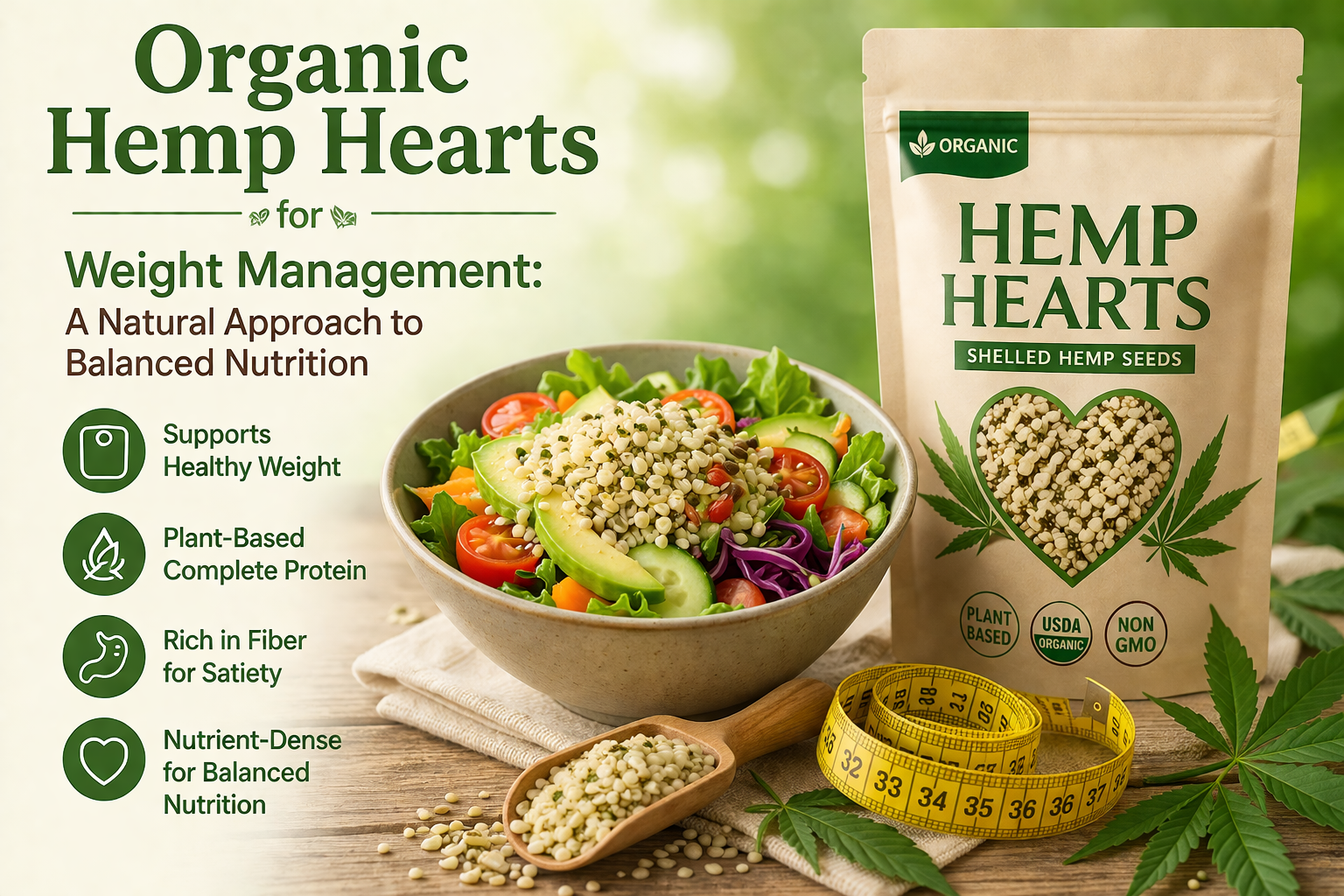
What Are Organic Hemp Hearts?
Organic hemp hearts are the hulled seeds of the hemp plant (Cannabis sativa L.), cultivated without synthetic pesticides or fertilizers and certified under USDA NOP, EU Organic, or equivalent standards. The outer shell is mechanically removed, leaving the soft, cream-colored inner kernel — the “heart” of the seed.
Key nutritional profile (per 100g dry):
| Nutrient | Amount | Weight Management Relevance |
|---|---|---|
| Protein | 31–33 g | Satiety, lean muscle preservation, thermic effect |
| Total Fat | 48–49 g | Hormonal balance, sustained energy, omega-3/6 ratio |
| Carbohydrates | 9–12 g | Minimal blood sugar impact |
| Fiber | 1.2–1.5 g (hulled) | Appetite regulation, gut health |
| Omega-6 : Omega-3 | ~3:1 | Anti-inflammatory, metabolic support |
| GLA (Omega-6) | 1.5–2.5 g | Hormonal regulation, fat metabolism |
| Arginine | 3.7 g | Nitric oxide, blood sugar stability |
| Calories | ~553 kcal/100g | Nutrient-dense; 30g serving ≈ 165 kcal |
One standard serving (30g / approximately 3 tablespoons) delivers ~10 g protein, 14–15 g fat, and only 2–3 g net carbohydrates — making hemp hearts one of the most balanced plant proteins for weight-conscious consumers and low-carb dieters alike.
The Science of Hemp Hearts and Healthy Weight Management
1. Protein-Induced Satiety: The Foundation of Appetite Control
Protein is universally recognized as the most satiating macronutrient. The thermic effect of food (TEF) for protein is approximately 20–30%, meaning the body expends significantly more energy digesting protein than fat or carbohydrates. Additionally, protein modulates hunger hormones:
- Lowers ghrelin (the “hunger hormone”)
- Increases peptide YY (PYY) and glucagon-like peptide-1 (GLP-1) (satiety hormones)
- Preserves lean muscle mass during caloric restriction, maintaining resting metabolic rate
A 30g serving of hemp hearts (~10g protein) produces meaningful satiety effects comparable to a small portion of lean meat or dairy — without the saturated fat or common allergens. For food manufacturers developing high-protein meal replacement shakes, satiety bars, or diet-targeted functional beverages, hemp hearts provide a clean-label protein base that outperforms many conventional options.
2. Arginine and Blood Sugar Stability
Hemp hearts are one of the richest plant sources of L-arginine, providing approximately 3.7 g per 100 g. Arginine plays a critical role in weight management through its conversion to nitric oxide (NO):
- Improves insulin sensitivity in muscle and liver tissue
- Reduces visceral fat accumulation (supported by human clinical trials)
- Enhances glucose uptake by cells, preventing blood sugar spikes and crashes
Blood sugar instability — characterized by rapid glucose peaks followed by crashes — is one of the primary drivers of hunger, cravings, and overeating. By promoting stable glucose metabolism, arginine-rich hemp hearts help consumers stay within their target caloric range without experiencing energy crashes or compulsive snacking.
A 2020 randomized controlled trial published in Nutrition & Diabetes found that L-arginine supplementation significantly improved insulin sensitivity and reduced waist circumference in subjects with metabolic syndrome.
3. GLA and Hormonal Balance for Fat Metabolism
Hemp hearts are among the very few food sources of gamma-linolenic acid (GLA), an omega-6 fatty acid with unique metabolic properties. Unlike most omega-6 sources (corn, soybean, sunflower oil), GLA is anti-inflammatory and has been shown to:
- Regulate prostaglandin pathways that control fat storage and mobilization
- Reduce cortisol levels in chronically stressed individuals — cortisol is a primary driver of abdominal fat accumulation
- Support healthy thyroid function, the master regulator of metabolic rate
This combination makes GLA particularly valuable for stress-related weight gain — one of the most common and least-addressed challenges in weight management.
4. Omega-3 Fatty Acids and Fat Oxidation
The omega-3 content in hemp hearts (approximately 8.7 g ALA per 100 g) supports weight management through multiple mechanisms:
- Enhances fat oxidation (the body’s ability to burn stored fat for energy)
- Reduces systemic inflammation, a known blocker of weight loss and a driver of metabolic dysfunction
- Improves leptin sensitivity — leptin is the hormone that signals fullness to the brain; leptin resistance is a hallmark of stubborn weight retention
Research published in the American Journal of Clinical Nutrition demonstrated that increased dietary ALA intake was associated with reduced visceral fat mass in adults, independent of calorie intake.
5. Fiber and the Gut-Brain Satiety Axis
Although hulled hemp hearts are lower in fiber than whole seeds (1.2–1.5 g per 30g serving vs. ~6–8 g for whole seeds), they still contribute to satiety through:
- Slowing gastric emptying, prolonging the feeling of fullness after meals
- Feeding beneficial gut bacteria that produce short-chain fatty acids (SCFAs) — acetate, propionate, and butyrate — which directly signal satiety to the brain
- Binding bile acids in the gut, modestly reducing cholesterol reabsorption
For manufacturers seeking higher fiber content, combining hemp hearts with organic chicory inulin, oat beta-glucan, or psyllium husk in functional food formulations creates a synergistic satiety complex with clinically validated cholesterol-lowering and appetite-suppressing effects.
6. Thermic Effect and Metabolic Support
Protein’s thermic effect (TEF) is the energy expended during digestion, absorption, and metabolism of food. At 20–30% of calories consumed, protein TEF is 3–4 times higher than carbohydrates (5–10%) and significantly higher than fats (0–3%).
A person consuming 2,000 calories primarily from high-protein sources will expend approximately 400–600 calories simply through digestion — a passive metabolic advantage that significantly supports weight management without requiring additional exercise.
Hemp hearts’ high protein content contributes to this thermic advantage, especially when used as a protein supplement in place of lower-protein ingredients in meal plans and formulated products.
Hemp Hearts for Specific Diet Patterns
Ketogenic & Low-Carb Diets
With only ~2–3 g net carbohydrates per 30g serving, hemp hearts are one of the few protein-rich foods that fit comfortably within a strict ketogenic framework (< 20 g net carbs/day):
- No impact on blood glucose or insulin response at standard serving sizes
- Provides the essential fats (LA, ALA, GLA) needed for keto-adaptation
- Supports ketone body production through medium-chain-like fat composition
For keto-formulated snack bars, meal replacement shakes, and fat-bomb recipes, hemp hearts deliver nutrition density without kicking users out of ketosis.
High-Protein / Macro-Balanced Diets
For fitness-focused consumers tracking macros, a 30g serving of hemp hearts contributes:
- ~10 g protein (protein target: 25–35% of total calories)
- ~15 g fat (fat target: 25–35% of total calories)
- ~2–3 g carbs (net carbs, minimal impact on carb ceiling)
This near-ideal macro split — approximately 24% protein / 70% fat / 6% carbs by calories — makes hemp hearts a natural fit for zone diet, paleo, and high-protein lifestyle consumers.
Plant-Based & Vegan Weight Management
For consumers following plant-based diets, hemp hearts solve two common weight management challenges:
- Protein quality: Unlike most plant proteins (rice, pea, soy isolates), hemp hearts provide a complete amino acid profile including the BCAAs (leucine, isoleucine, valine) critical for muscle preservation during caloric deficit.
- Nutrient density: Vegan dieters often struggle with micronutrient gaps (zinc, magnesium, iron) that can slow metabolism. Hemp hearts provide meaningful amounts of magnesium (210 mg/100g), zinc, and iron — supporting thyroid function and metabolic rate.


Hemp Hearts vs. Other Plant Proteins for Weight Management
| Attribute | Hemp Hearts | Pea Protein | Soy Protein | Rice Protein |
|---|---|---|---|---|
| Complete amino acid profile | Yes | No | Yes | No |
| Net carbs per 30g serving | 2–3 g | 1–2 g | 2–3 g | 18–22 g |
| Omega-3/6 (g/100g) | 8.7 g ALA + 1.5 g GLA | 0 | 0.1 | 0 |
| Arginine (g/100g) | 3.7 | 2.1 | 1.8 | 1.8 |
| Fiber (g/30g serving) | 1.2 g | 1 g | 0.5 g | 0.5 g |
| Allergen-free | Yes | Yes | No (soy allergen) | Yes |
| Gut comfort | Excellent | Gas/bloating common | Moderate | Moderate |
| Thermic effect | Moderate-high | High | High | Moderate |
| Clean-label acceptance | Very high | High | Moderate | High |
Key differentiator: Hemp hearts are the only plant protein that combines a complete amino acid profile, meaningful omega-3/GLA content, and arginine in a single allergen-free ingredient — making them uniquely positioned for weight management formulations.
B2B Applications: Functional Weight Management Products
Food manufacturers and supplement brands can leverage organic hemp hearts across multiple weight management product categories:
Functional Food & Beverages
- High-protein meal replacement shakes: 20–30g hemp hearts per serving as protein base
- Satiety smoothie bowls: Combined with soluble fiber, chia seed, and MCT oil
- Low-carb protein bars: Hemp hearts as primary protein + fat source with minimal carbs
- Keto-friendly snack bars: Hemp hearts + almond butter + dark chocolate (≤5g net carbs)
Weight Management Supplements
- Appetite control capsules: Hemp hearts powder + glucomannan + Garcinia cambogia
- Metabolism support blends: Hemp hearts + green coffee bean extract + chromium
- Plant-based protein powders: Hemp hearts as standalone or blended base for diet plans
Clean-Label Product Innovation
Hemp hearts meet every clean-label requirement:
- Single-ingredient claim possible (“contains organic hemp hearts”)
- Non-GMO verified
- Allergen-free (no soy, dairy, gluten, nuts)
- Organic certified (USDA NOP / EU Organic)
- Vegan and vegetarian approved
B2B Sourcing Note: HEMPLAND supplies organic hemp hearts in bulk from 1 MT with full organic certification, batch COA testing (heavy metals, pesticide residue, microbiology), and flexible packaging options for manufacturers and brand owners.
How to Use Hemp Hearts in a Weight Management Diet
| Application | Serving | Key Benefit |
|---|---|---|
| Morning protein smoothie | 3 tbsp (30g) blended with fruit/fiber | Sustained satiety until lunch |
| Overnight oats / yogurt bowl | 2 tbsp as topping | Protein + omega-3 boost |
| Salad protein topping | 2 tbsp | Nutrient density without cooking |
| Keto snack (fat bomb) | 4 tbsp mixed with coconut oil | Fat + protein, no carbs |
| Baked goods (cookies/brownies) | 15–20% flour substitution | Protein enrichment in treats |
| Soup thickener | 1–2 tbsp stirred in | Creamy texture + nutrition |
Daily serving recommendation for weight management: 30–60g (3–6 tablespoons) per day, divided across meals. This level provides 10–20g of complete plant protein and meaningful omega-3/GLA content sufficient to support satiety and metabolic health goals.
FAQ
Q1: How many calories are in a serving of hemp hearts?
A: One standard serving (30g / approximately 3 tablespoons) of organic hemp hearts provides approximately 165 calories — with 10g protein, 14–15g fat, and only 2–3g net carbohydrates. The high protein and fat content delivers sustained energy and satiety that typically prevents overeating.
Q2: Can hemp hearts help reduce belly fat?
A: Belly fat (visceral fat) is primarily driven by chronic inflammation, cortisol (stress hormones), and insulin resistance. Hemp hearts address all three pathways: omega-3/GLA reduce inflammation, arginine improves insulin sensitivity, and the overall nutrient density supports hormonal balance. While no single food “targets” belly fat, regular hemp heart consumption as part of a balanced diet can meaningfully support visceral fat reduction.
Q3: Are hemp hearts good for people on a keto diet?
A: Yes — hemp hearts are one of the most keto-compatible protein foods available. With only 2–3g net carbohydrates per serving and a fat-to-protein ratio of approximately 1.5:1, they fit comfortably within standard ketogenic macronutrient targets (70–75% fat, 20–25% protein, 5–10% carbs).
Q4: How do hemp hearts compare to whey protein for weight loss?
A: Whey protein has a higher protein density and thermic effect per gram, making it slightly more efficient for pure muscle-building. However, hemp hearts offer advantages for weight management: complete plant protein without dairy allergens, omega-3/GLA for anti-inflammatory and hormonal support, and significantly better gut comfort (whey commonly causes bloating). For consumers preferring plant-based or clean-label products, hemp hearts are the superior choice.
Q5: Can I eat hemp hearts every day for weight management?
A: Yes — daily consumption of 30–60g hemp hearts is safe and beneficial for most adults. They are not known to have any toxicity concerns at food-grade levels. Those on blood-thinning medications should maintain consistent omega-3 intake (rather than sporadically high doses) and consult their healthcare provider.
Q6: Do hemp hearts contain enough protein to support muscle during a diet?
A: Yes — hemp hearts provide all nine essential amino acids including adequate levels of branched-chain amino acids (BCAAs: leucine ~1.8g, isoleucine ~1.2g, valine ~1.6g per 30g serving). These BCAAs are the primary drivers of muscle protein synthesis, making hemp hearts an effective plant-based protein for preserving lean mass during caloric deficit.
Q7: What’s the best time of day to consume hemp hearts for weight management?
A: Research suggests protein distribution across 3–5 meals is optimal for satiety and muscle preservation. Consuming hemp hearts at breakfast (in a smoothie or oatmeal) and as an afternoon snack (sprinkled on yogurt or salad) is particularly effective for managing hunger throughout the day and preventing evening overeating.
Q8: Are there any side effects of eating too many hemp hearts?
A: Hemp hearts are very safe at food-grade serving sizes. The only notable consideration is their omega-6 content — while the ratio to omega-3 is favorable, consuming extremely large quantities alongside other high-omega-6 oils (soybean, corn, sunflower) could theoretically shift the overall dietary omega ratio unfavorably. For most people eating a varied diet, this is not a practical concern at 30–60g/day.
Why Choose HEMPLAND for Organic Hemp Hearts?
HEMPLAND (Shaanxi) Organic Agri-Tech Inc. is a vertically integrated supplier of certified organic hemp ingredients, serving B2B customers in food manufacturing, nutraceuticals, and functional beverage industries worldwide.
Product specifications available:
| Parameter | Specification |
|---|---|
| Protein (dry basis) | ≥ 31% |
| Fat content | ≥ 48% |
| Moisture | ≤ 8% |
| Green skin content | ≤ 5% (customizable) |
| THC | Non-detectable (< 0.001%) |
| Heavy metals | Compliant with EU/US FDA limits |
| Certifications | USDA NOP, EU Organic, Kosher, Halal, Non-GMO |
Bulk order capacity: 1 MT to full container loads
Lead time: 2–4 weeks from order confirmation
Sample orders: Available from 100g