
The global plant protein market continues expanding as consumers increasingly seek sustainable, allergen-friendly alternatives to conventional protein sources. For food manufacturers and formulators, selecting the right plant protein directly impacts product success, consumer satisfaction, and market positioning.
Among the leading plant protein options, organic hemp protein powder and pea protein isolate stand out as two of the most versatile and widely adopted choices. Each offers distinct nutritional advantages, functional properties, and market positioning opportunities.
This comprehensive comparison provides B2B decision-makers with the technical data needed to make informed protein sourcing decisions for product development and manufacturing applications.
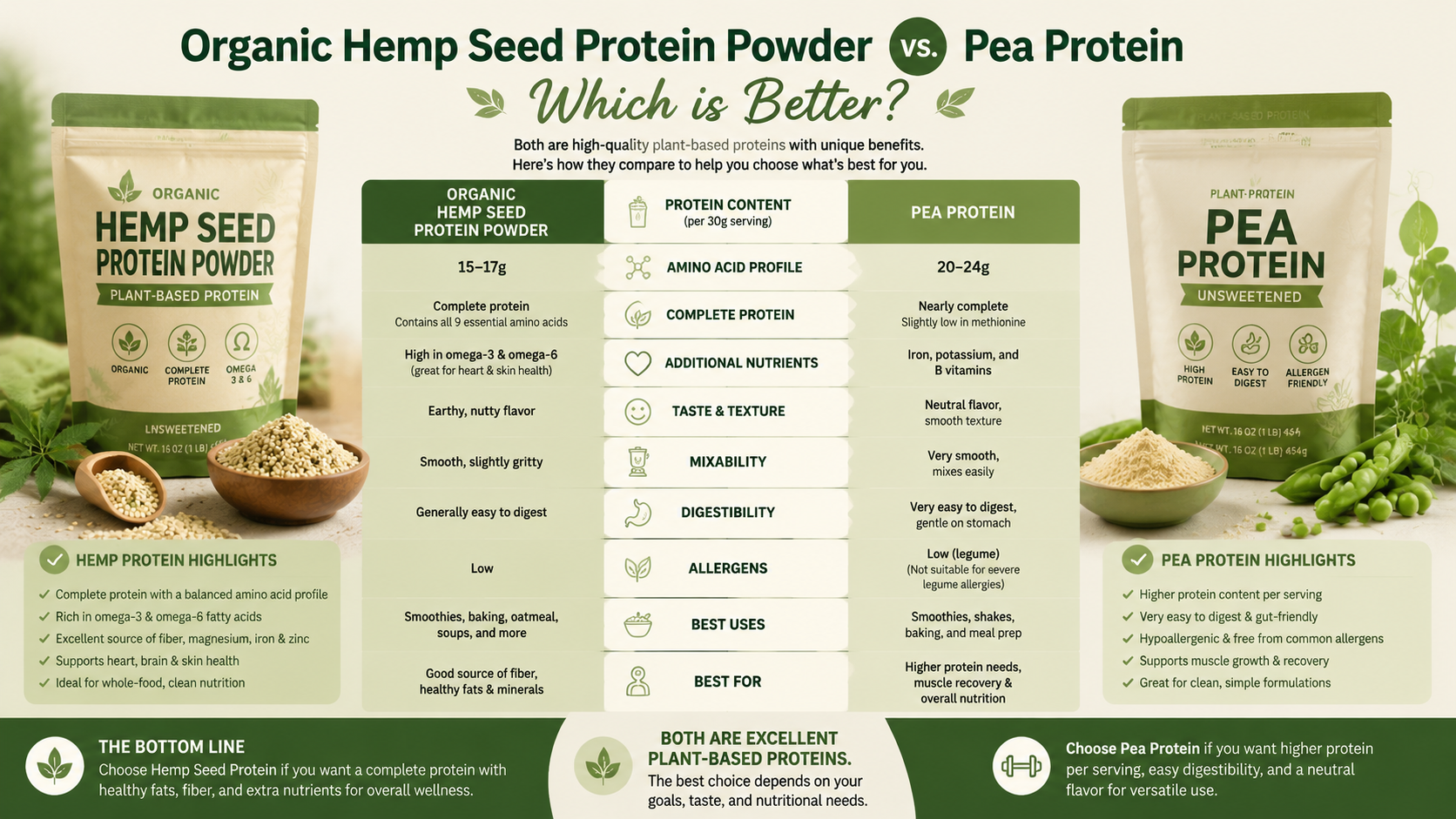
Nutritional Profile Comparison
Organic Hemp Protein Powder
Organic hemp protein powder is produced by cold-pressing organic hemp seeds to extract the oil, leaving a high-protein, fiber-rich powder. The resulting product contains:
Macronutrient Profile (per 30g serving):
- Protein: 15-18g (50-60% by weight)
- Fat: 3-4g (including omega-3, omega-6, GLA)
- Carbohydrates: 8-10g
- Fiber: 8-10g
- Calories: 110-120
Amino Acid Profile: Hemp protein provides all nine essential amino acids, though in varying quantities:
| Amino Acid | Per 100g | Daily Value % | Notes |
|---|---|---|---|
| Histidine | 2.7g | 35% | Supports hemoglobin production |
| Isoleucine | 4.2g | 78% | BCAA for muscle metabolism |
| Leucine | 7.6g | 98% | Primary BCAA for muscle protein synthesis |
| Lysine | 4.1g | 52% | Often limiting in plant proteins |
| Methionine | 2.5g | 68% | Supports antioxidant production |
| Phenylalanine | 4.8g | 80% | Precursor to tyrosine |
| Threonine | 3.6g | 68% | Collagen synthesis |
| Tryptophan | 1.0g | 30% | Serotonin precursor |
| Valine | 5.3g | 76% | BCAA for energy |
Unique Nutritional Advantages:
- Edestin protein (60-70% of total): Highly bioavailable, supports immune function
- Albumin protein (25-35%): Easy digestion, muscle repair support
- GLA content: 1-3% gamma-linolenic acid for anti-inflammatory benefits
- Fiber: 8-10g per serving for digestive health
- Minerals: Magnesium (30% DV), iron (20% DV), zinc (25% DV)
Pea Protein Isolate
Pea protein isolate is extracted from yellow peas (Pisum sativum) through wet extraction and drying processes:
Macronutrient Profile (per 30g serving):
- Protein: 24-26g (80-85% by weight)
- Fat: 0.5-1g
- Carbohydrates: 1-2g
- Fiber: 1-2g
- Calories: 100-110
Amino Acid Profile: Pea protein is high in branched-chain amino acids (BCAAs) but deficient in methionine:
| Amino Acid | Per 100g | Daily Value % | Notes |
|---|---|---|---|
| Histidine | 2.8g | 36% | Adequate |
| Isoleucine | 4.5g | 83% | BCAA, high |
| Leucine | 8.0g | 103% | Very high BCAA |
| Lysine | 7.0g | 88% | Excellent lysine source |
| Methionine | 1.0g | 27% | LIMITING |
| Phenylalanine | 5.3g | 88% | Adequate |
| Threonine | 4.0g | 76% | Adequate |
| Tryptophan | 0.9g | 27% | Adequate |
| Valine | 4.8g | 69% | BCAA, adequate |
DIAAS Comparison:
- Hemp protein DIAAS: ~0.86 (good for plant proteins)
- Pea protein DIAAS: ~0.82 (slightly lower due to methionine)
- Combined blend: ~0.95 (excellent amino acid score)
Digestibility and Gastrointestinal Tolerance
Hemp Protein Advantages
Hemp protein demonstrates superior digestibility characteristics:
- Natural Fiber Content: 8-10g per serving promotes healthy digestion and regular bowel movements
- Edestin Protein Structure: Globular protein structure similar to human plasma proteins
- Digestibility Rate: 92-97% protein digestibility (comparable to eggs)
- Gentle on Stomach: Minimal reported bloating, gas, or digestive discomfort
- No Anti-Nutrients: Unlike soy, hemp contains minimal trypsin inhibitors
Clinical Observations: A 2015 study in the Journal of Agricultural and Food Chemistry found hemp protein demonstrated faster gastric emptying compared to whey protein, suggesting better gastrointestinal tolerance.
Pea Protein Considerations
Pea protein offers excellent protein content but may cause issues for sensitive individuals:
- Oligosaccharide Content: Complex sugars that can cause gas and bloating
- Saponins: Natural compounds that may irritate some digestive systems
- Phytic Acid: Anti-nutrient that can reduce mineral absorption
- Individual Variation: 15-20% of consumers report digestive discomfort
Formulation Tip: Pea protein isolate with reduced oligosaccharide content (through extended washing during processing) shows improved tolerance.
Functional Properties for Food Manufacturing
Hemp Protein in Applications
Strengths:
- Excellent water-holding capacity (2.5-3.5 g water/g protein)
- Good emulsification properties for beverages
- Natural color (greenish tint) acceptable for health-positioned products
- Mild, nutty flavor that complements many formulations
- Fiber content adds texture to baked goods and bars
Limitations:
- Slight grittiness in protein shakes (reduced with finer grinding)
- Lower protein punch per serving (50-60% vs 80-85%)
- Limited gelation properties compared to dairy proteins
- Color may darken with pH changes
Ideal Applications:
- Clean-label protein powders
- Plant-based yogurts and smoothies
- Protein-enriched baked goods
- Snack bars with fiber claims
- Functional beverages
- Keto-friendly products
Pea Protein in Applications
Strengths:
- High protein concentration (80-85%)
- Excellent dispersibility in cold liquids
- Neutral flavor profile
- Smooth texture in beverages
- Strong emulsification for RTD protein drinks
- Cost-effective for high-protein formulations
Limitations:
- Potential beany/off-flavors in some formulations
- Requires flavor masking in many applications
- Poor gelation properties alone
- Dusty texture in dry applications
Ideal Applications:
- High-protein bars (where protein punch matters most)
- Ready-to-drink (RTD) protein beverages
- Meat alternatives and extenders
- Fortified foods requiring high protein density
- Sports nutrition products
Allergen Profile and Clean-Label Positioning
Both hemp and pea proteins offer significant advantages for allergen-sensitive consumers:
| Allergen | Hemp Protein | Pea Protein |
|---|---|---|
| Gluten | Free | Free |
| Dairy | Free | Free |
| Soy | Free | Free |
| Eggs | Free | Free |
| Nuts | Free | Free |
| Peanuts | Free | Free |
| Fish | Free | Free |
| Shellfish | Free | Free |
Hemp-Specific Advantages:
- No cross-reactivity concerns
- Safe for tree nut allergies
- Recognized as “hypoallergenic” by FDA
Pea-Specific Considerations:
- Peas belong to the legume family (cross-reactivity with lentils, beans)
- Rare allergy to peas exists (1-2% of population)
- Not suitable for those with legume allergies
For Clean-Label Products: Both proteins qualify for:
- Non-GMO Project Verified
- USDA Organic (when certified)
- Vegan/Vegetarian certified
- Gluten-Free certified
- Allergen-free claims
Sustainability and Environmental Impact
Hemp Protein Sustainability Profile
Hemp is one of the most environmentally sustainable protein crops:
Environmental Metrics:
- Water requirement: 400-600 liters/kg (vs. 5,000+ liters/kg for beef)
- Land efficiency: 2-3 tons protein/hectare
- Pesticide requirement: None (natural pest resistance)
- Nitrogen fixation: Yes, improves soil
- CO2 absorption: 1.6 tons CO2/ton hemp produced
- Biodiversity: Supports pollinator habitats
Lifecycle Assessment: A 2019 study in Sustainability journal found hemp protein has a carbon footprint approximately 50-70% lower than whey protein and 20-30% lower than pea protein.
Pea Protein Sustainability Profile
Pea protein offers moderate sustainability advantages:
Environmental Metrics:
- Water requirement: 1,500-2,000 liters/kg
- Land efficiency: 1-2 tons protein/hectare
- Pesticide requirement: Low to moderate
- Nitrogen fixation: Yes (legume characteristic)
- CO2 absorption: 0.8 tons CO2/ton peas produced
Comparison Summary: Hemp protein demonstrates superior sustainability across most metrics, particularly for brands emphasizing environmental positioning.
Market Pricing and B2B Sourcing
Cost Considerations:
- Hemp protein commands 30-50% premium per kg
- Hemp offers more nutrition per serving beyond protein
- Blending hemp with pea can optimize cost-nutrition balance
- Bulk contracts typically offer 10-15% discounts
Supply Chain Considerations
Hemp Protein:
- Supply concentrated in China, Canada, Europe
- Longer shipping times from China (3-6 weeks)
- Year-round availability from major processors
- Quality consistency varies by processor
Pea Protein:
- Supply concentrated in Europe (France, Germany, Denmark)
- Shorter shipping for European markets
- Seasonal availability variations
- Well-established quality standards
Formulation Recommendations by Application
For Clean-Label Protein Powders
Recommendation: 100% Organic Hemp Protein
- Natural positioning
- Complete amino acid profile
- Fiber and omega benefits
- Premium market positioning
For High-Protein Sports Nutrition
Recommendation: 70:30 Pea-Hemp Blend
- Maximizes protein content
- Reduces formulation cost
- Combines complementary amino acids
- Good dispersibility
For Plant-Based Beverages
Recommendation: 60:40 Hemp-Pea Blend with 10% Rice Protein
- Optimal amino acid score
- Smooth texture
- Mild flavor profile
- Clean-label friendly
For Premium Snack Bars
Recommendation: 50:50 Hemp-Pea Blend
- Balanced nutrition
- Good binding properties
- Fiber for texture
- Clean-label positioning
For Keto/Low-Carb Products
Recommendation: 100% Organic Hemp Protein
- Natural fats provide satiety
- Low carbohydrate content
- Supports keto positioning
- Fiber benefits
Conclusion
The choice between organic hemp protein powder and pea protein depends on your specific product requirements, target consumer, and market positioning:
Choose Organic Hemp Protein When:
- Clean-label positioning is priority
- Digestive comfort matters (no bloating claims)
- Omega fatty acid and fiber benefits align with brand
- Premium market segment targeting
- Sustainable/environmental brand story
- Allergen-free positioning is essential
Choose Pea Protein When:
- Maximum protein punch per serving
- Neutral flavor is critical
- Cost optimization is primary concern
- High-protein bar formulations
- RTD beverage applications
- Fortified food applications
Optimal Solution: Many leading brands now use hemp-pea protein blends to combine the advantages of both: hemp’s nutritional completeness and clean-label appeal, with pea’s high protein concentration and cost efficiency.
For B2B buyers seeking premium organic hemp protein powder, HEMPLAND offers certified organic products with comprehensive COAs, flexible MOQ, and global shipping capabilities.