

Hemp seed oil is increasingly recognized in both the food and cosmetic industries for its exceptional fatty acid profile and bioactive nutrient content. However, not all hemp seed oils are created equal. The manufacturing process — whether cold-pressed or refined — fundamentally determines the oil’s nutritional composition, sensory characteristics, stability, and appropriate end-use applications. This guide provides a science-based comparison of refined and cold-pressed (unrefined) hemp seed oil to help food manufacturers, cosmetic formulators, and procurement professionals make informed sourcing decisions.
1. Why Hemp Seed Oil Stands Out
Hemp seed oil (Cannabis sativa L.) is widely regarded as one of the most nutritionally balanced plant oils available. Its distinguishing properties include:
- Optimal omega fatty acid ratio: The ratio of omega-6 (linoleic acid, LA) to omega-3 (alpha-linolenic acid, ALA) is approximately 3:1, which aligns closely with the dietary ratio recommended by nutritional authorities for cardiovascular and inflammatory health.
- Gamma-linolenic acid (GLA): A rare omega-6 fatty acid with documented anti-inflammatory effects, present at 1–4% in hemp seed oil.
- Richness in bioactive compounds: Unprocessed hemp seed oil contains vitamin E (tocopherols and tocotrienols), carotenoids, chlorophyll, phytosterols, and polyphenols.
- Digestibility: The fatty acid profile is highly compatible with human metabolism, with no trans fats and very low saturated fat content (<8%).
However, the extent to which these benefits are preserved depends critically on how the oil is processed.
2. How Hemp Seed Oil Is Produced
2.1 Cold-Pressed Hemp Oil
Cold pressing is a mechanical oil extraction method in which hemp seeds are pressed under controlled low-temperature conditions, not exceeding 40°C (104°F). Key process characteristics include:
- No chemical solvents used at any stage
- No bleaching or deodorizing treatments
- No high-temperature exposure, preserving thermolabile (heat-sensitive) nutrients
- Suspended particles and sediment are removed through cold filtration only
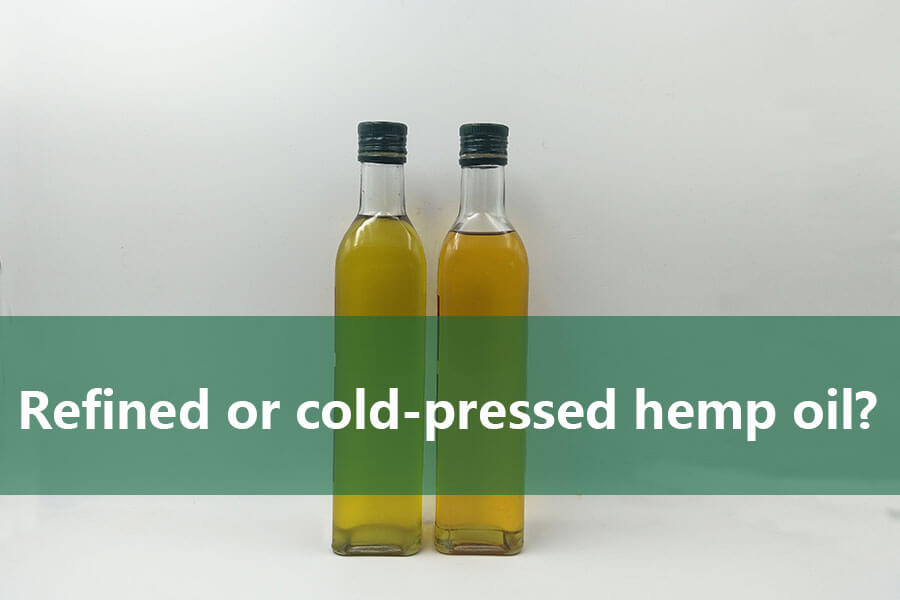
- The final oil retains its natural dark green color, characteristic nutty flavor, and full spectrum of bioactive compounds
This method is analogous to extra virgin olive oil production and is considered the gold standard for preserving nutritional integrity.

2.2 Refined Hemp Oil
Refined hemp oil undergoes a series of industrial processing steps designed to improve the oil’s appearance, odor neutrality, and shelf stability. Typical refining stages include:
| Refining Stage | Method | Purpose |
|---|---|---|
| Degumming | Water or acid treatment | Removes phospholipids |
| Neutralization | Alkali washing (NaOH) | Removes free fatty acids |
| Bleaching | Activated clay/charcoal | Removes pigments (chlorophyll, carotenoids) |
| Deodorization | Steam distillation at 200–270°C | Removes volatile compounds, odors |
| Winterization (optional) | Cold precipitation | Removes waxes and clouding agents |
The result is a pale yellow, odor-neutral, visually clear oil with extended shelf life — but significantly reduced nutritional value.
3. Side-by-Side Comparison
| Property | Cold-Pressed Hemp Oil | Refined Hemp Oil |
|---|---|---|
| Processing Temperature | ≤40°C | 200–270°C |
| Chemical Treatment | None | Alkali, bleaching agents |
| Color | Dark green | Pale yellow / colorless |
| Flavor & Aroma | Nutty, grassy, characteristic | Neutral, odorless |
| Omega-3 (ALA) Content | ~18–22% | Partially degraded |
| Omega-6 (LA) Content | ~55–60% | Partially degraded |
| GLA Content | 1–4% | Significantly reduced |
| Vitamin E (Tocopherols) | High (80–100 mg/100g) | Significantly reduced |
| Chlorophyll & Carotenoids | Present | Removed |
| Phytosterols | High | Reduced |
| Shelf Life | 6–12 months (refrigerated) | 18–24 months (ambient) |
| Storage Requirements | Cool, dark, airtight | Ambient, light-tolerant |
| Primary Applications | Food, nutrition, nutraceuticals | Cosmetics, topical formulations |
| Certifiable as Organic Food | ✅ Yes | ✅ Yes (but nutritional claims limited) |
4. Nutritional Impact of Refining
4.1 Essential Fatty Acid Degradation
The high-temperature deodorization stage (200–270°C) is the most damaging step in the refining process. Research by Choo et al. (2007) and Matthäus (2012) has demonstrated:
- Trans fatty acid formation: Prolonged exposure to temperatures above 180°C promotes geometric isomerization of polyunsaturated fatty acids (PUFAs), generating trace trans fats
- Oxidation products: Heat-induced lipid oxidation generates hydroperoxides, aldehydes, and ketones that reduce oil quality and may have negative health implications at high consumption levels
- Omega-3 vulnerability: ALA (C18:3), with its three double bonds, is particularly susceptible to heat oxidation and isomerization
4.2 Micronutrient Losses
| Bioactive Compound | Reduction from Refining | Health Relevance |
|---|---|---|
| Vitamin E (Tocopherols) | 50–80% loss | Antioxidant, cell membrane protection |
| Chlorophyll | ~100% removed | Antioxidant, anti-inflammatory |
| Carotenoids (β-carotene) | ~95% removed | Pro-vitamin A, skin health |
| Phytosterols | 30–60% loss | Cholesterol reduction, cell membrane function |
| Polyphenols | 40–70% loss | Anti-inflammatory, antioxidant |
| GLA (Gamma-linolenic acid) | Partially degraded | Anti-inflammatory, skin barrier function |
Data Sources: Matthäus (2012), Oomah et al. (2002), Teh & Birch (2013)
4.3 What Refining Preserves
It is important to note that refining does not eliminate all nutritional value:
- The core fatty acid ratio (omega-6:omega-3 ≈ 3:1) is largely maintained in the final refined oil
- Refined hemp oil retains good skin emolliency and occlusive properties
- The removal of chlorophyll and odor compounds makes refined oil more compatible with sensitive cosmetic formulations and consumers who dislike the grassy flavor
5. Application Guidelines by End Use
5.1 Cold-Pressed Hemp Oil — Best for Food and Nutraceuticals
Cold-pressed hemp oil is the preferred choice when nutritional value is the primary objective:
Recommended Applications:
- Salad dressings, dips, and cold sauces
- Dietary supplements and nutraceutical capsules
- Fortified functional beverages (smoothies, protein drinks)
- Nutritional cooking oils for low-heat preparation (≤40°C)
- Direct supplementation (1-3 tablespoons daily for omega fatty acid support)
⚠️ Important: Cold-pressed hemp oil should not be used for frying or high-heat cooking. The high PUFA content makes it unstable above 160°C. Oxidation at high temperatures degrades the oil rapidly and may produce harmful compounds.
Storage Recommendations:
- Keep refrigerated (2–8°C) after opening
- Store in dark glass bottles to minimize light-induced oxidation
- Consume within 6–8 weeks of opening
- Best consumed before the printed expiry date when stored unopened at ≤15°C
5.2 Refined Hemp Oil — Best for Cosmetics and Topical Formulations
Refined hemp oil is the industry standard for cosmetic and personal care applications:
Recommended Applications:
- Face creams, serums, and moisturizers
- Body lotions and massage oils
- Hair care products (conditioners, scalp treatments)
- Lip balms and lip care products
- Sunscreen and after-sun formulations
- Ointments and therapeutic salves
- OEM/ODM cosmetic manufacturing
Formulation Advantages in Cosmetics:
- Skin compatibility: Comedogenic rating of 0, suitable for all skin types including acne-prone skin
- Fast absorption: Lightweight texture, non-greasy feel
- Neutral odor and color: Allows precise fragrance and color control in formulations
- Extended stability: Longer shelf life reduces product waste in manufacturing
- Emollient properties: Softens and hydrates skin through lipid replenishment
6. Choosing the Right Hemp Oil: Decision Framework
Use the following framework to determine the appropriate oil type for your application:
Is the primary use FOOD / NUTRITION?
    ├── YES → Cold-Pressed Hemp Seed Oil
    │         (preserves full nutritional profile)
    └── NO → Is the primary use COSMETIC / TOPICAL?
                ├── YES → Refined Hemp Seed Oil
                │         (neutral, stable, skin-compatible)
                └── Is high-temperature stability required?
                            └── YES → Refined Hemp Seed Oil
Summary Decision Table
| Your Priority | Recommended Oil Type |
|---|---|
| Maximum nutritional value (omega-3, vitamins) | Cold-Pressed |
| Flavor neutrality for food applications | Refined |
| Cosmetic formulation (skin/hair care) | Refined |
| Long ambient shelf life | Refined |
| Organic food certification and labeling | Cold-Pressed |
| Sports nutrition / functional food enrichment | Cold-Pressed |
| Topical anti-inflammatory (GLA-rich) | Cold-Pressed (with GLA retention) |
7. HEMPLAND’s Hemp Oil Product Range
HEMPLAND offers both cold-pressed and refined hemp seed oil products, all sourced from vertically integrated, certified organic hemp cultivation in Shaanxi, China, with 100% traceability from seed to shipment.
7.1 Organic Cold-Pressed Hemp Seed Oil
| Specification | Details |
|---|---|
| Processing Method | Mechanical cold pressing (≤40°C) |
| Appearance | Dark green, naturally cloudy |
| Omega-3 (ALA) | 18–22% |
| Omega-6 (LA) | 55–60% |
| Vitamin E | ≥80 mg/100g |
| Certifications | USDA Organic, EU Organic |
| Applications | Food, nutraceuticals, dietary supplements |
| Packaging | Bulk drum (180kg), IBC (800kg), custom |
7.2 Organic Refined Hemp Seed Oil
| Specification | Details |
|---|---|
| Processing Method | RBD (Refined, Bleached, Deodorized) |
| Appearance | Pale yellow, clear |
| Omega-3 (ALA) | 15–20% |
| Omega-6 (LA) | 53–58% |
| Odor | Neutral |
| Certifications | USDA Organic, EU Organic |
| Applications | Cosmetics, personal care, OEM |
| Packaging | Bulk drum (180kg), custom |
Both product lines are:
- ✅ Certified Industrial Hemp — No CBD, No THC
- ✅ Heavy metal tested (EU 1881/2006 compliant)
- ✅ Microbiological safety certified
- ✅ Available with full Certificate of Analysis (CoA)
- ✅ OEM / white-label services available
8. Regulatory and Compliance Notes
All HEMPLAND hemp oil products are derived exclusively from industrial hemp seed (the seed portion only) and comply with:
- EU Regulation 2017/2100: THC content <0.2%
- US 2018 Farm Bill: Industrial hemp THC <0.3%
- Chinese Industrial Hemp Standards: Processing of seed portion under approved regulatory framework
- EU Novel Food Regulation: Hemp seed oil (unrefined and refined) is an established food ingredient within the EU
Legal Compliance Statement: HEMPLAND’s hemp seed oil products are produced exclusively from industrial hemp seeds. They contain no CBD, no THC, and no psychoactive compounds of any kind. These products are not classified as controlled substances in jurisdictions where industrial hemp seed products are legally permitted.
9. Conclusion
The choice between cold-pressed and refined hemp seed oil is not a question of quality in absolute terms — it is a question of fitness for purpose:
- Cold-pressed hemp seed oil is the nutritional powerhouse. Its complete fatty acid profile, retained vitamins, GLA content, and bioactive phytonutrients make it the superior choice for food, dietary supplementation, and nutraceutical applications.
- Refined hemp seed oil is the formulator’s workhorse. Its neutral sensory profile, superior shelf stability, and proven skin compatibility make it the dominant choice in cosmetic and personal care manufacturing.
Both forms originate from the same premium hemp seeds, but their divergent processing pathways optimize them for entirely different industries. Understanding this distinction allows buyers to specify the correct product with confidence, avoid unnecessary reformulation, and maximize the value of hemp seed oil in their applications.
References
- Callaway, J. C. (2004). Hempseed as a nutritional resource: An overview. Euphytica, 140(1-2), 65–72.
- Choo, W. S., Birch, J., & Dufour, J. P. (2007). Physicochemical and quality characteristics of cold-pressed flaxseed oils. Journal of Food Composition and Analysis, 20(3-4), 202–211.
- Matthäus, B. (2012). Oil technology. In C. Gupta (Ed.), Technological Innovations in Major World Oil Crops (Vol. 2, pp. 23–92). Springer.
- Oomah, B. D., Busson, M., Godfrey, D. V., & Drover, J. C. G. (2002). Characteristics of hemp (Cannabis sativa L.) seed oil. Food Chemistry, 76(1), 33–43.
- Teh, S. S., & Birch, J. (2013). Physicochemical and quality characteristics of cold-pressed hemp, flax, and canola seed oils. Journal of Food Composition and Analysis, 30(1), 26–31.
- Vonapartis, E., Aubin, M. P., Seguin, P., Mustafa, A. F., & Charron, J. B. (2015). Seed composition of ten industrial hemp cultivars approved for production in Canada. Journal of Food Composition and Analysis, 39, 8–12.
- EFSA Panel on Nutrition, Novel Foods and Food Allergens (NDA). (2020). Safety of hemp seed protein and hemp seed oil as novel foods. EFSA Journal, 18(10), e06242.
Disclaimer: The information in this article is intended for professional food manufacturing, cosmetic formulation, and procurement purposes. It does not constitute medical or health advice. Regulatory status of hemp seed oil may vary by jurisdiction; buyers are responsible for verifying compliance with applicable local regulations.
This article was prepared by the HEMPLAND Nutrition & Processing Research Team. Scientific data is based on peer-reviewed literature. For product-specific technical data sheets or Certificates of Analysis, please contact our sales team directly.
Recommended Products
Matched based on your content

Organic Refined Hemp Seed Oil
100% Certified Organic • Non-GMO Verified • Neutral Flavor • High Smoke Point 232°C

Organic Hemp Seed Oil
100% USDA Organic Certified • Non-GMO Verified • Hexane-Free Extraction • Optimal 3:1 Omega-6…