Golden Hemp Hearts Oil: A Comprehensive Technical Guide for Food Formulators, Cosmetic Manufacturers, and Industrial Buyers
HEMPLAND
Golden Hemp Hearts Oil is a premium-grade hemp seed oil extracted exclusively from the shelled inner kernel (hemp hearts) of Cannabis sativa L. seeds through cold-pressing technology. Unlike conventional green hemp seed oil pressed from whole seeds, golden hemp hearts oil offers a light color, neutral flavor profile, and superior safety profile — free from the chlorophyll, heavy metals, and hull-derived contaminants present in whole-seed oils. This guide provides a technical analysis of golden hemp hearts oil’s nutritional composition, comparative advantages over green hemp oil, food and cosmetic applications, industrial uses, quality specifications, and sourcing considerations for B2B buyers and formulators.
Key Findings:
Golden hemp hearts oil is pressed exclusively from the shelled kernel (hemp hearts), eliminating hull-derived chlorophyll, heavy metals, and anti-nutritional factors.
The oil retains the complete fatty acid profile of hemp seed oil: ~55–60% linoleic acid (LA), ~18–22% alpha-linolenic acid (ALA), and 1–4% gamma-linolenic acid (GLA), with an optimal omega-6 to omega-3 ratio of approximately 3:1.
Light golden color (absorption at 440 nm <0.15) and neutral, nutty flavor make it ideal for delicate culinary applications where green oil would discolor or overpower.
Heavy metal content is significantly lower than whole-seed oils, making golden hemp hearts oil suitable for infant nutrition, pediatric products, and premium cosmetic formulations.
Cold-pressing at temperatures ≤40°C preserves thermolabile nutrients including tocopherols, phytosterols, and polyunsaturated fatty acids.
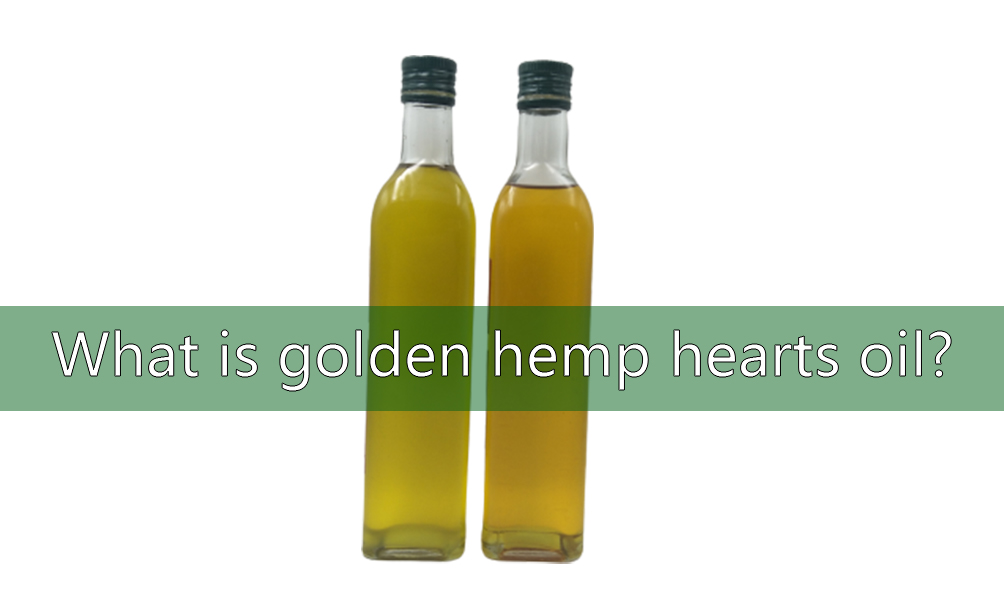
Golden Hemp Hearts Oil is a specialized grade of hemp seed oil produced by mechanically cold-pressing the shelled inner kernel (hemp hearts) of mature Cannabis sativa L. seeds. The term “golden” refers to the oil’s characteristic light yellow to pale golden color — a direct result of excluding the seed’s outer hull during processing.
Characteristic
Golden Hemp Hearts Oil
Conventional Green Hemp Oil
Raw Material
Shelled hemp hearts (hull removed)
Whole hemp seeds (with hull)
Color
Pale golden / light yellow
Dark green
Flavor
Mild, nutty, neutral
Grassy, bitter, pronounced
Chlorophyll Content
Negligible (<5 mg/kg)
High (100–500 mg/kg)
Heavy Metal Risk
Very low (hull excluded)
Higher (hulls concentrate metals)
Primary Applications
Premium food, cosmetics, infant nutrition
Standard food, industrial, feed
Processing Complexity
Higher (requires hulling + pressing)
Lower (direct pressing)
Market Availability
Limited (specialized processors)
Widespread
1.2 The Hulling Process: Critical First Step
The production of golden hemp hearts oil begins with mechanical dehulling — the removal of the seed’s fibrous outer shell. This process is essential for three reasons:
Chlorophyll elimination: The hull contains chlorophyll, which imparts the dark green color and grassy-bitter flavor to whole-seed oils. Removing the hull yields a color-stable, flavor-neutral oil.
Heavy metal reduction: Hemp seed hulls can accumulate heavy metals from soil (particularly cadmium and lead). Dehulling removes this contamination vector, producing oil with significantly lower heavy metal content.
Anti-nutritional factor removal: The hull contains fiber and phytic acid that can interfere with mineral absorption and oil stability. Hulled oil offers superior bioavailability and shelf life.
Processing Stage
Temperature
Purpose
Output
Cleaning & Sorting
Ambient
Remove debris, immature seeds
Clean whole seeds
Dehulling
<35°C
Remove outer hull mechanically
Hemp hearts + hulls (separated)
Cold Pressing
≤40°C
Extract oil without heat damage
Crude golden oil + press cake
Cold Filtration
<25°C
Remove particulates
Filtered golden oil
Storage
4–15°C
Prevent oxidation
Finished product
2. Nutritional and Chemical Composition
2.1 Fatty Acid Profile
Golden hemp hearts oil retains the complete fatty acid spectrum that makes hemp seed oil nutritionally exceptional:
Fatty Acid
Content (% of total fat)
Health Significance
Linoleic Acid (LA, Omega-6)
55–60%
Essential fatty acid; precursor to GLA and ARA
Alpha-Linolenic Acid (ALA, Omega-3)
18–22%
Plant-based omega-3; anti-inflammatory precursor
Gamma-Linolenic Acid (GLA)
1–4%
Rare omega-6 with direct anti-inflammatory effects
Oleic Acid (Omega-9)
8–12%
Monounsaturated; heart-protective
Stearidonic Acid (SDA)
0.5–1.5%
Omega-3 intermediate; efficiently converted to EPA
Palmitic Acid (Saturated)
5–7%
Stable saturated fat
Stearic Acid (Saturated)
2–3%
Neutral saturated fat
Omega-6 to Omega-3 Ratio: Approximately 3:1 — among the most favorable ratios of any edible oil and closely aligned with WHO dietary recommendations (4:1 or lower).
2.2 Bioactive Compound Content
Compound
Content Range
Function
Total Tocopherols (Vitamin E)
80–150 mg/100g
Primary antioxidant; protects oil from oxidation
— Alpha-tocopherol
10–20 mg/100g
Most bioactive vitamin E form
— Gamma-tocopherol
60–120 mg/100g
Major antioxidant in hemp oil
Phytosterols
400–600 mg/100g
Cholesterol-lowering; anti-inflammatory
— Beta-sitosterol
250–350 mg/100g
Primary phytosterol
— Campesterol
80–120 mg/100g
Secondary phytosterol
Polyphenols
50–100 mg GAE/100g
Antioxidant; UV protection
Chlorophyll
<5 mg/kg
Negligible (vs. 100–500 mg/kg in green oil)
Carotenoids
5–15 mg/kg
Light color; minimal vs. green oil
2.3 Comparison: Golden vs. Green Hemp Oil
Parameter
Golden Hemp Hearts Oil
Green Hemp Seed Oil
Significance
Appearance
Pale golden, transparent
Dark green, opaque
Golden oil preferred for color-sensitive applications
Flavor Intensity
Mild, nutty, neutral
Strong, grassy, bitter
Golden oil suitable for delicate dishes
Chlorophyll
<5 mg/kg
100–500 mg/kg
Chlorophyll accelerates oxidation; green oil less stable
Heavy Metals (Cd, Pb)
<0.05 mg/kg
0.1–0.5 mg/kg
Golden oil safer for infants, sensitive populations
Oxidative Stability
Higher (no chlorophyll pro-oxidant)
Lower
Golden oil longer shelf life
Vitamin E Content
80–150 mg/100g
80–150 mg/100g
Equivalent; both excellent sources
Omega Fatty Acids
55–60% LA, 18–22% ALA
55–60% LA, 18–22% ALA
Equivalent nutritional value
Price Point
Premium
Standard
Golden oil reflects additional processing
3. Food and Culinary Applications
3.1 Advantages in Food Formulation
The neutral color and mild flavor of golden hemp hearts oil make it uniquely versatile for food applications where green hemp oil would be unsuitable:
Application
Why Golden Oil Excels
Usage Rate
Salad dressings & vinaigrettes
Light color doesn’t discolor vegetables; neutral flavor lets herbs shine
15–30% of oil blend
Mayonnaise & emulsified sauces
Pale color maintains white/cream appearance
10–20% of total fat
Marinades
Neutral base carries spice and herb flavors
5–15% of marinade
Dips & hummus
Doesn’t impart green tint to beige/cream bases
5–10% of recipe
Protein shakes & smoothies
No green color in vanilla, strawberry, or neutral flavors
1–2 tablespoons per serving
Baked goods
No green discoloration in light-colored products
10–25% of fat content
Plant-based cheeses
Creamy white appearance maintained
20–40% of fat blend
Infant & pediatric nutrition
Heavy metal safety; neutral taste accepted by infants
As directed by formulation
Oil blending
Neutral carrier for flavor oils; doesn’t alter blend color
30–70% of blend
3.2 Flavor Profile and Sensory Characteristics
Sensory Attribute
Golden Hemp Hearts Oil
Green Hemp Oil
Color (visual)
Pale golden, clear
Dark green, cloudy
Aroma
Mild nutty, slightly sweet
Grassy, earthy, strong
Flavor intensity
Low–moderate
Moderate–high
Bitterness
Minimal
Pronounced
Aftertaste
Clean, brief
Lingering, grassy
Overall acceptability
High (universal)
Moderate (acquired taste)
3.3 Stability in Food Processing
Processing Condition
Suitability
Considerations
Cold applications
✅ Excellent
Optimal use case; all nutrients preserved
Baking (<180°C)
✅ Good
Some ALA degradation; acceptable for most applications
Sautéing (<160°C)
⚠️ Moderate
Use moderate heat; minimize time
Deep frying (>180°C)
❌ Not recommended
High PUFA content makes oil unsuitable for frying
Frozen storage
✅ Excellent
No crystallization issues; stable for 12+ months
4. Cosmetic and Personal Care Applications
4.1 Advantages in Cosmetic Formulation
Golden hemp hearts oil offers distinct advantages over green hemp oil for cosmetic and skincare products:
Cosmetic Application
Golden Oil Advantage
Typical Usage Rate
Facial serums & oils
Light color doesn’t tint skin; non-staining
5–20% of formula
Body lotions & creams
Creamy white appearance maintained
3–10% of oil phase
Lip balms & lipsticks
No green discoloration of pigments
5–15% of oil blend
Hair care products
Clear finish on light-colored hair
1–5% of formula
Baby care products
Heavy metal safety for sensitive infant skin
2–8% of formula
Massage oils
Neutral carrier for essential oils
50–90% of base oil
Sunscreen & UV products
Tocopherols provide antioxidant protection
3–8% of oil phase
Anti-aging formulations
GLA supports skin barrier function
5–15% of active oil blend
4.2 Skin Benefits
Benefit
Active Compound
Mechanism
Evidence Level
Moisturization
LA, ALA, GLA
Reinforces skin lipid barrier; reduces transepidermal water loss
Strong
Anti-inflammatory
GLA → DGLA
Modulates prostaglandin synthesis; reduces redness and irritation
Golden hemp hearts oil has a comedogenic rating of 0 — meaning it does not clog pores. This makes it suitable for:
Acne-prone skin formulations
Non-comedogenic facial products
Oil-free or oil-controlled skincare lines
5. Industrial and Non-Food Applications
5.1 Wood Finishing and Restoration
Golden hemp hearts oil has historical and contemporary use in wood finishing:
Application
Properties Utilized
Benefits
Wood furniture restoration
Penetrating oil; polymerizing finish
Restores luster to dry wood; non-toxic alternative to petroleum-based finishes
Cutting board oil
Food-safe; non-toxic
Safe for food contact; conditions and protects wood
Painted surface finishing
Light color; non-yellowing
Won’t alter painted surface color; provides protective topcoat
Leather conditioning
Emollient properties
Softens and preserves leather goods
5.2 Advantages Over Traditional Wood Oils
Property
Golden Hemp Oil
Linseed Oil
Tung Oil
Mineral Oil
Drying time
Moderate (24–48h)
Slow (48–72h)
Fast (12–24h)
Non-drying
Color change
Minimal
Moderate yellowing
Minimal
None
Food safety
✅ Yes
⚠️ Caution (oxidation products)
⚠️ Caution
✅ Yes
Odor
Mild nutty
Strong
Mild
None
Source
Renewable plant
Renewable plant
Renewable plant
Petroleum
6. Quality Specifications and Standards
6.1 Physical and Chemical Specifications
Parameter
Specification
Test Method
Appearance
Clear, pale golden liquid
Visual
Color (Lovibond)
<20 Yellow / <2.0 Red
AOCS Cc 13e-92
Color (Absorbance at 440 nm)
<0.15
Spectrophotometry
Odor
Mild, nutty, characteristic
Organoleptic
Flavor
Mild, nutty, free from bitterness
Organoleptic
Acid Value
<2.0 mg KOH/g
AOCS Cd 3d-63
Peroxide Value
<5.0 meq O₂/kg
AOCS Cd 8b-90
Moisture & Volatiles
<0.1%
AOCS Ca 2d-25
Insoluble Impurities
<0.05%
AOCS Ca 3a-46
6.2 Fatty Acid Composition Specifications
Fatty Acid
Specification (% of total fatty acids)
Palmitic Acid (C16:0)
5–8%
Stearic Acid (C18:0)
2–4%
Oleic Acid (C18:1)
8–15%
Linoleic Acid (C18:2, Omega-6)
50–65%
Alpha-Linolenic Acid (C18:3, Omega-3)
15–25%
Gamma-Linolenic Acid (C18:3, Omega-6)
0.5–4.0%
Other
< 3%
6.3 Contaminant Limits
Contaminant
Limit
Test Method
THC
<2 ppm (<0.0002%)
HPLC / LC-MS/MS
Heavy Metals (total)
<0.5 mg/kg
ICP-MS
— Lead (Pb)
<0.1 mg/kg
ICP-MS
— Cadmium (Cd)
<0.05 mg/kg
ICP-MS
— Arsenic (As)
<0.1 mg/kg
ICP-MS
— Mercury (Hg)
<0.02 mg/kg
ICP-MS
Pesticide Residues
ND (per EU 396/2005)
GC-MS / LC-MS
Aflatoxin B1
<2 µg/kg
HPLC
Total Aflatoxins
<4 µg/kg
HPLC
Benzo(a)pyrene
<2 µg/kg
HPLC
7. Storage, Handling, and Shelf Life
7.1 Storage Recommendations
Parameter
Recommendation
Rationale
Temperature
4–15°C (refrigerated preferred)
Minimizes oxidation rate
Container
Amber glass or opaque HDPE
Blocks UV-induced oxidation
Headspace
Minimize; nitrogen flush if possible
Reduces oxygen exposure
Shelf life (unopened)
12–18 months
With proper storage
Shelf life (opened)
3–6 months
Refrigerate after opening
Freezer storage
Up to 24 months
Best for long-term preservation
7.2 Signs of Degradation
Indicator
Fresh Oil
Degraded Oil
Color
Pale golden
Dark yellow / brown
Clarity
Clear
Cloudy / particulates
Odor
Mild, nutty
Rancid, fishy, paint-like
Flavor
Mild, nutty
Bitter, acrid
Peroxide value
<5 meq O₂/kg
>10 meq O₂/kg
8. Global Regulatory Status
Region
Regulatory Classification
THC Limit
Notes
United States
Food ingredient (GRAS); cosmetic ingredient
<0.3%
USDA Organic certification available
European Union
Approved food ingredient; cosmetic ingredient
<0.2% in hemp products
EU Organic certification available; Novel Food exempt for hemp seeds
Canada
Approved food; cosmetic ingredient
<10 µg/g in food
Health Canada regulated
China
Approved food ingredient
Variety-specific
Must use approved industrial hemp cultivars
Australia & New Zealand
Approved food (FSANZ)
<0.3%
Hulled seeds and derived oils specifically approved
Japan
Approved food ingredient
<0.001% in finished products
Strictest THC limits globally
9. Buyer’s Quality Checklist
When sourcing golden hemp hearts oil, request a Certificate of Analysis (CoA) confirming:
Parameter
Specification
Criticality
Origin of raw material
Certified organic hemp hearts
High
Extraction method
Cold-pressed, ≤40°C
High
Color (Lovibond or absorbance)
<20Y/2R or <0.15 @ 440 nm
High (defines “golden” grade)
Acid value
<2.0 mg KOH/g
High (freshness indicator)
Peroxide value
<5.0 meq O₂/kg
High (oxidation state)
THC content
<2 ppm
High (regulatory compliance)
Heavy metals (Cd, Pb, As, Hg)
Within Codex/EU limits
Critical (safety)
Fatty acid profile
Within specification ranges
Medium (quality verification)
Tocopherol content
>80 mg/100g
Medium (antioxidant capacity)
Pesticide residues
ND (organic standard)
High (organic claim verification)
Microbiological
Within food-grade limits
High (safety)
Organic certification
USDA Organic / EU Organic
Medium (market positioning)
Non-GMO verification
PCR negative
Medium (clean label)
10. HEMPLAND Golden Hemp Hearts Oil Product Overview
SKU
Product Name
Grade
Volume Options
Key Certifications
GHH-CP-ORG
Golden Hemp Hearts Oil — Cold Pressed
Food grade
1L, 5L, 20L, 200L drums
USDA Organic, EU Organic, Non-GMO
GHH-CP-COS
Golden Hemp Hearts Oil — Cosmetic Grade
Cosmetic grade
1L, 5L, 20L, 200L drums
Cosmos-approved, EU Organic, Non-GMO
GHH-CP-BULK
Golden Hemp Hearts Oil — Bulk Industrial
Technical grade
1000L IBC, flexitank
Available with custom specs
HEMPLAND Specifications:
Cold-pressed at ≤40°C from certified organic hemp hearts
THC content: <2 ppm (tested per batch)
Color: <15 Yellow Lovibond (premium golden grade)
Acid value: <1.5 mg KOH/g
Heavy metals: <50% of EU regulatory limits
Origin: China, Europe, or North America (customer preference)
References
Callaway, J. C. (2004). Hempseed as a nutritional resource: An overview. Euphytica, 140(1–2), 65–72. https://doi.org/10.1007/s10681-004-4811-9
Oomah, B. D., Busson, M., Godfrey, D. V., & Drover, J. C. (2002). Characteristics of hemp (Cannabis sativa L.) seed oil. Food Chemistry, 76(1), 33–43. https://doi.org/10.1016/S0308-8146(01)00245-X
Callaway, J. C., Schwab, U., Harvima, I., et al. (2005). Efficacy of dietary hempseed oil in patients with atopic dermatitis. Journal of Dermatological Treatment, 16(2), 87–94. https://doi.org/10.1080/09546630510035832
Schwab, U. S., Callaway, J. C., Erkkilä, A. T., et al. (2006). Effects of hempseed and flaxseed oils on the profile of serum fatty acids in healthy adults. Prostaglandins, Leukotrienes and Essential Fatty Acids, 74(1), 11–18. https://doi.org/10.1016/j.plefa.2005.08.002
Farinon, B., Molinari, R., Costantini, L., & Merendino, N. (2020). The seed of industrial hemp (Cannabis sativa L.): Nutritional quality and potential functionality for human health and nutrition. Nutrients, 12(7), 1935. https://doi.org/10.3390/nu12071935
Simopoulos, A. P. (2002). The importance of the ratio of omega-6/omega-3 essential fatty acids. Biomedicine & Pharmacotherapy, 56(8), 365–379. https://doi.org/10.1016/S0753-3322(02)00253-6
Leonard, W., Zhang, P., Ying, D., & Fang, Z. (2020). Hempseed in food industry: Nutritional value, health benefits, and industrial applications. Comprehensive Reviews in Food Science and Food Safety, 19(1), 282–308. https://doi.org/10.1111/1541-4337.12517
Zietsman, A. J., NonNull, N. P., & Zhao, Y. (2020). High-pressure processing of hemp (Cannabis sativa L.) seed oil: Impact on bioactive lipids. Food Research International, 137, 109637. https://doi.org/10.1016/j.foodres.2020.109637
Leizer, C., Ribnicky, D., Poulev, A., Dushenkov, S., & Raskin, I. (2000). The composition of hemp seed oil and its potential as an important source of nutrition. Journal of Nutraceuticals, Functional & Medical Foods, 2(4), 35–53. https://doi.org/10.1300/J133v02n04_04
World Health Organization. (2008). Interim summary of conclusions and dietary recommendations on total fat & fatty acids. WHO Technical Report.
Disclaimer: This article is provided for informational and educational purposes only. The technical data, specifications, and nutritional information cited are sourced from published scientific literature and industry standards; actual values may vary by cultivar, growing region, harvest conditions, and processing method. This content does not constitute medical advice, diagnosis, or treatment. Food and cosmetic manufacturers should conduct their own stability testing and regulatory compliance verification before commercializing products containing hemp seed oil. Regulatory information reflects the status as of the publication date and may be subject to change.