
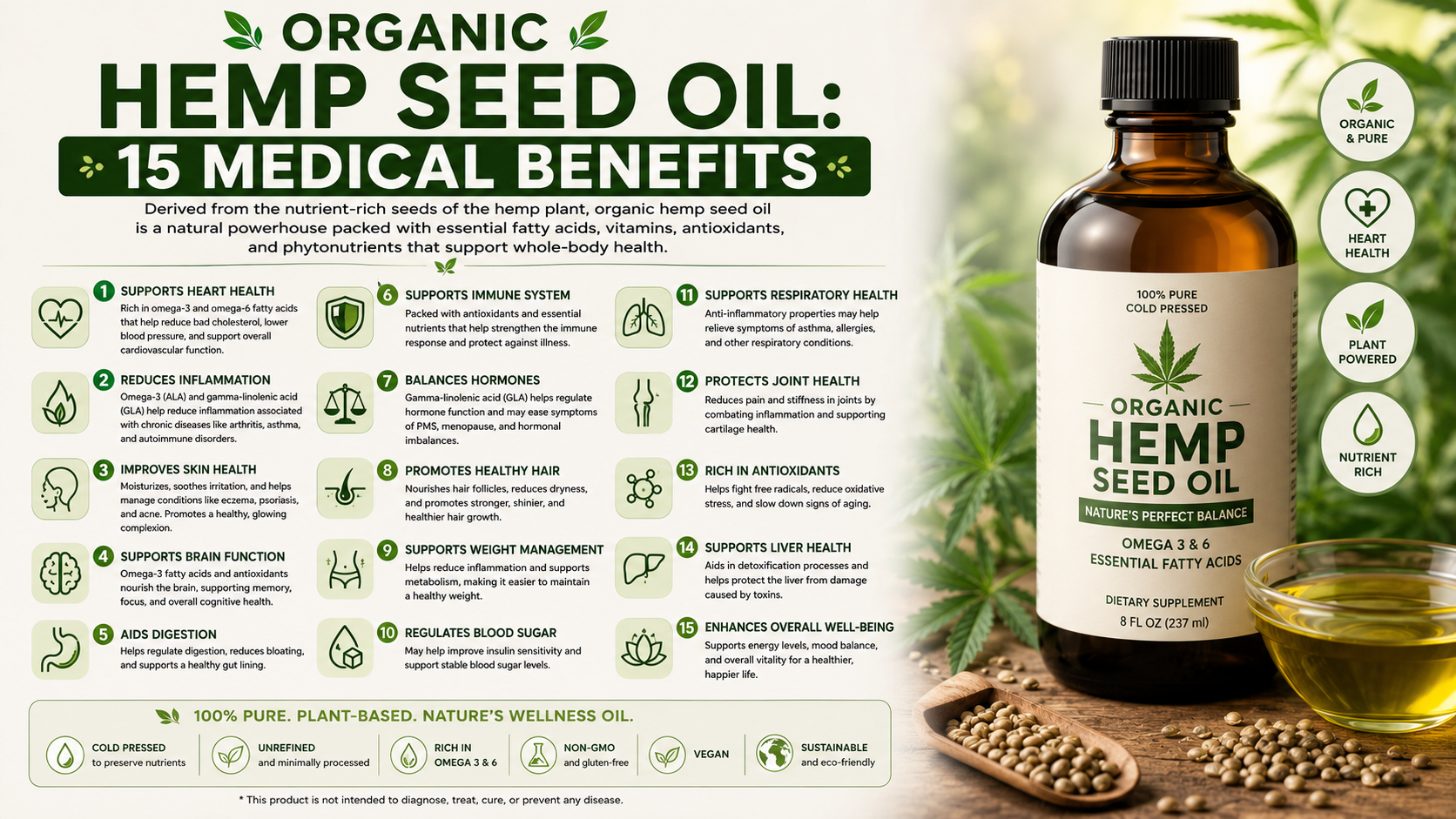
Organic hemp seed oil has moved beyond health food store curiosity to establish itself as a mainstream functional ingredient. Food manufacturers, supplement brands, and wellness product developers increasingly recognize its versatility: a single ingredient that supports skin health, inflammatory response, cardiovascular function, and nutritional enrichment.
This article examines 15 evidence-supported benefits of organic hemp seed oil, providing the technical context that B2B decision-makers need when evaluating this ingredient for product development.
1. Skin Barrier Support and Dermatological Health
Research published in the Journal of Dermatological Treatment demonstrated that topical and dietary hemp seed oil application significantly improved eczema symptoms. The gamma-linolenic acid (GLA) content supports skin barrier function, reducing transepidermal water loss and calming inflammatory skin responses.
For supplement brands developing beauty-from-within products or functional food companies positioning for skin health claims, hemp seed oil provides a science-supported foundation.
2. Inflammatory Response Management
The omega-3 and GLA content in hemp seed oil supports the body’s natural inflammatory response through multiple pathways. GLA converts to dihomo-gamma-linolenic acid (DGLA), which competes with pro-inflammatory arachidonic acid in the inflammatory cascade.
Clinical observations in rheumatoid arthritis patients indicate reduced NSAID requirements with regular hemp seed oil supplementation, suggesting meaningful support for joint comfort and mobility. Sports nutrition and age-management product categories benefit from this anti-inflammatory positioning.
3. Cardiovascular Function Support
The cardiovascular benefits of hemp seed oil extend beyond its omega fatty acid content:
Cholesterol Metabolism: Phytosterols in hemp seed oil compete with cholesterol for intestinal absorption, supporting healthy LDL cholesterol levels. Research indicates potential LDL reductions in the 10-15% range with consistent consumption.
Blood Pressure Support: The arginine content in hemp seed oil supports nitric oxide production, promoting vasodilation and healthy blood pressure maintenance.
Anti-inflammatory Vascular Protection: Reduced arterial inflammation supports long-term cardiovascular health by limiting endothelial dysfunction and plaque formation.
The cardiovascular market represents substantial commercial opportunity, with heart health supplements consistently ranking among the top supplement categories globally.
4. Cognitive Function and Brain Health
Omega-3 fatty acids, particularly alpha-linolenic acid (ALA) from hemp seed oil, support cognitive function through neuronal membrane composition and cerebral blood flow. While direct cognitive enhancement claims require careful regulatory navigation, supporting normal brain function through adequate omega-3 intake has substantial scientific support.
For nootropic supplement formulations or brain health positioned products, hemp seed oil offers a plant-based omega-3 source that avoids fish oil acceptance issues.
5. Hair and Scalp Health
The combination of omega-3 fatty acids, vitamin E, and essential minerals in hemp seed oil supports hair follicle nutrition and scalp health. Omega-3s nourish hair roots, while vitamin E provides antioxidant protection that supports hair integrity.
Functional hair care products, beauty supplements, and nutritional hair treatments increasingly incorporate hemp seed oil for its comprehensive nutrient profile.
6. Digestive Health and Microbiome Support
While hemp seed oil is not fiber-rich, the seed form provides prebiotic fibers that support beneficial gut bacteria. The essential fatty acids also support intestinal membrane integrity and healthy digestive function.
For probiotic supplements, digestive health products, or gut-brain axis positioned functional foods, hemp seed oil complements other gut-supporting ingredients.
7. Metabolic Function Support
Research indicates that hemp seed oil supports healthy metabolism through several mechanisms: improved insulin sensitivity, supporting healthy blood sugar levels, and promoting satiety through protein and fiber content.
Weight management, metabolic health, and blood sugar support product categories benefit from incorporating hemp seed oil.
8. Muscle Recovery and Athletic Performance
Athletes and active individuals benefit from hemp seed oil’s anti-inflammatory properties and complete amino acid profile. The combination supports muscle recovery, joint comfort, and sustained energy.
Sports nutrition formulations incorporating hemp seed oil appeal to consumers seeking natural alternatives to synthetic performance ingredients.
9. Immune System Support
The zinc, iron, and essential fatty acid content in hemp seed oil collectively support immune function. Zinc plays critical roles in immune cell development and signaling, while omega-3s support resolution of inflammatory immune responses.
Immune support supplements and functional foods targeting wellness-conscious consumers benefit from hemp seed oil inclusion.
10. Bone Health
The combination of magnesium, calcium, and phosphorus in hemp seed oil supports bone mineral density and musculoskeletal health. Magnesium, often underappreciated in bone health formulations, works synergistically with calcium for bone formation and maintenance.
For calcium supplements, bone health products, and senior nutrition formulations, hemp seed oil provides complementary mineral support.
11. Antioxidant Protection
Hemp seed oil contains natural antioxidant compounds—tocopherols (vitamin E complex), polyphenols, and phytosterols—that protect cells from oxidative damage. This antioxidant capacity also contributes to product stability, extending shelf life without artificial preservatives.
12. Hormonal Balance Support
GLA serves as a precursor to prostaglandins that regulate various hormonal functions. Some research suggests hemp seed oil supports hormonal balance, particularly in women experiencing premenstrual symptoms.
Women’s health supplements and wellness products targeting hormonal harmony incorporate hemp seed oil for this positioning.
13. Allergy-Friendly Nutrition
Hemp seed oil is free from common allergens: no gluten, soy, dairy, eggs, or nuts. This allergen-free profile enables broad consumer accessibility and simplifies label declarations for manufacturers.
14. Sustainable Plant-Based Nutrition
As consumer preference shifts toward plant-based products, hemp seed oil offers a sustainable choice: hemp cultivation requires minimal pesticides, improves soil health, and produces more biomass per acre than many competing oilseed crops.
Sustainability positioning supports premium pricing and aligns with environmental values shared by health-conscious consumer segments.
15. Versatile Culinary Applications
With a smoke point of approximately 165°C (329°F) for cold-pressed varieties, hemp seed oil suits low-to-medium heat cooking applications. The mild, nutty flavor complements salads, dressings, dips, and finishing applications without overwhelming dish profiles.
Nutritional Comparison
| Nutrient (per 15ml serving) | Hemp Seed Oil | Flaxseed Oil | Olive Oil |
|---|---|---|---|
| Omega-3 (ALA) | 2,700mg | 7,200mg | 0mg |
| Omega-6 (LA) | 5,400mg | 1,600mg | 1,800mg |
| GLA | 450mg | 0mg | 0mg |
| Protein | 0g | 0g | 0g |
| Vitamin E | 3.9mg | 0.1mg | 1.9mg |
Note: While flaxseed oil provides more ALA, hemp seed oil offers unique GLA content absent in flaxseed. GLA converts to anti-inflammatory DGLA, offering different physiological benefits.
What Brands Should Know: Quality Differences
Not all hemp seed oils deliver equivalent quality. B2B buyers should understand key differentiators:
Processing Temperature
Cold-pressed extraction below 40°C preserves heat-sensitive nutrients and enzyme activity. Some commercial extraction methods exceed 50°C, degrading nutritional quality. Request processing specifications from suppliers.
Packaging Materials
Light and oxygen exposure accelerates hemp seed oil rancidity. Premium products use dark glass bottles or opaque containers with nitrogen flushing. Clear plastic packaging significantly reduces shelf life and nutrient retention.
Organic Certification
Hemp plants bioaccumulate heavy metals from soil, requiring careful sourcing for applications requiring clean-label positioning. USDA Organic certification ensures pesticide-free cultivation and third-party verification.
Third-Party Testing
Reputable suppliers provide certificates of analysis documenting fatty acid profiles, purity testing (heavy metals, pesticides, microbial contamination), and organic verification. Absence of testing documentation represents a red flag.
Formulation Applications
Organic hemp seed oil integrates across diverse product categories:
Supplements: Softgels, capsules, liquid tinctures, and functional gummies targeting skin, joint, cardiovascular, or general wellness positioning.
Functional Foods: Energy bars, granola products, nut and seed mixes, and nutritional snacks.
Beverages: Wellness drinks, protein shakes, and beauty-positioned beverages.
Personal Care: Topical applications, beauty supplements, and ingestible beauty products.
Pet Nutrition: Omega fatty acid supplementation for skin, coat, and joint health.

Conclusion
Organic hemp seed oil delivers 15 evidence-supported benefits spanning skin health, inflammatory response, cardiovascular function, cognitive support, and metabolic health. The combination of nutritional density, clean-label positioning, and versatile application makes it a compelling ingredient for food manufacturers, supplement brands, and wellness product developers.
Quality varies significantly across suppliers. B2B buyers should prioritize certified organic sources, cold-pressed processing, proper packaging, and comprehensive third-party testing documentation.
HEMPLAND (Shaanxi) Organic Agri-Tech Inc. supplies organic hemp seed oil to manufacturers and brands worldwide, with full organic certification, cold-pressed quality preservation, and complete testing documentation.