Why there are three different hemp seed formats
Walk into any health food store or browse a bulk ingredient catalog online and you will find hemp seeds sold at least three ways: whole hemp seeds, hemp hearts, and 3mm hemp seeds. To a first-time buyer, the differences might seem minor, aren’t they all just hemp seeds? But the distinctions matter for nutrition, texture, price, and what you can actually do with each format in the kitchen or on a production line.
The three formats represent different stages of processing. Whole hemp seeds are as close to the field as a consumer product gets, the seed still wears its hull. Hemp hearts are the most processed: the hull has been fully removed, leaving the soft, pale kernel. The 3mm format sits between them, with the hull taken off but the kernel sized to a uniform dimension.
The three formats compare across measurable criteria: nutritional content, processing method, cost, shelf life, and best-use scenarios. Whether you are buying for home cooking, product development, or bulk ingredient supply, knowing the differences saves money and avoids mismatched expectations.
What each format actually is
Whole hemp seeds
A whole hemp seed has two parts: an outer hull (the shell) and an inner kernel (the seed). The hull is hard, grey-brown, and made mainly of insoluble fiber and minerals. It is edible in the sense that it passes through the digestive system, but chewing it is like chewing a sunflower seed shell, unpleasant and gritty.
In commercial use, whole seeds are bought mainly by dehulling processors who remove the hull and sell the kernels as higher-value products. Some end consumers buy whole seeds for sprouting or for grinding into a high-fiber flour, but those are niche uses. You almost never see whole hemp seeds sold as a ready-to-eat topping because the hull is too hard to enjoy.
Hemp hearts
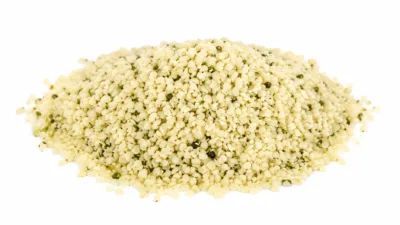
Hemp hearts (also called hulled hemp seeds, shelled hemp seeds, or hemp kernels) are what remains after the hull is fully removed. They have a soft texture, a buttery mouthfeel when chewed, and a mild nutty flavor. They are the most widely available retail form in North America and Europe, sold in bags from 200 grams to 1 kilogram.
Hemp hearts run about 4 to 5mm at their longest dimension and are irregular in shape. They have a pale green-to-cream color and a natural oiliness on the surface because the kernel’s fat is exposed once the hull is gone. This is the form most consumers picture when they hear “hemp seeds.”
3mm hemp seeds
The 3mm format is also hulled, the hull has been removed, but the kernels are sized to a more uniform dimension of about 3 millimeters. This is done by running the general hulled seed output through calibrated screens and keeping the fraction that falls within a specific range (for example, passing 3mm but retained on 2.5mm).
The result is a seed that looks and behaves differently from a standard hemp heart. The smaller, more uniform size makes 3mm seeds easier to fold into dry blends and granolas where particle consistency matters. The slightly firmer chew (next to the very soft hemp heart) gives them a more distinct presence in bar and topping applications. HEMPLAND’s organic hemp seeds 3mm are produced to this specification for food manufacturers and retail packers who need consistency.
Hemp seed kernels: what the term means on a spec sheet
Two names for the same material sit next to each other in purchasing documents: hemp seed kernels and hemp hearts. A hemp seed kernel is the pale inner kernel left once the green hull is removed, which is exactly what a hemp heart is. A supplier who writes kernels is describing hearts, and a specification written against one name holds against the other.
The distinction that does matter is the one against whole seed. Whole hemp seeds keep the hull, and with it most of the structural fibre, so whole seed carries 25% to 30% dietary fibre and 22% or higher protein. Dehulled hemp seed kernels carry 4 to 6 g of fibre per 100 g and 30% or higher protein. If a purchase order says hemp seed kernels, the receiving specification should still name the green hull fraction, because that is the one grading variable that separates a clean ivory product from one with visible green flecks.
Are hemp seed kernels and hemp hearts the same product?
They are. Both describe the kernel with the green hull removed, and the material behind them carries the same protein figure and the same four hull fractions, from under 5% green hull up to 15% to 20%. The name a supplier prints on the bag is a labelling habit rather than a different product, so compare the green hull percentage and the protein basis on the two documents before treating the offers as separate items. Buyers who want this specification in one place will find the same figures on our bulk organic hemp hearts product page.
Processing: how the three formats are made
The processing path decides not just the format but also the nutritional profile, shelf life, and cost of each type.
| Processing Stage | Whole Seeds | 3mm Seeds | Hemp Hearts |
|---|---|---|---|
| Harvest and clean | Yes | Yes | Yes |
| Dehull | No | Yes | Yes |
| Size-grade to 3mm | No | Yes | No (mixed sizes) |
| Optical sort | Sometimes | Yes | Yes |
| Nitrogen flush pack | Optional | Standard | Standard |
Whole seeds
Whole seeds skip dehulling entirely. They are harvested, cleaned to remove stems and foreign material, and packed. That short processing chain is why whole seeds are the cheapest format to produce.
3mm seeds
3mm seeds go through dehulling, then an extra sizing step. The added handling costs more but delivers uniformity. Optical sorting matters because any hull fragments that survive dehulling need to come out, a single dark hull piece in a bag of pale 3mm kernels is obvious to the consumer.
Hemp hearts
Hemp hearts are dehulled and optically sorted but not size-graded. They contain the full range of kernel sizes from the dehulling run, typically 2 to 6mm. This is the standard bulk output of a dehulling line and the format most processors make the most of.
HEMPLAND’s organic hemp hearts are dehulled, optically sorted, and packed without size grading, which represents the standard retail hemp heart format.
Nutritional comparison
All three formats come from the same seed, but the presence or absence of the hull changes the nutritional numbers.
Whole seeds vs 3mm seeds, the hull makes the difference
The hull of a hemp seed is roughly 35 to 40 percent fiber, with the remainder being minerals and structural carbohydrates. When the hull is removed, the fiber drops and the relative percentages of protein and fat rise because they are concentrated in the kernel.
Here is a comparison per 30-gram serving, using USDA FoodData Central values and published processing data:
| Nutrient (per 30g) | Whole Seeds (with hull) | 3mm Hemp Seeds (hulled) | Hemp Hearts (hulled) |
|---|---|---|---|
| Calories | ~120 kcal | ~166 kcal | ~170 kcal |
| Protein | ~7.0 g | ~9.5 g | ~9.5 g |
| Total Fat | ~9.0 g | ~14.6 g | ~15.0 g |
| Saturated Fat | ~0.8 g | ~1.4 g | ~1.4 g |
| Polyunsaturated Fat | ~7.0 g | ~10.9 g | ~11.0 g |
| Monounsaturated Fat | ~0.9 g | ~1.6 g | ~1.7 g |
| Carbohydrates | ~8.0 g | ~2.6 g | ~2.0 g |
| Dietary Fiber | ~6.0 g | ~1.2 g | ~1.0 g |
| Iron (mg) | ~3.0 | ~2.4 | ~2.4 |
| Magnesium (mg) | ~260 | ~210 | ~210 |
The pattern is clear: whole seeds have more fiber and fewer calories per gram because the indigestible hull dilutes the energy-dense kernel. 3mm seeds and hemp hearts are nutritionally very close, the small differences come from residual hull fragments in the 3mm fraction versus the more complete dehulling that hearts represent.
Protein quality
The protein quality is identical across formats. Hemp protein contains all nine amino acids the body must get from food. The edestin and albumin fractions that make up most of hemp’s protein are the same whether the hull is present or not. What changes is the percentage of protein by weight, higher in hulled formats, lower in whole seeds.
Fatty acid profile
The omega-6 to omega-3 ratio of hemp oil is about 2.5 to 3 to 1. This ratio is the same whether you eat whole seeds, 3mm seeds, or hearts, the oil composition is a property of the kernel, not the hull. What differs is the absolute amount of fat per serving, which is about 60 percent higher in the hulled formats because there is more kernel per gram.
Price comparison
Processing adds cost, and cost shows up in price. Here is how the three formats typically rank in the market.
Whole hemp seeds
Whole hemp seeds sit at the lowest price per kilogram. The minimal processing means lower production costs. However, whole seeds are heavier per unit of usable nutrition because the hull accounts for roughly 30 to 40 percent of the weight. Once you calculate the cost per gram of protein or fat actually available, the price advantage narrows.
3mm hemp seeds
3mm hemp seeds fall in the mid-range. The extra sizing step adds cost over standard hearts. For food manufacturers who need uniform particle size, that premium is offset by reduced production waste (fewer rejected bars or inconsistent granola clusters) and faster line speeds.
Hemp hearts
Hemp hearts are the standard retail product. Pricing is competitive because hearts are produced in the highest volume. Brands package hearts at price points consumers already know from other seeds and nuts, in the range of $8 to 15 per pound at retail.
For bulk buyers, volume discounts apply across all three formats, though 3mm seeds may have longer lead times if the supplier needs to accumulate enough 3mm fraction to fill a full container.
Texture and mouthfeel
This is where the three formats diverge most noticeably, and where picking the wrong one can ruin a product concept.
Whole seeds: hard, gritty, shell-like. Biting into one feels like biting a tiny stone. They do not soften with cooking or baking. Use them only for sprouting or grinding, never for direct eating as-is.
3mm seeds: firm with a noticeable “pop” when bitten. The texture is closer to a small sunflower kernel than to a soft nut. They hold their shape in granola and give textural contrast in bars. Eaten by the spoonful, they have a pleasant chew that takes slightly longer to break down than hearts.
Hemp hearts: soft, almost creamy, with a melt-in-the-mouth quality. They break down quickly and leave a subtle buttery coating. Hearts work where you want the nutritional boost without texture interference, smoothies, yogurt toppings, sauces, dressings.
The texture difference between 3mm and hearts is the main reason product developers sometimes choose one over the other. A granola brand that wants visible seed identity and a bit of crunch might choose 3mm. A smoothie-boost brand that wants the seeds to blend invisibly might choose hearts.
Best-use scenarios for each format
When to choose whole seeds
- Home sprouting: the hull protects the kernel until germination begins. After sprouting, the hull is rinsed away or falls off. Sprouted hemp seeds have a crisp, slightly sweet taste.
- Grinding into flour: if you are making hemp flour for high-fiber baking, whole seeds are the most cost-effective starting point. A home grain mill or high-speed blender can reduce them to powder. For guidance on how much seed to use, see our guide on hemp seed effects and appropriate amounts.
- Seed saving and planting: if you plan to plant hemp (where legally permitted), you need whole seeds with intact hulls. Hulled seeds will not germinate.
Whole seeds are rarely the right choice for direct eating or for inclusion in finished food products. Their primary value is as an input material.
When to choose 3mm hemp seeds
- Granola manufacturing: uniform size means even distribution and consistent cluster formation. 3mm seeds do not sink to the bottom of the mixing drum.
- Protein and snack bars: they integrate into the binder without creating lumpy textures but still provide visible seed identity on the bar surface and in cross-section.
- Baking mixes: in pancake, bread, and muffin mixes, 3mm seeds stay suspended in the dry mix rather than migrating to the bottom of the package.
- Topping blends: mixed with other seeds and nuts of similar size for salad or yogurt toppings, 3mm seeds create a blend where no ingredient dominates visually.
- Retail packs wanting a premium look: the uniformity of 3mm seeds photographs well and looks deliberate in clear packaging.
For the full specification, see our organic hemp seeds 3mm complete guide. View HEMPLAND’s organic hemp seeds 3mm for specification details and current availability.
When to choose hemp hearts
- Smoothies and shakes: hearts blend easily into liquid without leaving gritty residue.
- Yogurt and oatmeal topping: the soft texture means hearts do not interfere with the creamy base.
- Hemp milk: ground hearts plus water plus straining make a creamy plant-based milk at home.
- Salad garnish: a sprinkle of hearts adds nutrition without changing the salad’s texture.
- Sauces and dressings: blended hearts create a creamy base similar to cashew cream but with a different nutritional profile.
- Direct snacking: hearts are enjoyable eaten straight from the bag, which supports repeat purchase for retail brands.
Browse HEMPLAND’s organic hemp hearts for retail and bulk options.
Shelf life and storage differences
The hull acts as a natural barrier against oxygen, light, and moisture. Removing it exposes the kernel’s oils to oxidation. This is the main reason whole seeds last longer than hulled products.
Whole seeds: 18 to 24 months under cool, dry, dark storage. The hull protects the oil-rich kernel. Some buyers store whole seeds and dehull them closer to the production date to maximize the shelf life of the finished product.
3mm seeds: 12 to 18 months when nitrogen-flushed and stored below 15°C (59°F). Once the package is opened and exposed to air, the clock speeds up. Partially used bags should be sealed and refrigerated if not used within a few weeks.
Hemp hearts: 10 to 15 months. Hearts may have a slightly shorter shelf life than 3mm seeds because the larger, irregular kernel surface presents more area where oxidation can begin. The soft texture also means hearts show rancidity earlier as off-flavors.
All three formats benefit from cold storage (refrigerated after opening, frozen for long-term reserve), opaque packaging, and nitrogen flushing. A supplier who cannot provide accelerated shelf-life testing data for their hulled products is not controlling their processing conditions adequately.
B2B purchasing: which format for your product?
If you are sourcing hemp seeds for a commercial food product, your decision should follow product requirements first and price second. Here is a decision framework.
What is the product format?
- Dry blend (granola, trail mix, muesli) leads to 3mm seeds for size consistency
- Wet or semi-wet (protein bars, energy balls) leads to 3mm seeds or hearts depending on desired texture
- Liquid (smoothie base, milk) leads to hearts, ground before or during processing
- Baked good (bread, crackers) leads to 3mm seeds for visible inclusion, ground hearts for invisible enrichment
What is the texture goal?
- Textural contrast wanted leads to 3mm seeds
- Smooth, undetectable inclusion leads to hearts or ground hearts
- Crunchy, distinct pieces leads to 3mm seeds
What claims does the product make?
- High-fiber claim leads to whole seeds (ground) for more fiber
- High-protein claim leads to hearts or 3mm, which have higher protein density
- Organic certified means all three formats must carry organic certification from source
What is the package format?
- Clear bag or pouch leads to 3mm seeds, which photograph well as uniform particles; hearts can look mushy in transparent packaging if oils separate
- Opaque carton means either format, since visual appearance matters less
For specification sheets, organic certificates, and pricing on all three formats, HEMPLAND’s sales team can provide current documentation. Visit organic hemp seeds 3mm and organic hemp hearts for product pages.
Common questions about choosing a format
Are 3mm seeds just smaller hemp hearts?
Partially. They are smaller, but also more uniform. Hemp hearts can range from 2mm to 6mm in a single bag. The 3mm specification means the entire lot has been screened to a narrow size band. The mouthfeel difference, firmer bite on 3mm, softer on hearts, is noticeable enough that bakers and bar manufacturers treat them as distinct ingredients.
Can I use hearts where a recipe calls for 3mm seeds?
Usually yes, but the result will have a softer texture and the seeds will be less visible. In granola, hearts tend to crumble and blend into the oat matrix, while 3mm seeds stay as recognizable seed shapes. In baked goods, hearts soften almost completely, while 3mm seeds keep a slight bite.
Why would anyone buy whole seeds?
Mostly for sprouting, seed-saving, or milling into hemp flour at home. The cost per bag is lower, but the usable nutrition per dollar is actually worse than hulled seeds once you account for the hull weight. Whole seeds are a processing input, not a finished food.
Is there a nutritional reason to choose 3mm seeds over hearts?
Not meaningfully. The nutritional differences between 3mm seeds and hearts are too small to matter for daily intake. Choose based on texture, application, and pricing, not on micronutrient differences of a few percent.
For broader context on how hemp seeds compare to other seeds, see Hemp Hearts vs Chia Seeds and What Are Hemp Hearts?.
Making the right purchase decision
The choice between whole hemp seeds, 3mm hemp seeds, and hemp hearts comes down to what you are making and how you want it to turn out.
For home cooks who want a versatile ingredient that disappears into smoothies and sprinkles nicely on oatmeal, standard hemp hearts are the default choice. They are widely available, fairly priced, and work in nearly every recipe a home user would try.
For product developers and manufacturers working on granola, bars, baking mixes, or retail seed packs, the 3mm specification from HEMPLAND is worth the premium because the size uniformity translates to production consistency. A granola that looks the same in every bag and a protein bar with the same seed distribution in every serving are objectives that random-sized hearts struggle to meet.
For the few use cases where the hull itself has value, sprouting, seed saving, or high-fiber flour milling, whole hemp seeds serve a purpose that hulled products cannot replicate.
Conclusion
Whole hemp seeds, 3mm hemp seeds, and hemp hearts are the same plant material at three different processing stages, and the differences are practical, not just academic. The hull changes the nutrition, the sizing changes the production behavior, and both together change the price and the shelf life.
Standard hemp hearts work for most home and retail applications. The 3mm format exists because food manufacturers and brands have specific texture, appearance, and mixing requirements that standard hearts cannot satisfy. Whole seeds have a narrow but real niche around sprouting and milling.
Understanding these differences before you buy means you get the product that actually fits your recipe, your production line, or your brand concept, not the one that happened to be cheapest per kilogram.
HEMPLAND supplies all three formats with documentation, organic certification, and quality testing. View organic hemp seeds 3mm and organic hemp hearts for current product information.
Contact Us to discuss your requirements or request samples for product testing.
Recommended Products
Bulk Organic Hemp Hearts
Bulk organic hemp hearts, the hulled hemp seed kernels with the green shell removed,…
Related Posts