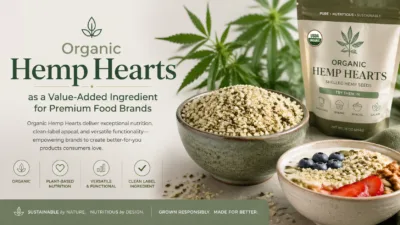
The ketogenic diet has held steady in popularity, and one question keeps surfacing among low-carb eaters: are hemp hearts keto? When every gram of carbohydrate counts, eating something that disrupts ketosis is a risk nobody wants to take. Hemp hearts, the shelled seeds of the hemp plant, show up in smoothie bowls, keto granolas, and fat bomb recipes, but their carbohydrate content deserves a closer look.
The answer is yes, hemp hearts are keto-friendly. At roughly 1.4 grams of net carbs per 30-gram serving, they fit comfortably into a standard ketogenic macro budget. This guide covers the nutritional breakdown, explains how net carbs are calculated, compares hemp hearts to other keto seeds, and gives practical recipes for a low-carb diet.
Nutritional Breakdown of Hemp Hearts
A ketogenic diet typically caps net carbohydrates at 20 to 50 grams per day, with 70 to 80 percent of calories from fat and 15 to 25 percent from protein. Seeing where hemp hearts land takes a close look at the nutrition facts.
Full Nutrition Facts (per 30-gram Serving)
A 30-gram serving, about three tablespoons, breaks down as follows.
| Nutrient | Amount |
|---|---|
| Calories | 170 kcal |
| Total Fat | 14 g |
| Saturated Fat | 1.4 g |
| Monounsaturated Fat | 1.6 g |
| Polyunsaturated Fat | 11 g |
| Protein | 10 g |
| Total Carbohydrates | 4.4 g |
| Dietary Fiber | 3.0 g |
| Net Carbs | 1.4 g |
| Sugars | 0 g |
The 4.4 grams of total carbohydrate looks alarming at first, but subtract the fiber and net carbs drop to just 1.4 grams. A single serving uses only 3 to 7 percent of a 20-to-50-gram daily net carb budget, leaving generous room for vegetables, dairy, and other keto staples.
How Net Carbs Are Calculated
Net carbohydrates equal total carbohydrates minus dietary fiber. Dietary fibre is a carbohydrate that is not broken down into glucose. It passes through the small intestine without raising blood sugar or triggering insulin, which is why keto dieters subtract it.
For hemp hearts: 4.4 grams total carbs minus 3.0 grams fiber equals 1.4 grams net carbs.
One practical note: U.S. and Canadian labels fold fiber into total carbohydrates, so subtraction is required. In the UK, Australia, and much of Europe, labels already list fiber separately from digestible carbs. Check the labeling standard to avoid counting errors.
At 170 calories, hemp hearts draw roughly 74 percent of calories from fat, 24 percent from protein, and 3 percent from carbohydrates, a spread that mirrors the standard ketogenic ratio.
Why Hemp Hearts Are Keto-Friendly
Beyond the net carb math, several structural features of hemp hearts line up with ketogenic principles.
High Healthy Fat Content
A 30-gram serving delivers 14 grams of fat, mostly polyunsaturated, with an omega-6-to-omega-3 ratio of roughly 2.5:1 to 3:1. That range is favorable next to the standard Western diet, where ratios often exceed 15:1 and have been linked in observational studies to pro-inflammatory effects.
For keto dieters leaning on dairy, butter, ghee, and fatty meats, hemp hearts add polyunsaturated fat variety with zero added carbohydrates. They work in fat bombs, keto smoothies, or straight from the spoon.
Complete Protein Without Overdoing It
Keto protein needs balance: enough to hold muscle, but not so much that gluconeogenesis (the body’s conversion of amino acids into glucose) interferes with ketosis. Hemp hearts provide 10 grams of protein per serving without approaching concentrated powder levels.
What sets hemp protein apart is its completeness. Hemp hearts contain all nine essential amino acids, including the sulfur-containing methionine and cysteine that legume proteins often lack. Edestin and albumin, the two main storage proteins, supply a broad profile.
For a more concentrated keto protein source, HEMPLAND also offers organic hemp seed protein powder.
Low Net Carbs, Zero Sugar
The 1.4 grams of net carbs per serving puts hemp hearts firmly inside keto limits. The 3 grams of fiber aid satiety, a common struggle during keto adaptation, while the complete absence of sugar means no carbohydrate-driven insulin response. Unlike many packaged keto snacks, hemp hearts need no sugar alcohols or artificial sweeteners to work in sweet or savory dishes.
Hemp Hearts vs Other Keto Seeds: A Comparison
Not all seeds match on net carbs and macros. The table compares hemp hearts with three other common keto seeds.
| Nutrient (per 30g) | Hemp Hearts | Chia Seeds | Flax Seeds | Pumpkin Seeds |
|---|---|---|---|---|
| Calories | 170 kcal | 146 kcal | 160 kcal | 168 kcal |
| Total Fat | 14 g | 9.2 g | 12.7 g | 13.9 g |
| Protein | 10 g | 5.0 g | 5.5 g | 9.0 g |
| Total Carbs | 4.4 g | 12.6 g | 8.6 g | 5.4 g |
| Fiber | 3.0 g | 10.3 g | 8.1 g | 1.8 g |
| Net Carbs | 1.4 g | 2.3 g | 0.5 g | 3.6 g |
Hemp Hearts vs Chia Seeds
Chia is a keto staple with over 10 grams of fiber per 30 grams and a gel-forming property useful for puddings. Its net carbs run about 2.3 grams per serving, slightly above hemp hearts.
Hemp hearts pull ahead on protein, double chia at 10 grams versus 5 grams, and on convenience. Hemp hearts eat straight from the bag; chia usually needs soaking. For the full breakdown of omega profiles, culinary uses, and cost, see our hemp hearts vs chia seeds comparison.
Hemp Hearts vs Flax Seeds
Flax is the low-net-carb leader at about 0.5 grams per serving, with a high concentration of alpha-linolenic acid (ALA). The catch: whole flax seeds must be ground for proper absorption, or they pass through intact.
Hemp hearts need no grinding or soaking. They deliver more protein than flax and add meaningful minerals including magnesium, zinc, and iron.
Hemp Hearts vs Pumpkin Seeds
Pumpkin seeds are nutrient-dense but carry about 3.6 grams of net carbs per 30-gram serving, more than double hemp hearts. Portion control matters more with pumpkin on a strict keto protocol. Their strength is magnesium and zinc, plus a crunch that works in trail mixes. Alternating hemp and pumpkin adds variety while keeping net carbs low.
How to Use Hemp Hearts on Keto
Hemp hearts slip into a keto diet with minimal effort. Their mild, nutty taste and soft texture work in sweet and savory dishes alike.
Keto Hemp Heart Fat Bombs
Fat bombs help keto dieters hit daily fat targets without carbs, and hemp hearts make a strong base because they bring fat, protein, and structure. Blend 1 cup (120 g) organic hemp hearts, 1/3 cup melted coconut oil, 2 tablespoons unsweetened cocoa powder, and liquid stevia or monk fruit to taste. Spoon into silicone molds and freeze for 30 minutes. Each bomb gives roughly 8 grams of fat and under 1 gram of net carbs, about 12 servings. Optional additions include unsweetened shredded coconut, sea salt, or vanilla extract.
Keto Granola with Hemp Hearts
Store-bought granola usually fails keto thanks to oats, honey, and dried fruit. A homemade version built on hemp hearts and nuts fixes that. Combine 1 cup hemp hearts, 1/2 cup sliced almonds, 1/2 cup unsweetened coconut flakes, 2 tablespoons chia seeds, 2 tablespoons melted coconut oil, 1 tablespoon erythritol, 1 teaspoon cinnamon, and a pinch of sea salt. Spread on a parchment-lined sheet and bake at 150°C (300°F) for 15 to 18 minutes, stirring once, then cool completely. That is about 4 grams of net carbs per 1/3-cup serving.
Keto Smoothie Bowl
A keto smoothie bowl skips the banana-and-honey trap of traditional bowls. Blend 1/2 avocado, 1/4 cup (30 g) hemp hearts, 1/2 cup unsweetened almond milk, 1 tablespoon MCT oil, 1/2 teaspoon vanilla extract, sweetener to taste, and ice until smooth. Top with extra hemp hearts, a few blackberries or raspberries, and unsweetened coconut flakes. Roughly 3 grams of net carbs per bowl.
Quick Everyday Uses
Sprinkle two tablespoons over a green salad with avocado, olive oil, and grilled chicken or salmon; stir into keto-friendly yogurt or cottage cheese; mix into cauliflower rice for extra nutrients; add to keto pancake batter made with almond flour; or toss over roasted broccoli, zucchini, or other low-carb vegetables.
Serving Recommendations and What to Avoid
One to two servings daily (30 to 60 grams) fits standard keto macro budgets. Two servings contribute roughly 2.8 grams of net carbs. Weigh portions with a scale at first, hemp hearts are calorie-dense and a handful can easily become three servings.
Avoid honey-sweetened commercial granolas, high-carb wheat-and-sugar baking, and flavored hemp heart products with added sweeteners or maltodextrin. The plain organic product from HEMPLAND avoids these hidden carbohydrates entirely.
Common Keto Mistakes with Seeds
Three mistakes surface regularly among keto newcomers when it comes to seeds.
Portion blindness: a casual handful can equal three or four servings. For hemp hearts, that means 4 to 6 grams of net carbs instead of the expected trace. A kitchen scale during the first week builds accurate portion awareness.
Eating only one seed type: hemp hearts deliver protein and magnesium, chia provides fiber and omega-3, flax contributes lignans, and pumpkin adds zinc and iron. Rotating between them broadens micronutrients without complicating meal planning.
Trusting flavored seed products: flavored, roasted, and seasoned seeds often hide honey, maple syrup, or maltodextrin. A “honey roasted hemp seeds” label is a keto risk unless it confirms zero added sugar and a low net carb count. Stick with plain, unflavored hemp hearts.
The Bottom Line
Hemp hearts are keto-friendly at about 1.4 grams of net carbs per 30-gram serving. Their profile (high polyunsaturated fat, moderate complete protein at 10 g, low net carbs, zero sugar) lines up with a well-formatted ketogenic diet.
Among keto seeds, hemp hearts offer the best protein-to-net-carb ratio, double the protein of chia and flax, and fewer net carbs than pumpkin. Their ready-to-eat convenience and neutral flavor make them the most versatile seed for fat bombs, granola, smoothie bowls, and salad toppings.
For keto dieters who want nutrient-dense whole foods without label scrutiny or complicated recipes, organic hemp hearts from HEMPLAND fit the bill.
*Contact us for more information about our organic hemp hearts and other keto-friendly products.*
Related Posts