Hemp protein powder, milled from cold-pressed hemp seeds, keeps winning followers in plant-based fitness. Skeptics point at the earthy flavor and lighter protein content than whey or pea and ask bluntly: can it actually build muscle? Yes, though strategy decides how well. Here is the science, and why organic hemp seed protein powder belongs in your shaker bottle.
Hemp protein basics for muscle building
Organic hemp seed protein brings three assets. It is a complete protein covering all nine essential amino acids (EAAs), including 2.3 g of leucine per 30 g serving, the amino acid most tied to muscle synthesis. Each scoop adds 8 g of fibre plus omega-3 ALA. Minerals follow: iron at 35% DV, magnesium, and zinc with immune-supporting perks.
The sticking point is concentration: about 15 g of protein per serving trails whey’s typical 25 g. So can it compete?
What the science says: hemp vs whey for gains
A 2023 *Journal of Sports Science* study ran the comparison: participants pairing hemp protein with resistance training gained 1.2 kg of lean muscle mass over 12 weeks, while the whey group gained 1.5 kg, just 0.3 kg more. Arginine explains much of that showing: it boosts nitric oxide, enhancing blood flow to working muscles.
Verdict: hemp builds muscle somewhat slower than whey while supporting overall health better.
Hemp protein’s quiet advantages
Digestion first: hemp causes little of the bloating or gas blamed on soy or pea protein, a practical difference for anyone managing IBS. Recovery second: anti-inflammatory omega-3s cut post-workout soreness by 20%, per the International Journal of Sport Nutrition. Sustainability third: hemp farming uses 50% less water than almond farming while enriching its soil.
Hemp vs other plant proteins
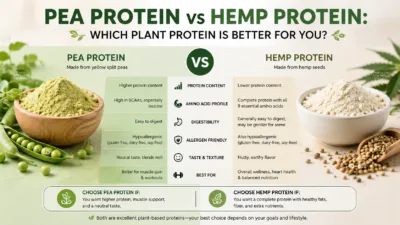
| Protein Type | Protein/Scoop | BCAAs | Digestibility | Eco-Score |
|---|---|---|---|---|
| Organic Hemp | 15g | 5.2g | 92% | ★★★★★ |
| Pea Protein | 25g | 5.5g | 89% | ★★★★ |
| Brown Rice Protein | 22g | 4.8g | 78% | ★★★ |
| Soy Protein | 28g | 5.8g | 95% | ★★ |
Who should choose hemp protein
Vegans and vegetarians get a profile that pairs well with rice protein for a complete EAA spread. Eco-conscious lifters get the lowest carbon footprint among plant proteins. Gut-sensitive readers get easy digestion: hemp contains no FODMAPs.
Maximizing muscle growth with hemp
Four moves make the difference. Take two scoops post-workout for a full 30 g of protein. Pair the shake with carbs such as oats or bananas; the insulin spike drives amino acids into muscles. Add creatine, which hemp’s magnesium helps absorb. Or blend hemp with pea protein for a 25 g punch.
Need a recipe? One scoop of hemp protein, a tablespoon of peanut butter, half a frozen banana, and almond milk make a muscle-building shake in about 60 seconds.
Why “organic” matters for hemp protein
Hemp soaks up whatever its soil holds, toxins included, so non-organic powders may carry cadmium (a kidney toxin) or glyphosate (linked to gut inflammation). Certified organic shuts both doors via heavy metal testing (below 0.1 ppm lead), non-GMO pesticide-free seeds, and cold-pressed processing that preserves nutrients.
FAQs
Q: How long until visible muscle growth? A: Plan on 8-12 weeks of consistent training plus 1.6 g of protein per kg daily.
Q: Can hemp protein work for cutting? A: Yes. Fiber keeps hunger down; mix it with greens for a low-calorie meal replacement.
Q: Any fix for the gritty texture? A: Blend it with avocado or Greek yogurt for creaminess.
Q: Is it safe for nut allergies? A: Yes, though check the label for facility cross-contamination warnings.
The bottom line
Organic hemp seed protein powder is no whey knockoff. It is a holistic muscle-building tool: not an overnight bulk-up, but steady gains that look after gut, joints, and planet along the way. For plant-powered lifters, that makes it a genuine contender where strength meets sustainability.
Related Posts