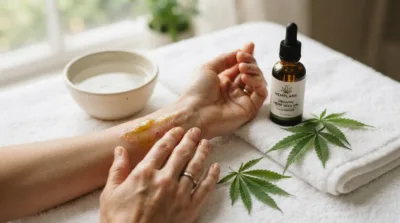
Hemp seed oil occupies an odd spot in skincare: light enough for oily skin, rich enough for dry skin, gentle enough for reactive skin. The catch is that all of this only holds when you apply it correctly. Getting results from hemp seed oil for skin means matching the technique, the amount, and the frequency to your specific skin type. This guide walks through application for the four major types (dry, oily, combination, sensitive), then covers DIY masks and pairing strategies.
Understanding your skin type first
Before deciding how to apply the oil, confirm what you are actually working with. The bare-faced test takes half an hour: wash with a gentle cleanser, pat dry, apply nothing, then wait 30 minutes and observe each zone of your face.
Tight, flaky skin with fine lines that look more pronounced than usual points to dry skin. Shine across the forehead, nose, and chin (the T-zone) along with visible pores indicates oily skin. A shiny T-zone with normal or dry cheeks is combination skin, the most common pattern in adults. Skin that looks red, feels itchy or stinging, or reacts to multiple products is sensitive skin. The classification matters because the application strategy differs for each type.
One caveat: skin type is not permanent. It shifts with seasons, age, hormones, and whatever you have been applying lately. Reassess now and then, especially when winter turns to summer or when you add new actives to your routine.
How to use hemp seed oil for dry skin
Dry skin is short on both water and oil, and the barrier’s lipid matrix is compromised, which lets moisture escape. Hemp seed oil tackles the oil side by supplying linoleic acid, which the skin builds into ceramides to repair that lipid barrier. It also brings alpha-linolenic acid and GLA, both of which calm the low-grade inflammation that travels with barrier dysfunction.
Timing and amount: make the oil the final step of your evening routine. Cleanse, apply any water-based serums or moisturizers, then dispense 3 to 5 drops into your palm. Rub your hands together for a few seconds to warm the oil (this slightly thins it so it spreads evenly), then press it into the face and neck with gentle upward motions. Press, do not rub: pressing deposits the oil without the friction that irritates dry skin and loosens flakes. If your skin still feels tight by midday, add 1 to 2 drops under sunscreen in the morning as well.
For overnight repair, layer the oil under something heavier such as a balm or petrolatum-based moisturizer. The oil supplies fatty acids while the occlusive seals them in and blocks overnight transepidermal water loss. That combination earns its keep in winter, when indoor heating and cold outdoor air strip moisture from the skin’s surface. For stubborn dry patches at the corners of the nose or around the lips, one drop applied directly works as targeted relief.
How to use hemp seed oil for oily and acne-prone skin
Avoiding oil when your skin is oily feels logical. It is also physiologically incomplete, because oily skin is often dehydrated skin overproducing sebum to compensate for barrier damage. When skin receives linoleic acid, which acne-prone skin tends to lack, sebum consistency shifts from thick and sticky toward more fluid, and comedones become less likely to form.
Dose discipline matters here: 1 to 2 drops for the entire face. Apply to clean skin after water-based treatments, never before, and keep the oil as the last step or second-to-last before sunscreen. More than 2 drops risks a heavy residue.
Press the oil in gently rather than sliding it around, then wait 2 to 3 minutes before makeup or sunscreen. If you use prescription acne treatments, apply the medication first, let it dry for 20 to 30 minutes, then apply the oil as a buffer. For the full picture, read our guide on hemp seed oil for acne-prone skin.
How to use hemp seed oil for combination skin
Combination skin means an oily T-zone paired with drier cheeks, so a uniform layer of oil is the wrong tool. Zone-targeted application solves it.
Work in two passes. Pass one: 1 drop on the fingertips, pressed into the cheeks only. Pass two: another drop, pressed lightly across the T-zone. Dry areas get more oil, oily areas get less, and nothing gets overloaded.
If the T-zone still feels heavy after a week, dilute instead of skipping: dispense gel-based moisturizer into your palm, add 1 to 2 drops of oil, mix, and apply evenly. The gel carries the oil’s fatty acids without over-application on oily zones. Expect seasonal adjustments too. Winter may ask for an extra drop; summer usually rewards a lighter hand.
How to use hemp seed oil for sensitive skin
Sensitive skin can react with stinging, redness, or itching. The causes vary: a compromised barrier, heightened nerve sensitivity, contact dermatitis, or conditions like rosacea and eczema. For any new product, the goals are barrier support and trigger avoidance.
Hemp seed oil starts with three advantages here. Its comedogenic rating is 0, it contains none of the fragrance compounds and botanical oils that commonly set off reactions, and its GLA provides anti-inflammatory activity through the prostaglandin E1 pathway.
With sensitive skin, the introduction protocol matters more than the quantity. Patch test on the inner forearm twice daily for 3 days. Clear so far? Test behind the ear for another 2 days. Only after both spots stay calm should the oil touch your full face, starting with a single drop applied after moisturizer.
During redness and heat flares, refrigerated oil adds a cooling effect that helps constrict dilated capillaries. Press 1 to 2 drops gently onto the affected areas, and skip rubbing entirely since friction generates heat and worsens facial redness. Introduce only one new product at a time during this period so any reaction has a clear suspect.
DIY face mask recipes with hemp seed oil
Hemp seed oil combines well with other single-ingredient skincare staples, and these recipes keep the ingredient count low on purpose: fewer components means lower irritation risk and simpler preparation.
The calming mask suits dry or irritated skin. Combine 1 tablespoon of plain full-fat yogurt with 1 teaspoon of hemp seed oil and 1 teaspoon of raw honey. Yogurt contributes lactic acid for gentle exfoliation, honey adds humectant and antimicrobial properties, and the oil delivers fatty acids. Mix in a small bowl, apply to clean skin, leave for 10 to 15 minutes, rinse with lukewarm water.
The clarifying mask targets oily or congested skin. Mix 1 tablespoon of bentonite or French green clay with enough water to form a smooth paste, then stir in 1 teaspoon of hemp seed oil. Clay draws out excess oil and impurities while the hemp seed oil keeps the mask from over-drying skin. Apply, leave until the clay starts drying but has not fully cracked (usually 8 to 10 minutes), then rinse and follow with 1 drop of oil pressed into the skin to replenish lipids.
The brightening mask needs two ingredients. Mash one-quarter of a ripe avocado with 1 teaspoon of hemp seed oil; avocado brings vitamins C and E plus fatty acids that complement the oil. Apply to clean skin, wait 15 minutes, rinse. This one is handy in winter when skin goes dull from cold air and indoor heating.
Use every mask immediately and store none of them. These are fresh ingredients without preservatives, which makes bacterial growth a real possibility. Once per week is a sensible frequency.
DIY massage oil and body oil blends
Light texture and fast absorption make hemp seed oil a capable body moisturizer, and it sinks in quicker than heavier options like coconut or olive oil.
The basic body application: dispense roughly 1 teaspoon into your palm and apply to damp skin right after showering. Damp skin spreads oil into a thinner, more uniform layer, so absorption improves. Work from the extremities toward the heart using long, gentle strokes.
For a massage blend, combine 2 tablespoons of hemp seed oil with 1 tablespoon of jojoba oil for extra slip, then add 3 to 4 drops of a skin-safe plant oil such as lavender or chamomile if your skin tolerates aroma. One rule has no exceptions: always dilute fragrant plant oils in a carrier oil. Applied straight at full concentration they can cause sensitization or allergic reactions.
Elbows, knees, and heels respond to a few drops of undiluted oil massaged in circular motions for 30 to 60 seconds. Pull a cotton sock or sleeve over the area afterward; trapped warmth increases absorption and keeps the oil off your clothes.
Using hemp seed oil as a moisturizer base
Think of hemp seed oil as the oil phase in a simple two-phase system. The water phase (a hydrating toner, essence, or gel moisturizer with humectants such as glycerin, hyaluronic acid, or panthenol) pulls water into the skin. The oil phase locks it there and supplies fatty acids.
Building the system takes seconds. Start with your hydrating product on damp skin and press it in until partially absorbed, then immediately apply 2 to 3 drops of hemp seed oil over the damp surface. Dampness is what lets the oil spread into a thin, non-greasy layer.
Prefer a pre-mixed product? Blend the oil into your moisturizer per use instead: one pump of moisturizer in the palm, 1 to 2 drops of oil, mix, apply. Do not stir oil into the whole jar, because adding oil to a formulated product can destabilize its preservative system.
Pairing hemp seed oil with other carrier oils
Each carrier oil carries a different fatty acid profile and a different set of secondary compounds, which makes blending genuinely useful rather than gimmicky.
For extra anti-inflammatory support, blend hemp seed oil with rosehip seed oil at 2:1 (two parts hemp, one part rosehip). Rosehip contributes natural retinoids that support cell turnover and collagen production, useful against inflammation and post-inflammatory marks at once.
For antioxidant coverage, go 1:1 with argan oil. Argan is rich in vitamin E and ferulic acid, compounds that neutralize free radicals from UV exposure and pollution, and the blend sits well as the final step before sunscreen.
For compromised barriers, blend 1:1 with squalane. Squalane is the hydrogenated version of squalene, a lipid already present in human sebum, and it absorbs quickly without weight or grease.
For lighter daytime wear on oily skin, flip the ratio: 1 part hemp to 2 parts jojoba. Jojoba is a liquid wax ester with a light feel, while hemp supplies the GLA and ALA that jojoba lacks.
Whatever the blend, store it in dark glass dropper bottles and mix small batches of 15 ml to 30 ml so everything gets used within a few weeks, before oxidation sets in.
Common application errors to avoid
Too much oil is the most frequent error and the easiest to correct. A full dropper is roughly 1 ml, about 20 drops, and no skin type needs that much. The leftover film traps debris and creates the shiny look that convinces people oil “doesn’t suit” their skin. Start with 1 to 3 drops and add more only if your skin feels tight within an hour. Adding a drop later is easy; removing excess after application is not.
Applying oil to bone-dry skin wastes half its value. Oil spreads and penetrates better over a thin water layer, so mist first or apply while skin is still slightly damp from cleansing.
Using hemp seed oil as a makeup remover squanders its leave-on potential. Let a dedicated cleansing balm or micellar water handle makeup, then apply the oil afterward when skin can actually absorb its fatty acids.
Storage mistakes shorten usable life. All those polyunsaturated fats make the oil vulnerable to oxidation from light, heat, and air, so keep it in dark glass, in a cool spot, with the cap tightened after every use. Refrigeration extends shelf life and doubles as a cooling treat for sensitive skin. And trust your nose: a sharp, paint-like odor instead of a mild nutty scent means the oil has oxidized and should be discarded.
Expecting overnight results leads to quitting early. Fatty acids incorporate into barrier lipids gradually, and improvements in hydration, smoothness, and reactivity typically show up across 2 to 4 weeks of consistent use. Judging the oil after one or two applications tells you nothing useful.
Conclusion
The whole method reduces to matching application strategy to skin type. Dry skin wants generous evening application, often sealed under an occlusive. Oily and acne-prone skin wants 1 to 2 drops used sparingly as a buffer after active treatments. Combination skin wants zone-targeted passes, richer on the cheeks and lighter on the T-zone. Sensitive skin wants slow introduction, cold application during flares, and a simplified routine that isolates the oil’s effects.
The DIY section stretches the oil past daily moisturizing into masks, massage blends, and body care, all built from food-grade ingredients your skin has likely already tolerated on their own. None of it works, though, if technique falls apart. Dosage, layering order, and timing decide whether hemp seed oil becomes a staple or a bottle gathering dust.
Two next steps worth taking: if acne is your main concern, the dedicated guide to hemp seed oil for acne-prone skin covers use alongside common acne treatments, and the research on hemp seed oil and cardiovascular wellness shows the same fatty acids support heart health when the oil is used internally too.
For questions about selecting a HEMPLAND product or tailoring the approach to a specific skin situation, Contact Us.
Related Posts