The premium food market is undergoing a fundamental shift. Across Europe, North America, and Asia-Pacific, consumers buying at the high end of the market are no longer satisfied with taste alone. They scrutinize ingredient lists, research sourcing claims, and choose products that align with transparent, values-driven brands. For food manufacturers and brand owners, this creates both a challenge and an opportunity.
The challenge: how do you genuinely enhance a product’s nutritional profile without adding processing complexity, synthetic ingredients, or lengthy ingredient declarations that undermine premium positioning?
The opportunity: whole-food ingredients that naturally carry the messaging power of clean-label nutrition, plant-based positioning, and proven functional benefits, without any artificial construction.
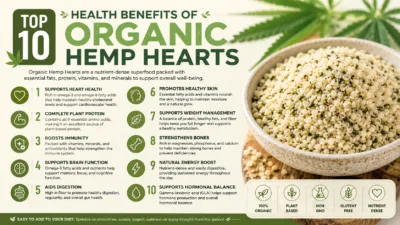
Organic hemp hearts are increasingly recognized by premium food brands as precisely this kind of ingredient. Grown from Cannabis sativa L. with THC content below 0.0 percent (EU) or 0.2 percent (UK threshold basis), processed to remove the hard outer shell, and certified organic under USDA NOP, EU Organic, and equivalent standards, hemp hearts deliver a rare combination. They offer genuinely superior nutrition and the kind of ingredient transparency that builds consumer trust at scale.
This article is written for B2B food brand decision-makers, procurement managers, R&D formulators, brand strategists, and product developers who are evaluating hemp hearts as a value-added ingredient for premium product lines. It covers the science behind hemp hearts’ functional properties, how they compare to alternative premium plant-based ingredients, the regulatory landscape for food-grade applications, and the practical B2B considerations that determine successful product integration.
What makes hemp hearts a value-added ingredient for premium brands?
The term “value-added” is used broadly in the food industry, but for premium brands it carries specific weight. An ingredient earns value-added status when it delivers compounding benefits across multiple dimensions simultaneously, nutritional, functional, sensory, and commercial, without creating liability in any one of them.
Organic hemp hearts satisfy this standard across all four dimensions.
Nutritional value: a naturally complete plant protein
Hemp hearts (the shelled seeds of Cannabis sativa) contain approximately 31 to 35 percent protein by dry weight, including the two storage proteins edestin and albumin. Edestin constitutes roughly 65 percent of total hemp seed protein and is notable for its near-perfect amino acid profile, closely matching human globular blood proteins in molecular structure. This gives hemp protein a biological value that plant-based proteins rarely achieve without supplementation.
The amino acid profile is complete, with meaningful concentrations of all nine essential amino acids, including:
| Amino Acid | Content (g/100g dry seeds) | Significance for Food Formulation |
|---|---|---|
| Arginine | 4.5 to 6.0 | Precursor to nitric oxide; supports cardiovascular claims |
| Glutamic acid | 4.4 to 5.5 | Flavor enhancement; umami profile |
| Leucine | 1.7 to 2.1 | Muscle protein synthesis; sports nutrition positioning |
| Lysine | 1.0 to 1.3 | Often limiting in cereals; complements grain-based products |
| Phenylalanine | 1.1 to 1.5 | Tyrosine precursor; cognitive support narratives |
| Valine | 1.3 to 1.6 | Branched-chain amino acid; endurance positioning |
| Isoleucine | 0.9 to 1.1 | BCAA; glucose metabolism |
| Threonine | 1.0 to 1.2 | Collagen synthesis; skin health narratives |
| Methionine | 0.5 to 0.7 | Sulfur-containing; complementary to legume proteins |
In addition to protein, hemp hearts deliver a distinctive fatty acid profile: approximately 50 to 55 percent linoleic acid (LA, omega-6), 22 to 25 percent alpha-linolenic acid (ALA, omega-3), and 3 to 6 percent gamma-linolenic acid (GLA, omega-6), in a ratio of roughly 3:1 omega-6 to omega-3. This ratio is considerably closer to the ancestral human dietary ratio (estimated at 1:1 to 4:1) than most conventional seed oils, a fact that has generated significant research interest.
Callicu Co, M. et al. “Hemp Seed (Cannabis sativa L.) Proteins: Composition, Structure, Physicochemical Properties, and Applications in Food Products.” Molecules, vol. 28, no. 9, 2023, p. 3982.
House, J.D. et al. “Evaluating the Use of Hempseed Oil as a Source of Omega-3 and Omega-6 Fatty Acids in Foods.” Journal of Food Science, vol. 77, no. 9, 2012.
Functional value: textural and sensory properties
For food formulators, hemp hearts offer more than nutrition. They contribute functional properties that enhance product quality.
- Soft, creamy texture: Shelled hemp hearts have a smooth, yielding mouthfeel that blends seamlessly into granolas, bars, yogurts, and smoothies without the gritty or chalky notes common with soy or pea protein isolates.
- Mild, nutty flavor: The taste profile is subtle and pleasant, complementing sweet and savory applications alike, without the beany or earthy off-notes associated with many plant proteins.
- Minimal processing: Unlike protein isolates that require alkaline extraction, isoelectric precipitation, or enzymatic hydrolysis, hemp hearts can be incorporated as a whole-food ingredient with minimal processing, a significant clean-label advantage.
- Natural oil content: The 40 to 45 percent lipid content provides built-in emulsion properties and lubrication, reducing the need for added oils in certain applications.
Commercial value: market positioning and margin structure
From a commercial standpoint, hemp hearts enable premium brands to:
- Support clean-label claims with a single, recognizable ingredient rather than a blend of isolated nutrients.
- Differentiate from competitors who rely on soy, whey, or conventional grain-based proteins.
- Command price premiums consistent with the organic and premium positioning of the product line.
- Reduce label complexity, one ingredient declaration covers protein, essential fats, fiber, and micronutrients simultaneously.
The combination of these four value dimensions, nutritional, functional, sensory, and commercial, explains why hemp hearts are increasingly appearing in premium food launches globally.
Scientific mechanisms: why hemp hearts deliver functional benefits
Understanding the mechanisms behind hemp hearts’ nutritional benefits allows brand owners and formulators to make evidence-based positioning claims and design products with genuine functional differentiation.
Mechanism 1: edestin and albumin, the protein bioactivity advantage
Hemp seed protein is dominated by two storage proteins: edestin (a 7S globulin, about 65 percent of total protein) and albumin (a 2S albumin, about 25 percent). Unlike the storage proteins in soy (glycinin and beta-conglycinin) or pea (legumin and vicilin), edestin is notable for its high digestibility-corrected amino acid score (DCAAS) of approximately 0.86, among the highest reported for plant proteins, comparable to casein and exceeding wheat and corn.
The digestibility of hemp protein is estimated at 92 to 97 percent in cooked forms, significantly higher than raw soy (approximately 65 percent) and competitive with animal proteins. This matters for food applications: when a protein is more digestible, a smaller quantity delivers meaningful amino acid availability.
House, J.D. et al. “Protein Quantity and Quality in Hempseed (Cannabis sativa L.) and Hempseed Protein Isolates.” Journal of Agricultural and Food Chemistry, vol. 60, no. 52, 2012, pp. 12852 to 12859.
Mechanism 2: GLA and the omega-6 to omega-3 balance
The presence of gamma-linolenic acid (GLA) at 2 to 4 percent of total fatty acids is a distinguishing feature of hemp hearts that most competing plant protein sources lack entirely. GLA is an intermediate in the conversion of LA (omega-6) to dihomo-gamma-linolenic acid (DGLA), which competes with arachidonic acid (AA) in inflammatory eicosanoid synthesis pathways.
In practical terms, GLA supplementation has been associated with:
- Reduced systemic inflammation markers (CRP, IL-6) in meta-analyses of trials involving 1,000 or more participants
- Improved skin barrier function and reduced transepidermal water loss (TEWL) in dermatological studies
- Modulated prostaglandin ratios supporting cardiovascular and metabolic health narratives
For food brands targeting inflammation-management, skin health, or metabolic wellness positioning, GLA content provides a concrete, differentiating nutritional feature that is difficult to replicate with soy, pea, or rice proteins.
Kapoor, R. and Huang, Y.S. “Gamma Linolenic Acid: An Anti-inflammatory Omega-6 Fatty Acid.” Current Pharmaceutical Biotechnology, vol. 7, no. 6, 2006, pp. 531 to 534.
Mechanism 3: arginine and nitric oxide pathways for cardiovascular positioning
Hemp hearts are unusually rich in arginine (4.5 to 6.0 g per 100g), an amino acid that serves as the primary substrate for endothelial nitric oxide synthase (eNOS), the enzyme responsible for producing nitric oxide (NO). Nitric oxide is a signalling molecule involved in normal vascular function.
Epidemiological and intervention studies consistently link arginine intake with improved endothelial function, particularly in populations with compromised vascular health. A meta-analysis of 16 randomized controlled trials found that L-arginine supplementation significantly improved flow-mediated dilation (FMD), a clinical marker of endothelial health.
For food brands developing cardiovascular health positioning or sports nutrition products, the natural arginine content in hemp hearts provides a compelling, evidence-backed claim pathway.
Böger, R.H. and Bode-Böger, S.M. “The Clinical Pharmacology of L-Arginine.” British Journal of Clinical Pharmacology, vol. 51, no. 5, 2001, pp. 478 to 481.
Mechanism 4: tocopherol complex and antioxidant protection in food systems
Hemp hearts contain a natural tocopherol complex (vitamin E) at levels of approximately 90 to 105 mg per 100g, predominantly as gamma-tocopherol (about 80 percent) with meaningful alpha- and delta-tocopherol contributions. This is significant for two reasons:
- In vivo: Gamma-tocopherol demonstrates superior capacity to scavenge reactive nitrogen species (RNS) compared to alpha-tocopherol alone, providing complementary antioxidant protection.
- In food matrices: Natural tocopherols act as antioxidants that inhibit lipid peroxidation, potentially extending shelf life in hemp-containing food products and reducing the need for synthetic antioxidants.
Ecker, J. et al. “Hempseed Oil Provides a Unique Source of Polyunsaturated Fatty Acids and Gamma-Tocopherol.” Lipid Technology, vol. 24, no. 9, 2012, pp. 203 to 205.
Mechanism 5: phytosterols and cholesterol metabolism
Hemp hearts contain approximately 250 to 450 mg of phytosterols per 100g, including beta-sitosterol, campesterol, and stigmasterol. Phytosterols are structurally similar to cholesterol and compete for intestinal absorption via the Niemann-Pick C1-like 1 (NPC1L1) transporter.
Clinical evidence from 80 or more randomized controlled trials demonstrates that phytosterol consumption of 1.5 to 3.0 g per day reduces LDL cholesterol by approximately 8 to 10 percent, a meaningful reduction that supports cardiovascular health positioning.
For food brands targeting the heart health premium segment, naturally occurring phytosterols in hemp hearts allow for LDL-cholesterol-reduction claims under regulatory frameworks (EFSA, FDA) when consumed at effective doses.
Ras, R.T. et al. “LDL-Cholesterol-Lowering Effect of Plant Sterols and Stanols Across Different Dose Ranges.” Atherosclerosis, vol. 233, no. 2, 2014, pp. 373 to 381.
Mechanism 6: dietary fiber and gut microbiome modulation
Hemp hearts contain approximately 6 to 8 percent dietary fiber (both soluble and insoluble), which serves dual functions in food systems:
- Prebiotic potential: Soluble fiber fractions (mucilages and gums) selectively promote beneficial gut bacteria, including Bifidobacterium and Lactobacillus species, supporting microbiome diversity and gut barrier integrity.
- Short-chain fatty acid production: Fermentation of fiber by colonic microbiota produces butyrate, propionate, and acetate, which regulate inflammation, glucose metabolism, and appetite signaling.
Emerging evidence specifically links hemp seed fiber with improved gut barrier function and reduced intestinal inflammation in animal models, though human clinical data remain preliminary.
Irandoost, M. et al. “Hemp Seed (Cannabis sativa L.) Supplementation: A Review of Clinical and Experimental Evidence.” Journal of Functional Foods, vol. 95, 2022, 105173.
Hemp hearts vs. competing premium plant-based ingredients
For food brand decision-makers evaluating ingredient options, the following comparison provides a direct, multi-dimensional assessment of hemp hearts against the most common competing premium plant proteins and whole-food ingredients.
| Dimension | Organic Hemp Hearts | Hemp Protein Isolate | Pea Protein Isolate | Soy Protein Isolate | Sunflower Seed Butter | Chia Seeds | Almonds |
|---|---|---|---|---|---|---|---|
| Protein content (per 100g dry) | 33g | 88 to 90g | 80 to 85g | 88 to 90g | 20 to 25g | 17g | 21g |
| DCAAS / PDCAAS | 0.86 (high) | 0.91 (high) | 0.82 (moderate) | 1.0 (high) | 0.42 (low) | 0.73 (moderate) | 0.44 (low) |
| Complete amino acid profile | Yes | Yes | Partial (low in methionine) | Yes | Partial | Partial | Partial |
| Omega-3 (ALA) per 100g | 9g | under 0.5g | 0g | 0g | 0.5g | 18g | 0g |
| GLA content | 2 to 4g | 2 to 4g | 0g | 0g | 0g | 0g | 0g |
| Phytosterols | 300mg | 200mg | 0mg | 200mg | 150mg | 20mg | 100mg |
| Tocopherols (natural VE) | 90 to 105mg | 50 to 80mg | 0mg | 1 to 5mg | 35 to 45mg | 0.5mg | 25 to 30mg |
| Dietary fiber | 6 to 8g | 3 to 5g | 5 to 8g | 2 to 4g | 7 to 10g | 34g | 12g |
| Clean label suitability | Excellent | Moderate | Moderate | Moderate | Good | Good | Good |
| Single-ingredient declaration | Yes | No | No | No | Yes | Yes | Yes |
| Minimal processing | Yes | No | No | No | Yes | Yes | Yes |
| Allergen-free (top 14) | Yes | Yes | Yes | Soy allergen | Sunflower allergen | Yes | Tree nut allergen |
| Gluten-free | Yes | Yes | Yes | Yes | Yes | Yes | Yes |
| Organic certification available | Yes (USDA/EU) | Yes (limited) | Yes (common) | Yes (common) | Yes (less common) | Yes (limited) | Yes |
| Neutral flavor profile | Good | Moderate | Moderate (beany) | Moderate | Strong (nutty) | Mucilaginous | Strong (roasted) |
| Premium food positioning | Excellent | Good | Moderate | Moderate | Good | Good | Good |
| B2B supply chain maturity | Growing | Established | Established | Established | Moderate | Moderate | Established |
| Retail price positioning | Premium | Mid-premium | Mid | Value-premium | Mid | Mid-premium | Mid |
Key takeaways for B2B decision-makers:
- Hemp hearts are the only ingredient in this comparison that simultaneously offers complete plant protein, meaningful omega-3 and ALA, GLA, natural tocopherols, phytosterols, dietary fiber, a clean single-ingredient declaration, allergen-free status, and organic certification in one product.
- Hemp protein isolates sacrifice most of the fat-soluble nutrient advantages (GLA, tocopherols, phytosterols) in exchange for higher protein concentration.
- For products where whole-food positioning matters more than protein density (snack bars, granolas, beverages, dairy alternatives), hemp hearts provide a superior overall value proposition.
Application categories: where premium food brands use hemp hearts
Based on current market data and the formulation properties outlined above, hemp hearts have demonstrated commercial viability across the following premium food categories.
Plant-based dairy and alternatives
- Oat, almond, and coconut yogurts: Hemp hearts added post-fermentation provide protein enrichment and textural creaminess without processing requirements.
- Plant-based cheese alternatives: Hemp protein’s emulsification properties support fat-water binding in dairy-free cheese formulations.
- Non-dairy ice creams: Hemp hearts’ natural fat content contributes to smooth texture and reduced ice crystal formation.
Premium snack bars and energy bites
Hemp hearts are among the most widely adopted whole-food protein ingredients in premium snack bar formulations, preferred for:
- Soft, chewy texture that integrates without grinding or milling
- Natural nutty flavor that complements honey, chocolate, and fruit profiles
- No gritty mouthfeel common with pea or rice protein concentrates
- Clean label compliance for organic and free-from claims
High-protein breakfast products
- Granola and muesli: Hemp hearts added at 5 to 15 percent provide protein enrichment for premium morning cereals.
- Overnight oats and porridge mixes: Whole hemp hearts retain texture through soaking preparation methods.
- Protein pancakes and waffle mixes: Hemp hearts contribute binding properties and nutrition without strong flavor competition.
Functional beverages
- Protein shakes and smoothie boosters: Finely milled hemp hearts (or whole hearts for textured products) add protein with omega-3 and micronutrient density.
- Ready-to-drink (RTD) protein beverages: Hemp protein isolates are more suitable for clear or semi-clear applications; whole hearts are better for textured or blended products.
Organic baby food and kids’ nutrition
The allergen-free status, mild flavor, and nutrient density of hemp hearts make them suitable for premium organic baby food formulations targeting the first foods and toddler snack categories.
Sports and active nutrition
Premium sports nutrition brands increasingly use hemp hearts as a clean-label protein source in:
- Recovery bars with GLA and omega-3 ALA
- Pre-workout formulations with natural arginine for nitric oxide support
- Plant-based protein powders blended with pea or rice for complementary amino acid profiles
Regulatory landscape and certification requirements
For food brands operating in multiple markets, working through the regulatory requirements for hemp-derived ingredients is essential.
THC and psychoactive content
The critical regulatory distinction for hemp ingredients is THC content. In most jurisdictions:
- EU and UK: Hemp ingredients must be derived from Cannabis sativa L. varieties with THC content below 0.0 percent (EU) or 0.2 percent (UK threshold basis).
- United States: The 2018 Farm Bill (and subsequent state regulations) defines legal hemp as containing less than 0.3 percent THC on a dry weight basis.
- Canada: Hemp with less than 0.3 percent THC is exempt from cannabis regulation under the Cannabis Act.
Hemp hearts, as shelled seeds with minimal oil fraction exposed, consistently test below detection limits for THC in properly sourced material. Food brands should request batch-level certificates of analysis (COA) showing THC below LOQ (limit of quantification, typically below 5 mg per kg).
Novel food status
- EU: Hemp seed and hemp seed oil have no Novel Food pre-authorization requirement because they have a history of consumption predating the Novel Food Regulation (1997 cutoff). Hemp protein isolates and extracts derived from hemp seeds without flowers, leaves, or stalks are similarly grandfathered. Confirm with your regulatory counsel for specific extracts or novel processing methods.
- United States: Hemp seed hearts are GRAS (Generally Recognized as Safe) for food use under FDA guidance. No premarket approval is required for conventional food applications.
- Canada: Hemp seeds and derived products are approved for food use under Health Canada’s Industrial Hemp Regulations.
Organic certification
For premium brands, organic certification is a non-negotiable supply chain requirement. Acceptable certifications include:
| Certification | Region | Key Requirements |
|---|---|---|
| USDA Organic | USA / Global | No synthetic pesticides; no GMOs; soil-based cultivation |
| EU Organic | Europe | Equivalent to USDA NOP; stricter on certain inputs |
| COSMOS Organic | Europe (cosmetics + foods) | Includes environmental sustainability criteria |
| Japan JAS Organic | Japan | Separate certification required for Japanese market |
| China Organic | China | GB/T 19630 standard; separate certification for domestic market |
When sourcing for multi-market brands, verify whether the supplier’s organic certificate covers your specific target market registration. Not all certifications are mutually recognized without additional verification steps.
Allergen and cross-contamination standards
Hemp hearts are not classified among the top 14 major food allergens (which include peanuts, tree nuts, soybeans, milk, eggs, fish, shellfish, wheat, sesame, and others, depending on jurisdiction). However:
- Hemp is a cousin of cashew (both in the Anacardiaceae family), and a small population with severe cashew allergy may cross-react. This is not classified as a mandatory allergen declaration but should be noted in risk assessments.
- For brands marketing to EU markets, assess the need for voluntary “may contain” declarations based on co-manufacturing facility risk assessments.
- Request supplier allergen management plans and batch-level testing for soy, peanut, and gluten if co-manufacturing risk exists.
Supply chain and B2B considerations
Quality specifications to request from suppliers
Premium food brands should specify the following parameters in ingredient specifications (COP or RFP documents):
| Parameter | Typical Specification | Test Method |
|---|---|---|
| Protein content | 30 percent or more dwb | AOAC 991.20 / 992.15 |
| Moisture | 8 percent or less | ISO 662 |
| Ash | 5 percent or less | AOAC 942.05 |
| Fat content | 40 percent or more | AOAC 991.36 |
| THC | below LOQ (below 5 mg per kg) | GC-MS or LC-MS/MS |
| Microbial total plate count | under 10,000 cfu per g | ISO 4833 |
| Yeast and mold | under 500 cfu per g | ISO 7954 |
| E. coli | Negative / under 10 cfu per g | ISO 16649 |
| Salmonella | Negative in 25g | ISO 6579 |
| Heavy metals (Pb, Cd, As, Hg) | Below regulatory limits | ICP-MS |
| Pesticide residues | Compliant with EU/US organic standards | GC-MS/MS + LC-MS/MS |
| Gluten | under 20 ppm (if claiming GF) | ELISA R5 Mendez |
| Aflatoxin B1 | under 4 micrograms per kg | HPLC-FLD |
Shelf life and storage
- Shelf life: Typically 12 to 18 months from production date when stored in original sealed packaging.
- Storage conditions: Cool, dry, dark environment; relative humidity below 65 percent; temperature below 20°C.
- Post-opening stability: Hemp hearts contain natural oils; once opened, shelf life is significantly reduced. Nitrogen flushing or vacuum packaging is recommended for industrial users.
- Oxidative stability: Natural tocopherols (vitamin E) provide inherent antioxidant protection, but pro-oxidant metals (Fe, Cu) in some food systems can accelerate rancidity. Consider EDTA or rosemary extract in formulations where extended shelf life is required.
Minimum order quantities (MOQ) and lead times
- Typical MOQ for wholesale B2B: 100 to 500 kg for initial sampling; 1 to 5 metric tons for commercial orders.
- Lead times: 2 to 6 weeks from order confirmation to dispatch, depending on stock availability and organic certification batch requirements.
- Sample availability: Reputable suppliers should offer 1 to 5 kg sample quantities for product development before commercial commitment.
Supplier evaluation checklist for premium brands
- Organic certification (USDA/EU/JAS equivalent) with valid certificate and scope document
- Third-party food safety audit (SQF, BRCGS, FSSC 22000, or equivalent)
- Batch-level COA for every delivery, including THC, microbiology, and pesticide panels
- Allergen management plan and co-manufacturing disclosure
- Traceability from field to finished product (seed variety, farm GPS, processing facility)
- Technical data sheet (TDS) and material safety data sheet (MSDS) available
- Application support: formulation guidance, pilot samples, and trial batches
- Regulatory compliance letter covering target market registrations
- Sustainability report or carbon footprint documentation (increasingly required by premium retailers)
Conclusion
Organic hemp hearts occupy a rare position in the premium food ingredient landscape: they are simultaneously a whole food, a complete protein, a source of essential omega fatty acids including the rare GLA, a natural antioxidant complex, and a clean-label ingredient with an outstanding consumer perception profile.
For premium food brands building product lines around authentic nutrition, transparent sourcing, and minimal processing, hemp hearts provide a compounding value proposition that supports multiple simultaneous marketing narratives without requiring reformulation, processing complexity, or ingredient list dilution.
The scientific evidence base is concrete rather than promotional. Hemp hearts deliver a DCAAS of about 0.86, a 3:1 omega-6 to omega-3 ratio, 90 to 105 mg of natural tocopherols per 100g, 250 to 450 mg of phytosterols per 100g, and 6 to 8 percent dietary fiber, all in a single allergen-free, organic-certified ingredient. These are the figures that let brand decision-makers make confident, evidence-based positioning claims for cardiovascular, skin health, and clean-label applications. As consumer demand for clean-label, plant-based, and functionally differentiated premium foods continues to grow, organic hemp hearts represent a defensible ingredient choice for manufacturers and brand owners seeking genuine differentiation rather than ingredient commoditization.
For product development support and bulk sourcing of organic hemp hearts, contact HEMPLAND to request specification sheets, samples, and pricing.
FAQ: hemp hearts for premium food brands
Q1: Do organic hemp hearts justify a premium price point?
A: Yes. At 31 to 35 percent protein by dry weight, a 3:1 omega-6 to omega-3 ratio, and a complete amino acid profile, their nutritional density and clean-label status support higher perceived product value.
Q2: Are hemp hearts suitable for luxury or gourmet food products?
A: Yes. Their mild flavor and refined texture integrate well into high-end formulations.
Q3: Can organic hemp hearts replace more processed functional ingredients?
A: In many cases, yes. They offer natural nutrition without relying on isolates or synthetic additives.
Q4: Do hemp hearts align with sustainability-focused branding?
A: Yes. Hemp is widely associated with efficient resource use and environmentally conscious farming.
Q5: Are organic hemp hearts scalable for premium brands with global distribution?
A: When sourced from experienced suppliers, they are suitable for consistent, large-scale production.
Brands specifying the unroasted kernel can order raw organic hemp hearts in food-grade bags or bulk totes, with per-lot documentation.
Related Posts