
Immune health has become the most searched health category globally, with consumers increasingly seeking natural, food-based solutions rather than synthetic supplements. According to a 2025 Euromonitor survey, 67% of global consumers actively seek foods with immune-supporting ingredients — driving explosive growth in the functional food, nutraceutical, and wellness beverage markets.
Among the emerging star ingredients in this space, organic hemp hearts (hulled seeds of Cannabis sativa) stand out for their uniquely comprehensive nutritional profile. Unlike single-nutrient immune boosters (zinc capsules, vitamin C tablets), hemp hearts deliver a synergistic combination of zinc, iron, magnesium, omega-3, omega-6 (including GLA), vitamin E, complete plant protein, and prebiotic fiber — all from a single, clean-label, allergen-free ingredient.
For food manufacturers, supplement brands, and wellness product developers, organic hemp hearts offer a compelling immune-support ingredient that meets every major consumer demand: plant-based, organic, non-GMO, allergen-free, and backed by multiple scientific mechanisms.
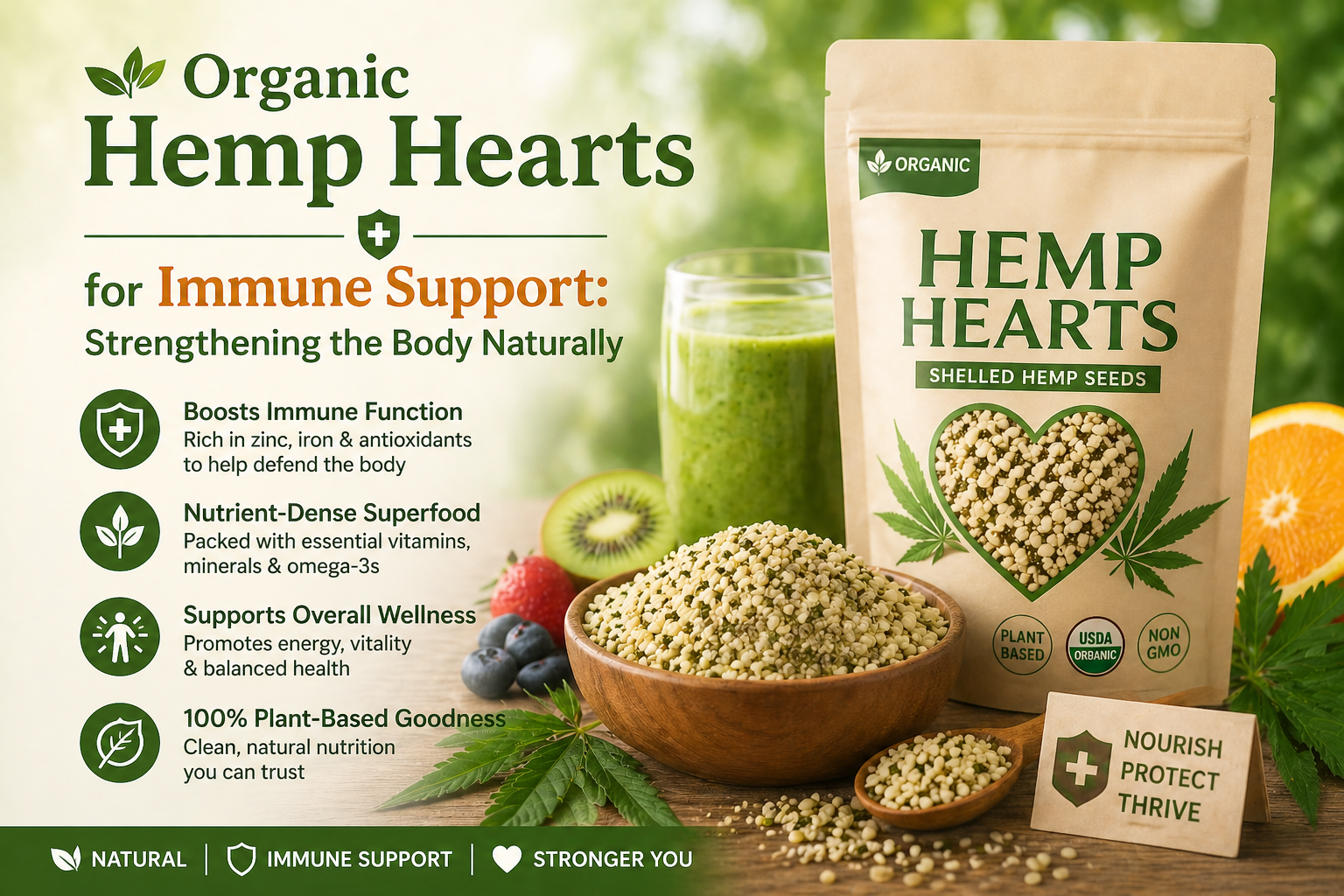
What Are Organic Hemp Hearts?
Organic hemp hearts are the hulled inner kernels of Cannabis sativa seeds, grown under certified organic conditions (USDA NOP, EU Organic, or equivalent). The outer fibrous shell is mechanically removed, leaving the soft, cream-colored seed heart — hence the name.
Key immune-relevant nutrients per 100g:
| Nutrient | Amount | Immune Function |
|---|---|---|
| Protein | 31–33 g | Antibody synthesis, immune cell production |
| Zinc | 5–6 mg (~45–55% DV) | T-cell and NK cell activation |
| Iron | 7.5–8 mg | Oxygen transport, cellular energy, fatigue reduction |
| Magnesium | 210 mg (~50% DV) | 300+ enzymatic reactions, inflammation regulation |
| Vitamin E (tocopherols) | 90 mg | Antioxidant protection of immune cells |
| Omega-3 (ALA) | 8.7 g | Anti-inflammatory, membrane integrity |
| Omega-6 (LA) | 27–30 g | Immune cell signaling, eicosanoid production |
| GLA | 1.5–2.5 g | Anti-inflammatory, hormonal immune pathways |
| Phytosterols | 190–200 mg | Cholesterol-immune interaction, anti-inflammatory |
| Fiber (soluble) | 1.2–1.5 g | Prebiotic gut microbiome support |
| Arginine | 3.7 g | Nitric oxide, immune cell communication |
One standard serving (30g) provides approximately: 10g protein, 1.5mg zinc (~14% DV), 63mg magnesium (~15% DV), 2.6g ALA, and meaningful iron — making hemp hearts one of the most nutrient-dense immune-support ingredients available in the clean-label market.
The Science: How Hemp Hearts Support the Immune System
1. Zinc — The Cornerstone Mineral for Innate and Adaptive Immunity
Zinc is arguably the single most critical mineral for immune function. It participates in over 300 enzymatic reactions directly related to immune defense, and even mild zinc deficiency significantly increases susceptibility to infections.
Key immune mechanisms of zinc:
- Innate immunity: Essential for the development and function of natural killer (NK) cells — the immune system’s first-line defense against viruses and abnormal cells
- Adaptive immunity: Critical for T-cell proliferation and differentiation; zinc deficiency causes thymic atrophy and reduces T-cell counts
- Humoral immunity: Required for antibody production by B-cells
- Barrier integrity: Maintains skin and mucosal barrier function, reducing pathogen entry
- Antiviral activity: Directly inhibits viral replication (zinc ionophore mechanism)
Hemp hearts provide approximately 5–6 mg zinc per 100 g (~45–55% of daily value) — one of the richest plant-based sources of zinc alongside pumpkin seeds and oysters. A single 30g serving contributes ~14% of the recommended daily intake, making regular hemp heart consumption a meaningful immune-supporting dietary strategy.
A landmark meta-analysis published in The American Journal of Clinical Nutrition (2016) found that zinc supplementation (≤25 mg/day) reduced the duration of the common cold by 33% on average in otherwise healthy adults.
2. Omega-3 and GLA: Resolving Inflammation Without Suppressing Immunity
Acute inflammation is a necessary and healthy immune response — it signals, recruits, and activates defenses against infection and injury. However, chronic, unresolved inflammation is one of the primary drivers of immune dysfunction, autoimmune activation, and tissue damage.
Hemp hearts address this through their unique anti-inflammatory fatty acid combination:
Omega-3 (ALA) — The inflammation resolver:
- Omega-3 fatty acids are metabolized into specialized pro-resolving mediators (SPMs) — molecules that actively signal the body to resolve inflammation rather than merely reduce it
- SPMs (resolvins, protectins, maresins) are among the most powerful natural inflammation-resolution compounds known to science
- A 2017 study in Nature Immunology demonstrated that omega-3-derived SPMs were essential for tissue repair and the prevention of chronic inflammatory disease
GLA (Gamma-Linolenic Acid) — The immune-hormone regulator:
- GLA is converted to dihomo-gamma-linolenic acid (DGLA), a precursor to anti-inflammatory prostaglandins (PGE1)
- DGLA competes with pro-inflammatory arachidonic acid (AA) at the cyclooxygenase (COX) enzyme level, reducing the production of inflammatory prostaglandins
- GLA also modulates cortisol activity, preventing stress-induced immune suppression — a particularly relevant mechanism for the chronic-stress lifestyle common in modern consumers
The hemp heart advantage: Unlike fish oil (high EPA/DHA but no GLA) or flaxseed (high ALA but no GLA), hemp hearts deliver both omega-3 AND GLA in a single ingredient, targeting multiple inflammation-resolution pathways simultaneously.
3. Vitamin E: Antioxidant Shield for Immune Cells
Vitamin E is the primary fat-soluble antioxidant protecting immune cell membranes from lipid peroxidation — the oxidative damage that impairs immune cell function. Unlike water-soluble antioxidants (vitamin C), vitamin E specifically protects the fatty outer membranes where immune signaling receptors are embedded.
Hemp hearts provide approximately 90 mg vitamin E per 100 g, making them an exceptional natural source. Key benefits:
- Protects T-cell and B-cell membranes from free radical damage during oxidative stress
- Enhances T-cell-mediated immune response — studies show vitamin E supplementation significantly improves T-cell function in older adults (a population with typically declining immunity)
- Synergizes with zinc — vitamin E and zinc together enhance NK cell activity more effectively than either nutrient alone
The phytosterol content in hemp hearts (190–200 mg/100g) further contributes to anti-inflammatory and immune-modulating effects, as phytosterols have been shown to enhance the efficacy of vaccination responses in clinical trials.
4. Iron: Energy for the Immune Front Line
Iron deficiency is the world’s most common micronutrient deficiency, and its impact on immunity is direct and severe:
- Immune cell proliferation requires enormous amounts of energy (iron is a cofactor for the enzymes driving cell division)
- Oxygen transport to immune tissues depends on hemoglobin, which requires iron
- T-cell activation and differentiation are particularly iron-dependent processes
Hemp hearts provide 7.5–8 mg iron per 100 g (~40–45% of daily value), including both heme and non-heme iron. While plant-based iron has lower bioavailability than animal sources, the vitamin C and omega-3 content in hemp hearts synergistically enhance non-heme iron absorption.
Note: Hemp hearts contain phytates (in the residual fiber) which can mildly inhibit iron absorption. For maximum iron bioavailability, recommend consuming hemp hearts separately from high-phytate foods (whole grains, legumes) or combining with vitamin C-rich foods.
5. Gut Microbiome: The Immune System’s Primary Home
The gut-associated lymphoid tissue (GALT) contains over 70% of the body’s immune cells — making gut health one of the most important yet underappreciated drivers of systemic immunity.
While hulled hemp hearts are lower in fiber than whole seeds (1.2–1.5 g per 30g serving vs. 6–8 g for whole), they still contribute meaningfully to gut health through:
- Prebiotic fiber: Soluble fiber components feed beneficial bacteria (Bifidobacteria, Lactobacillus), which produce short-chain fatty acids (SCFAs) — acetate, propionate, and butyrate — that directly:
- Strengthen intestinal barrier integrity (preventing “leaky gut” and endotoxin entry)
- Promote regulatory T-cell (Treg) development (preventing autoimmune overactivity)
- Modulate systemic inflammation
- Phytosterols: Positively modulate gut microbiome composition, with demonstrated prebiotic effects in human trials
- Arginine: Supports gut mucosal integrity and repair through nitric oxide pathways
For manufacturers developing gut-immune synergy products, combining hulled hemp hearts with whole hemp seeds, chicory inulin, or resistant starch creates a comprehensive gut-immune formulation.
6. Magnesium: The Inflammation Regulator
Magnesium is involved in over 300 enzymatic reactions, many directly related to immune function:
- Regulates C-reactive protein (CRP) — the primary blood marker of systemic inflammation
- Essential for vitamin D activation — vitamin D is a critical immune-modulating hormone; magnesium is a required cofactor in the conversion of vitamin D to its active form (calcitriol)
- Controls calcium channels in immune cells, regulating activation thresholds and preventing over-activation
- Reduces cortisol — chronic magnesium deficiency elevates cortisol, suppressing immune surveillance
Hemp hearts provide 210 mg magnesium per 100 g (~50% of daily value), making them one of the richest plant-based magnesium sources. A 30g serving delivers ~15% of the daily requirement — meaningful when consumed daily as part of a balanced diet.
Clinical research published in Magnesium Research (2020) found that magnesium supplementation (300mg/day) significantly reduced CRP levels and improved inflammatory markers in subjects with subclinical inflammation.
Hemp Hearts vs. Other Immune-Support Ingredients
| Nutrient/Feature | Hemp Hearts | Elderberry | Echinacea | Vitamin C (Ascorbic) | Zinc Gluconate |
|---|---|---|---|---|---|
| Complete amino acids | Yes | No | No | No | No |
| Anti-inflammatory omega-3 | Yes | No | No | No | No |
| GLA (anti-inflammatory) | Yes | No | No | No | No |
| Zinc per serving | 1.5 mg | ~0.1 mg | ~0.5 mg | 0 | 15–30 mg |
| Vitamin E | Yes (90mg/100g) | Minimal | Minimal | No | No |
| Magnesium | Yes (210mg/100g) | No | No | No | No |
| Iron | Yes | No | No | Enhances absorption | No |
| Prebiotic fiber | Yes | Yes | Minimal | No | No |
| Multi-pathway immune support | Yes (6+ pathways) | 1–2 | 1–2 | 1–2 | 1–2 |
| Plant-based / Vegan | Yes | Yes | Yes | Yes | Yes |
| Allergen-free | Yes | Yes | Some reactions | Yes | Yes |
Key differentiator: Most single-ingredient immune products (elderberry, echinacea, zinc lozenges, vitamin C) target one or two immune pathways. Hemp hearts deliver simultaneous, multi-pathway immune support across six major mechanisms — making them uniquely comprehensive for preventive, everyday immune nutrition rather than acute intervention.
B2B Applications: Immune-Support Product Development
Organic hemp hearts are suitable for a wide range of immune-focused product categories:
Functional Foods & Beverages
- Daily immunity wellness beverages: Hemp hearts + vitamin D + zinc blend, ready-to-drink shots
- Kids’ immune snacks: Hemp heart-enriched fruit bars, granola, and cereals
- Immunity powder sachets: Hemp hearts + elderberry + zinc + vitamin D3
- Gut-immune smoothies: Hemp hearts + prebiotic fiber + spirulina + berry blend
- Superfood immunity bowls: Hemp hearts as a core ingredient for breakfast/lunch bowls
Nutritional Supplements
- Broad-spectrum immune capsules: Hemp hearts powder + vitamin E + zinc + selenium
- Plant-based immune complex: Hemp hearts + reishi + astragalus + beta-glucan
- Children’s immunity gummies: Hemp hearts oil + vitamin D + zinc
Clean-Label Positioning
Hemp hearts meet all major clean-label and ethical claims:
- ✅ Single-ingredient origin possible
- ✅ USDA Organic / EU Organic certified
- ✅ Non-GMO Project Verified
- ✅ Allergen-free (no soy, dairy, gluten, nuts)
- ✅ Vegan and vegetarian approved
- ✅ Sustainable / regenerative agriculture-compatible
B2B Sourcing: HEMPLAND supplies organic hemp hearts in bulk from 1 MT with full organic certification, batch COA (heavy metals, pesticide residue, micro testing), and flexible packaging for manufacturers and brand owners.
FAQ
Q1: How much zinc do hemp hearts contain, and is it enough for immune support?
A: Hemp hearts provide approximately 1.5 mg zinc per 30g serving (~14% of the daily value). While this is not a therapeutic dose, it contributes meaningfully to daily zinc intake when consumed regularly as part of a balanced diet. The anti-inflammatory omega-3/GLA combination and prebiotic fiber in hemp hearts amplify zinc’s immune effects — making the total immune impact greater than zinc alone would suggest.
Q2: Can hemp hearts replace vitamin C or zinc supplements for immune support?
A: No single food can replace targeted supplements for acute intervention. However, for daily preventive immune nutrition, hemp hearts provide a uniquely broad combination of immune-supporting nutrients (zinc, iron, magnesium, vitamin E, omega-3, GLA, prebiotic fiber) that most single-ingredient supplements cannot match. Think of hemp hearts as the foundational immune-supporting food, with targeted supplements filling specific gaps.
Q3: Are hemp hearts safe for people with autoimmune conditions?
A: Generally yes — hemp hearts are considered safe and are not known to overstimulate the immune system. The anti-inflammatory omega-3/GLA combination may actually benefit individuals with autoimmune conditions by reducing chronic inflammation. However, those with specific conditions (e.g., lupus, rheumatoid arthritis) should consult a healthcare professional before making significant dietary changes, as individual cases vary.
Q4: How do hemp hearts support gut immunity?
A: Over 70% of immune cells reside in the gut. Hemp hearts contribute to gut immunity through prebiotic fiber (feeding beneficial Bifidobacteria and Lactobacillus), which produce short-chain fatty acids (SCFAs) that strengthen intestinal barriers, promote regulatory T-cells, and reduce systemic inflammation. The phytosterols and arginine further support gut mucosal integrity.
Q5: Can children consume hemp hearts for immune support?
A: Yes — hemp hearts are safe and beneficial for children from approximately age 1 and up. They provide zinc, iron, and magnesium — nutrients commonly deficient in children’s diets — in a safe, allergen-free form. Start with small servings (1 teaspoon) and increase gradually. Consult a pediatrician for specific dosage recommendations.
Q6: Do hemp hearts contain CBD or THC that could affect immunity?
A: No. Organic hemp hearts are the hulled seeds only — no leaves, flowers, or stalks. THC content is non-detectable (< 0.001% by third-party lab testing). There is no CBD content of nutritional significance. Hemp hearts have no psychoactive or immunomodulatory effects related to cannabinoids.
Q7: What’s the best time of day to consume hemp hearts for immune support?
A: There is no specific optimal time — consistent daily consumption is more important than timing. For gut-immune benefits, consuming hemp hearts with or shortly after a meal may enhance absorption of fat-soluble nutrients (vitamin E, zinc, iron). For athletes or those with higher metabolic demands, morning or post-workout consumption supports recovery and immune resilience.
Q8: How do hemp hearts compare to elderberry for immune support?
A: Elderberry is rich in anthocyanins (antiviral flavonoids) and is excellent for acute viral infection support. Hemp hearts, by contrast, are superior for daily preventive immune nutrition through their broad micronutrient support (zinc, iron, magnesium, vitamin E) and anti-inflammatory mechanisms (omega-3, GLA). The ideal immune product strategy: elderberry for acute support + hemp hearts for daily foundation.
Conclusion
Organic hemp hearts represent one of the most comprehensive, science-supported functional ingredients for daily immune nutrition. Their unique delivery of zinc, iron, magnesium, vitamin E, omega-3, GLA, phytosterols, and prebiotic fiber addresses six major immune pathways simultaneously — from T-cell and NK cell function to inflammation resolution, gut barrier integrity, and antioxidant protection.
For food manufacturers, supplement brands, and wellness product developers, hemp hearts offer a multi-benefit, clean-label, and consumer-friendly ingredient that meets the rapidly growing demand for natural, plant-based immune support across every major global market.
HEMPLAND — your trusted bulk supplier of certified organic hemp hearts for immune-support formulations.