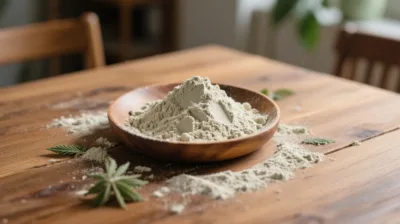
For food and supplement manufacturers, incorporating hemp seed oil into powdered or dry products has long been a challenge. Liquid oil is difficult to handle, prone to oxidation, and incompatible with dry formulations. Micro encapsulation technology solves these problems by converting the oil into a stable, free-flowing powder that integrates seamlessly into dry production workflows.
This B2B guide covers the technology, benefits, and applications of Hemp seed oil micro capsule powder, providing formulators and product developers with the technical information needed to evaluate this ingredient for commercial production.
What is micro-encapsulated hemp seed oil?
Micro encapsulation is a process where oil droplets are coated with a protective wall material, converting liquid oil into a free-flowing powder. The core material, hemp seed oil, is surrounded by a thin shell of wall material that acts as a physical barrier against environmental stressors. The wall material is typically plant-based, including maltodextrin, modified starch, or plant protein isolates.
The result is a fine powder containing 40 to 70 percent oil by weight, with the oil protected from oxidation, light, and heat. Outside, the powder behaves like any other dry ingredient. It can be weighed, blended, and stored using standard equipment. This transformation is what makes micro capsule vs regular oil a critical consideration for B2B formulators.
Hemp seed oil is valued for its balanced omega-3 and omega-6 ratio, its gamma-linolenic acid (GLA) content, and its overall nutritional profile. As a liquid, however, it presents handling and stability challenges that limit its use. Micro encapsulation removes those limitations while preserving the oil’s nutritional value.
The encapsulation process
Understanding the production process helps formulators appreciate what goes into Hemp seed oil micro capsule powder and why quality varies between suppliers:
Emulsification: Hemp seed oil is dispersed in an aqueous solution containing the wall material, which surrounds each oil droplet and prevents coalescing.
Homogenization: Oil droplets are reduced to micro-scale (1 to 100 micrometers). Smaller droplets produce more uniform powder with better encapsulation efficiency.
Drying: Spray drying is the most common commercial method, removing water to leave solid powder particles. Freeze drying is used for specialty applications requiring maximum preservation of the oil’s fragile components.
Quality control: The finished powder is tested for oil load, particle size distribution, oxidation level, moisture content, and microbial safety.
The choice of wall material affects stability, solubility, and release characteristics. Maltodextrin-based walls dissolve quickly in water, starch-based walls offer better heat resistance, and protein-based walls provide enhanced oxidation protection with controlled release potential.
Key benefits for B2B formulators
Oxidation protection
Hemp seed oil is rich in polyunsaturated fatty acids, which are highly susceptible to oxidation. In liquid form, shelf life is typically 6 to 12 months. Micro encapsulation creates a physical barrier that blocks oxygen ingress, reduces light exposure, and buffers against temperature fluctuations, extending shelf life to 18 to 24 months sealed at room temperature. For manufacturers managing large inventories or extended supply chains, this has direct economic and quality implications.
Powder handling
Free-flowing powder is easier to weigh, mix, and transport than liquid oil. It can be handled with standard blending, conveying, and packaging equipment: no spills, no sticky residue, no specialized oil-handling infrastructure. Powder also simplifies inventory management, storing in bags or drums alongside other dry ingredients rather than requiring temperature-controlled liquid storage.
Dry product compatibility
Liquid oil cannot be added to protein powders, drink mixes, nutrition bars, or capsule fills without causing separation, clumping, or texture problems. Micro capsule powder blends directly into dry formulations, dispersing evenly in powder mixes, binding into bar matrices, and filling capsules alongside other powdered supplements. This opens product categories previously inaccessible for hemp seed oil.
Taste masking
Hemp seed oil has a distinctive nutty and slightly grassy flavor. Encapsulation masks this by physically containing the oil within the wall material. The powder itself is essentially taste-neutral, allowing formulators to add omega-3 nutrition without affecting the product’s flavor system. In the digestive tract, the wall material dissolves, releasing the oil where its nutritional properties are needed.
Controlled release
Depending on the wall material, micro capsules can be formulated for targeted release in the digestive tract. Protein-based walls may resist dissolution in the stomach and release their payload in the intestinal environment, valuable for supplement manufacturers developing targeted-delivery products.
Precise dosing
Each gram of powder contains a known, consistent amount of oil. This simplifies formulation calculations, quality control, and regulatory compliance. If a specification calls for 500 mg of hemp seed oil per serving, the formulator calculates the required powder weight based on the oil load percentage. No volumetric measurements, no batch variability, no guesswork.
Applications in food manufacturing
Nutritional powders and drink mixes
Protein powders, meal replacements, and instant drink mixes are straightforward applications. The powder blends into the dry mix, adding omega-3 without oil separation or clumping. When the consumer adds water, the wall material dissolves, releasing the oil. This requires a water-soluble wall material, typically maltodextrin or modified starch.
Bakery
Incorporating omega-3 into baked goods has been difficult because liquid oil alters dough hydration, texture, and shelf stability. Micro capsule powder can be added to dry mixes for omega-enriched breads, muffins, and cookies. Starch-based wall materials offer better heat resistance, though formulators should test encapsulation integrity after baking.
Nutrition bars
The powder can be added to the dry ingredient blend, alongside oats, protein crisps, and dried fruit, without affecting bar texture or causing oil migration. Unlike liquid oil, which can make bars soft, sticky, or prone to oil bloom, micro capsule powder maintains structural integrity while delivering omega-3.
Capsules and tablets
Filling capsules with liquid oil requires specialized equipment and creates leakage, oxidation, and integrity challenges. Micro capsule powder fills capsules using standard equipment, with no leakage risk and extended shelf stability. It also enables combination capsules, blending hemp seed oil powder with vitamins, minerals, or plant extracts in a single fill.
Infant formula
Omega-3 enrichment in infant formula is a potential application, subject to regulatory approval. Hemp seed oil’s balanced fatty acid profile, including GLA, makes it an interesting candidate. Manufacturers must verify regulatory compliance for both the oil source and wall material in their target markets.
Functional foods
Cereals, granolas, and snack mixes can incorporate micro capsule powder as a dry ingredient, adding omega-3 without affecting texture or shelf life. These applications suit insoluble or slow-release wall materials.
Applications in supplements
Vegan omega-3 capsules
Fish oil dominates the omega-3 supplement market, but demand for plant-based alternatives is growing. HEMPLAND’s organic hemp seed oil micro capsule powder offers a vegan omega-3 source. While hemp seed oil provides ALA rather than EPA and DHA, it offers a balanced omega-3 to omega-6 ratio plus GLA, a combination fish oil does not provide.
Omega-3 + protein combination supplements
Hemp seed oil micro capsule powder can be blended with hemp protein powder to create supplements delivering both omega-3 and plant protein, building on the natural synergy between these co-products of the same seed.
Anti-inflammatory formulations
Hemp seed oil’s GLA content and balanced fatty acid profile contribute to anti-inflammatory properties. Formulators can combine the micro capsule powder with other anti-inflammatory botanicals, turmeric, ginger, or boswellia, in capsule or tablet formats, with each ingredient arriving as a stable powder.
Beauty-from-within supplements
Omega-3 fatty acids support skin hydration, barrier function, and hair health. Hemp seed oil micro capsule powder can be incorporated into beauty-from-within formulations alongside collagen peptides and biotin. Encapsulation’s taste-masking benefit is particularly valuable here, where consumers expect a neutral taste experience.
Sports nutrition
Omega-3 fatty acids play a role in exercise recovery by reducing inflammation and supporting joint health. Sports nutrition products can incorporate hemp seed oil micro capsule powder as a dry ingredient, with taste masking allowing formulation into flavored recovery drinks.
Technical specifications for formulators
When evaluating Hemp seed oil micro capsule powder for production, expect these specification ranges from a qualified supplier:
| Parameter | Typical Range |
|---|---|
| Oil content | 40 to 70 percent by weight |
| Particle size | 50 to 200 micrometers |
| Moisture content | under 5 percent |
| Peroxide value (oxidation) | under 10 meq per kg |
| Solubility | Water-soluble or insoluble, depending on wall material |
| Shelf life (sealed) | 18 to 24 months at room temperature |
| Storage conditions | Cool, dry place below 25°C; protect from direct sunlight |
These values represent industry-standard ranges. Specific products may vary depending on wall material, drying method, and oil load. Request a full specification sheet from the supplier and verify alignment with your product requirements. For a deeper technical overview, refer to the micro capsule guide. For the underlying fatty acid science, see omega-3 and omega-6 balance in organic hemp seed oil.
Formulation tips
Start low and adjust: Begin with 1 to 3 percent micro capsule powder in dry blends and adjust based on the desired omega-3 content per serving. This conservative starting point allows you to assess the powder’s behavior in your formulation before committing to higher inclusion rates.
Calculate capsule fill weight: For capsule applications, use the oil load percentage to calculate how much powder is needed to deliver the target oil dose per capsule. For example, if the powder contains 50 percent oil and you want 500 mg of hemp seed oil per capsule, you need 1,000 mg (1 gram) of powder per capsule. This calculation directly determines which capsule size is required.
Combine with other micro encapsulated oils: Consider blending hemp seed oil micro capsule powder with micro encapsulated flaxseed oil, borage oil, or other plant oils to create balanced fatty acid profiles. This approach allows formulators to fine-tune the omega-3, omega-6, and omega-9 ratios in their final product.
Test oxidation stability in the final product: Some processing steps stress the capsule wall. Baking, high-shear mixing, and prolonged exposure to moisture can degrade encapsulation integrity. Conduct stability testing on the finished product, not just on the raw ingredient, to confirm that the oil remains protected throughout the product’s intended shelf life.
Engage the supplier early: Work with the supplier to select the right wall material for your application. A maltodextrin wall dissolves quickly in beverages but may not survive baking. A modified starch wall handles heat better but may dissolve slowly in cold drinks. The supplier’s technical team can recommend the optimal wall material based on your processing conditions and end-product requirements.
Choosing a micro capsule supplier
Selecting a micro capsule supplier is a decision that affects product quality, regulatory compliance, and long-term production reliability. Key evaluation criteria include:
Oil quality: The core material should be cold-pressed, ideally organic, hemp seed oil. Starting quality determines the nutritional value and flavor of the final product.
Wall material options: A supplier should offer multiple wall materials for different applications. A single option limits formulation flexibility.
Testing and documentation: Third-party testing for oxidation, heavy metals, and microbial contamination provides independent verification. Specification sheets, Certificates of Analysis, and stability data should be available for every batch.
Certifications: Organic certification, GMP compliance, ISO registration, and HACCP accreditation indicate recognized quality systems. For regulated markets, these are often prerequisites.
Customization: The ability to adjust oil load, particle size, and wall material lets formulators specify a product matching their exact requirements.
HEMPLAND offers hemp seed oil micro capsule powder with full documentation and organic certification, supporting formulators with technical consultation and customization options for commercial production.
Conclusion
Micro encapsulated hemp seed oil powder bridges the gap between hemp seed oil’s nutritional value and the practical needs of food and supplement manufacturers. By converting liquid oil into a stable, easy-to-handle powder, micro encapsulation opens formulation possibilities that were previously impractical, from omega-enriched protein powders and drink mixes to nutrition bars, capsules, and functional foods.
For B2B buyers seeking a plant-based omega-3 ingredient, hemp seed oil micro capsule powder delivers oxidation protection (extending sealed shelf life from 6 to 12 months in liquid form to 18 to 24 months as powder), taste masking, precise dosing, and dry formulation compatibility, all while preserving the balanced 3:1 fatty acid profile and GLA content that makes hemp seed oil nutritionally valuable.
HEMPLAND provides high-quality micro capsule powder with full certification and technical support for commercial formulators. Contact HEMPLAND for specifications, samples, and pricing.
Recommended Products

Hemp Seed Oil Micro Capsule Powder
Stabilized, water-dispersible powder delivering the full benefits of organic hemp seed oil.

Organic Hemp Seed Oil
Premium organic hemp seed oil — cold-pressed, virgin & extra virgin grades. Perfect 3:1…