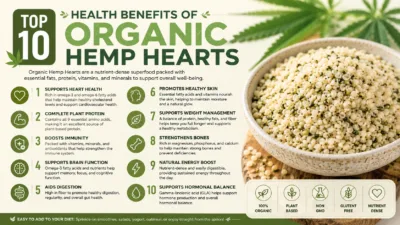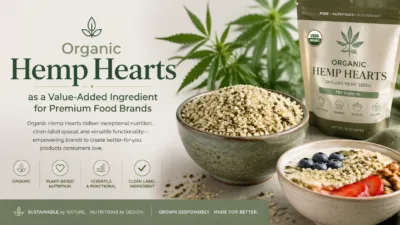
Organic hemp hearts are the inner kernels of hemp seed with the outer green hull removed. They are sold as whole kernels, and they are graded by how much hull is left in the batch. HEMPLAND produces them under USDA Organic and EU Organic certification, in a standard 25 kg bag with a customisable net weight. This guide covers what the product is, how it is made, and which lines belong on a purchase order.
What organic hemp hearts are
A hemp heart is the kernel inside a hemp seed once the greenish outer shell has been taken away. The shell is the part of the seed that people remove before eating, and the kernel is the part that carries the oil and the protein. In the market the same kernel is sold as hulled hemp seed, shelled hemp seed, dehulled hemp seed, hemp seed kernel, or hemp heart. HEMPLAND lists the product as Organic Hemp Hearts / Hulled Hemp Seeds.
Buyers work with three neighbouring products, and the boundaries matter:
- Whole hemp seed, sold as 3mm seed, keeps its hull. It carries protein of 22% or higher, dietary fibre of 25% to 30%, and an oil content of 30% or higher by weight. See 3mm hemp seeds for that line.
- Hemp protein powder is a concentrate made from the press cake left after oil extraction, with 70%, 75% or 80% protein grades.
- Hemp flour is a milled, single-sieve fraction with protein of 30% to 33% and dietary fibre of 40% to 45%.
Hemp hearts sit in a different place from all three. They are the whole kernel with the hull gone: protein of 30% or higher on a dry basis, fat of 45 to 55 g per 100 g, carbohydrate of 5 to 10 g per 100 g, and dietary fibre of 4 to 6 g per 100 g. Fibre in hemp seed lives largely in the shell, so removing the shell removes most of it and leaves a kernel that is dense in protein and fat. A buyer comparing a heart against whole seed is comparing two different products, and the specification has to name which one is on the order.
How they are produced
Cultivation comes first. The crop is grown and handled under USDA Organic and EU Organic schemes, and the finished hearts carry no solvent residues. Organic certification here covers the whole chain, from the field to the finished batch.
Oil extraction comes next on the 3mm whole seed line, where the cold press oil yield runs 25% to 28% depending on the machine, the pressure and the temperature. The press cake that remains carries protein of 15% to 20% and is the raw material for hemp protein powder.
Mechanical dehulling is the step that makes a heart. The hull is separated from the kernel mechanically, and the kernel is kept whole. No solvents are involved, which is why the finished product lists no solvent residues.
Grading closes the process. Kernels are separated by the share of green hull that remains, and the four grades are under 5%, 5% to 10%, 10% to 15% and 15% to 20%. Appearance follows the grade, running from ivory white at the clean end to light green at the other end. Buyers choose the grade, so it belongs on the order.
Quality grades and what to specify on a purchase order
The four hull grades are the first line of the specification. Below that, the analytical markers on the certificate of analysis are what confirm a batch. These are the figures HEMPLAND publishes for Organic Hemp Hearts:
- Protein: 30% or higher on a dry basis.
- Moisture: 6% or lower.
- Acid value: 2.0 mg KOH/g or lower.
- Peroxide value: 5.0 meq/kg or lower.
- Aflatoxin B1: below 2 μg/kg.
- Pesticide residues: not detected.
- Solvent residues: none.
- Heavy metals: compliant with EU and FDA standards.
- Allergens: free from gluten, nuts, soy and dairy.
Acid value and peroxide value are the two numbers to watch when product sits in stock, because both move as oil oxidises. A buyer who receives a batch can check them against the certificate of analysis and against the age of the stock.
Storage conditions and shelf life belong on the paperwork too. HEMPLAND specifies 18 to 25°C, protected from light, kept sealed, and a shelf life of 12 months for sealed product in cool, dry storage.
Packaging is part of the order as well. Hearts ship in a 25 kg bag built from a food-grade PE inner liner inside an outer corrugated carton, and the net weight is customisable. For a trial, the 3mm seed line offers samples of 100 g to 500 g free of charge with freight paid by the customer, a trial order minimum of 100 kg, and lead times of 7 to 15 working days from stock or 15 to 30 working days for customised packaging.
Raw versus toasted hemp hearts
Two forms turn up on purchase orders and in tenders, and a specification has to name which one it wants.
Raw hearts are the kernels as they leave dehulling and grading. They keep the pale natural colour of the kernel and a mild, nutty character, and they leave the buyer free to apply their own heat treatment if the application calls for it. Toasted hearts have been heat treated after grading, which deepens the colour and brings up a stronger roasted note in aroma and taste. A buyer searching on raw organic hemp hearts should expect the first form, and organic hemp seed hearts sold as a toasted finish belong in a different line of the specification.
The decision sits with the application. A buyer who wants a specific colour, aroma or level of crispness should name the form on the order, because a raw delivery and a toasted delivery will not behave the same way in the same process. The form should be confirmed in writing, together with the net weight, and the current options for the hearts line are listed on our bulk organic hemp hearts page.
Documentation buyers should request
A purchase order that names documents saves a round of email. For the hearts line, ask for the following before the first shipment.
- Certificate of analysis for the batch being delivered, covering protein, moisture, acid value, peroxide value, aflatoxin B1, pesticide residues and heavy metals.
- Organic certificates for USDA Organic and EU Organic.
- Non-GMO declaration, verified by a third party.
- Gluten-free declaration, consistent with a product that carries no gluten, no nuts, no soy and no dairy.
- Kosher certification, rabbi-certified, and Halal certification.
- MSDS and SDS for the product. HEMPLAND publishes full COA and MSDS documentation packs for its organic hemp protein line, and MSDS and SDS files for its organic hemp flour line, so buyers can request the same documents for the hearts and confirm what is on file.
For anyone who also buys whole seed, the 3mm line ships with third-party THC testing at ppm level showing not detected, and an optional germination specification of 85% or higher.
Frequently Asked Questions
Q: What is the difference between organic hemp hearts and organic hemp seeds?
A: The hull. Hearts are the kernel with the shell removed, which gives them protein of 30% or higher and fat of 45 to 55 g per 100 g. Whole 3mm seed keeps its shell, so it carries 25% to 30% dietary fibre and an oil content of 30% or higher. Hearts suit applications built around protein and texture, and whole seed suits applications that need the fibre or a pressing step.
Q: Are hemp hearts the same product as hemp protein powder?
A: No. Hemp protein powder is a concentrate made from press cake after the oil is extracted, graded at 70%, 75% or 80% protein. Hearts are the whole kernel with the hull removed, and no further concentration is applied. A buyer who wants a clean, whole ingredient should look at hearts, and a buyer who needs a high protein percentage should look at the concentrate.
Q: Which green hull grade should I specify?
A: Under 5% is the cleanest and suits retail packs and lines that clean the product themselves. The 10% to 15% and 15% to 20% grades carry more visible green flecks and suit applications where appearance matters less. State the grade on the order, since colour alone does not identify it.
Q: What documents should arrive with a first order?
A: A certificate of analysis for the batch, organic certificates for USDA Organic and EU Organic, a third-party Non-GMO declaration, a gluten-free declaration, Kosher and Halal certification, and the MSDS and SDS files. Ask for the certificate of analysis against the delivery, not against a previous lot.
Q: How should hemp hearts be stored, and how long do they keep?
A: Store the bags sealed, protected from light, at 18 to 25°C. The shelf life is 12 months for sealed product in cool, dry storage, and that shelf life assumes the temperature range above. Check acid value and peroxide value on the certificate of analysis when the batch arrives.
Q: Can the bag size and net weight be adapted?
A: Yes. The standard format is a 25 kg bag with a food-grade PE inner liner inside an outer corrugated carton, and the net weight is customisable. Our bulk hemp hearts page lists the current formats, and the 3mm seed line carries samples of 100 g to 500 g free of charge for evaluation.
Recommended Products
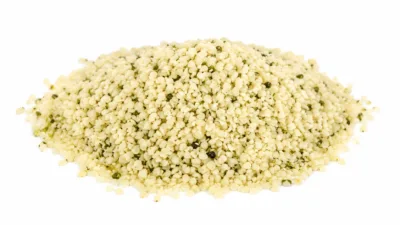
Organic Hemp Hearts
Premium organic hulled hemp seeds (shelled hemp hearts) — 33% complete plant protein, perfect…

Organic Hemp Seeds
Organic hemp seeds offer complete nutrition with optimal protein, fatty acids, and fiber content.…
Related Posts