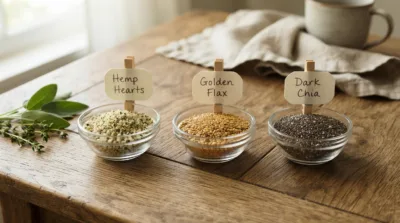
Hulled hemp seeds, shelled hemp seeds and dehulled hemp seeds are three trade names for one product: the edible kernel of the hemp seed with the outer hull removed. A specification that treats them as separate lines compares labels on paper and nothing more. The variables that genuinely move between suppliers are the green hull fraction, the nutritional spec and the documentation, and those belong on the purchase order.
Hulled, shelled and dehulled hemp seeds are the same product
Hulled and shelled describe one mechanical step. The tough green outer coat is separated from the pale kernel inside, and the kernel is then sold under any of these names. The seed itself keeps its original condition, and the germ and the inner endosperm stay in the kernel.
Dehulled is the same term written out in full. Hemp seed kernels is a less common synonym that turns up on technical spec sheets, while hulled is the word retail packaging tends to use. None of these labels point to a different processing intensity or a different oil content, so a buyer searching on organic hulled hemp seeds lands on the same product as one searching on shelled hemp seeds.
At HEMPLAND the same material is listed as Organic Hemp Hearts / Hulled Hemp Seeds, so a spec written against one name is a spec against the other. Buyers comparing a supplier who writes “shelled” against one who writes “dehulled” should look at the green hull percentage and the protein figure on both documents before concluding that the products differ.
One term does point to a different product, and it is easy to confuse with the others: “hulled” also exists in the phrase “unhulled hemp seed”, which means the whole seed with its coat intact. That is the item this article keeps comparing against, and it is the one product line where hemp seed kernels and whole seed are genuinely different goods.
What a hemp heart actually is
A hemp heart is the inside of the hemp seed: the soft pale kernel that remains once the green hull is removed. Each heart is a whole kernel. Nothing is broken or milled, so a sack of hearts looks like a sack of small pale seeds without the outer coat.
The share of green hull still present is the one grading variable, and HEMPLAND offers four fractions that a buyer can specify:
- under 5% green hull
- 5% to 10% green hull
- 10% to 15% green hull
- 15% to 20% green hull
The under 5% fraction is the cleanest, and it is the usual choice for retail packs and for lines that run their own cleaning step. Higher fractions add visible green flecks and sit at a friendlier price. Colour follows the fraction, moving from ivory white at the low end to light green at the high end, so a spec that quotes a colour without quoting a hull percentage is incomplete.
Nutrition and fibre compared with whole hemp seeds
Dehulling changes the composition, because the hull and the kernel do not have the same profile. Hearts concentrate protein and fat, and they leave most of the fibre behind with the hull.
Set a heart against a whole 3mm hemp seed and the differences are clear:
- Protein: 30% or higher on a dry basis in hearts, against 22% or higher in whole 3mm seed.
- Fat: 45 to 55 g per 100 g in hearts, against 30 to 35 g per 100 g in whole seed.
- Dietary fibre: 4 to 6 g per 100 g in hearts, against 25% to 30% in whole seed.
- Carbohydrate: 5 to 10 g per 100 g in hearts.
The fibre figure surprises most people, and it makes sense once you know where the fibre sits. A large part of the hull is structural fibre, so removing the hull removes most of it. Hearts carry a different fibre profile, and a formulation built around the whole seed’s 25% to 30% dietary fibre will behave differently on hearts.
Whole seed also keeps the oil in the kernel: an oil content of 30% or higher by weight, and a bulk density of 620 to 680 g per litre for planning transport space. Cold pressed from 3mm seed, the oil yield runs 25% to 28% depending on the press, the pressure and the temperature, and the press cake that remains carries 15% to 20% protein.
If the formulation leans on texture or on a fibre claim, the two products will not give the same result. If it leans on protein percentage and a clean mouthfeel, hearts usually fit better.
Grades, appearance and quality markers
Colour is the fastest way to sort a sample, and it only means something next to the hull percentage. Hearts run from ivory white to light green depending on grade, so appearance confirms a fraction and proves nothing about the rest of the specification.
The numbers do the real work:
- Acid value: 2.0 mg KOH/g or lower.
- Peroxide value: 5.0 meq/kg or lower.
- Aflatoxin B1: below 2 μg/kg.
- Pesticide residues: not detected.
- Solvent residues: none.
- Heavy metals: compliant with EU and FDA standards.
- Moisture: 6% or lower.
Acid value and peroxide value are the two figures a buyer storing product should track, because both climb as oil oxidises. The 12 month shelf life assumes sealed storage in cool, dry conditions, and the recommended storage conditions are 18 to 25°C, protected from light and sealed.
Allergen status is fixed and cannot be adjusted. Hearts are free from gluten, nuts, soy and dairy, and they are Non-GMO.
Pack sizes and bulk formats
The standard HEMPLAND format is 25 kg per bag, and the net weight can be customised for a buyer running a different line rate. Every bag is a food-grade PE inner liner inside an outer corrugated carton. Our bulk organic hemp hearts page lists the formats currently available.
The 3mm whole seed line is a useful reference for what a plant already handles. It ships in 25 kg PP woven bags with a minimum of one bag per order, and it also runs retail formats at 250 g, 500 g, 1 kg and 5 kg with a minimum of 100 units. Ton bags are available at 500 kg and 1,000 kg, and a 20 foot container holds roughly 18 tonnes.
A purchase order for hearts should name four things: the green hull fraction, the protein basis as dry weight, the bag format, and the documentation set. Leave any of them open and the delivered product is a reasonable product that fails to match the receiving spec.
Certifications and documentation
Every HEMPLAND batch is covered by a fixed certification set:
- USDA Organic
- EU Organic
- Non-GMO, verified by a third party
- Kosher, rabbi-certified
- Halal
A certificate of analysis is issued for each batch, which is what makes the figures quoted above checkable against the goods that arrived. Buyers building an ongoing supply relationship can read the wider range on our hulled hemp seeds supplier page.
The published sampling and lead time details belong to the 3mm line. That line offers samples of 100 g to 500 g free of charge with the customer covering freight, and its lead time is 7 to 15 working days from stock or 15 to 30 working days for customised packaging.
Frequently Asked Questions
Q: Are hulled hemp seeds and shelled hemp seeds the same product?
A: They are. Both names describe the hemp seed with the outer hull removed, and the material behind them has the same nutritional profile and grade options. Buyers sometimes see different names used by different suppliers, which reflects a labelling habit and not a difference in the material. Compare the green hull percentage and the protein figure to confirm that two offers are the same item.
Q: What separates hemp hearts from whole hemp seeds?
A: The hull. Hearts are the kernel alone, which is why they carry 30% or higher protein and 45 to 55 g of fat per 100 g, while whole 3mm seed carries 22% or higher protein and 25% to 30% dietary fibre. Hearts suit formulations built on protein and mouthfeel, and whole seed suits applications that need the fibre or a pressing step.
Q: Which green hull percentage should be ordered?
A: Under 5% for retail packs and for lines that clean the product themselves, 10% to 15% when a little visible green is acceptable and the budget matters more than appearance. The grade you pick should be written on the purchase order, because colour alone does not identify it.
Q: Are hemp hearts free from gluten and from other allergens?
A: Yes. Hearts carry no gluten, no nuts, no soy and no dairy, and they are Non-GMO with that status verified by a third party. The certification set also includes USDA Organic, EU Organic, rabbi-certified Kosher and Halal, and a certificate of analysis is issued for each batch.
Q: How long do hemp hearts keep, and how should they be stored?
A: The shelf life is 12 months, and that assumes sealed storage in cool, dry conditions. Store the bags at 18 to 25°C, protected from light and sealed. Check the acid value and the peroxide value on the certificate of analysis when the batch arrives, since those are the two figures that move as the oil oxidises.
Q: Can the pack size be adapted to a bulk order?
A: Yes. The standard format is 25 kg per bag with a food-grade PE inner liner and an outer corrugated carton, and the net weight is customisable. Our hemp hearts pack formats page sets out the current range.
Recommended Products
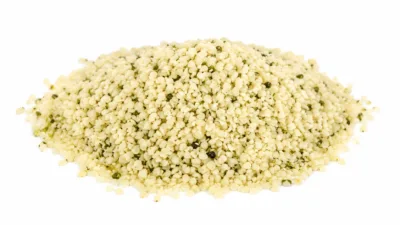
Organic Hemp Hearts
Premium organic hulled hemp seeds (shelled hemp hearts) — 33% complete plant protein, perfect…
Related Posts