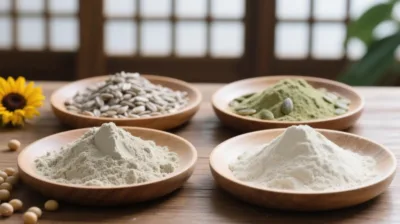
Seed cycling is a naturopathic practice that involves eating specific seeds at different phases of the menstrual cycle to support hormonal balance. The concept is simple: different seeds contain different nutrients that support the body’s natural hormonal shifts throughout the month. While clinical evidence is limited, many women report improvements in PMS symptoms, cycle regularity, and overall wellbeing. Here is how seed cycling works and how to use HEMPLAND’s organic seeds to practice it.
If you have ever felt at the mercy of your hormones, bloating before your period, mood dips mid-cycle, or irregular timing, seed cycling for hormones offers a food-based, low-risk approach that works with your body’s natural rhythms. By rotating seeds rich in zinc, magnesium, lignans, and essential fatty acids, you give your endocrine system a steady supply of the raw materials it uses to build and clear hormones.
What is seed cycling?
Seed cycling is the practice of rotating specific seeds throughout the menstrual cycle to support the dominant hormones of each phase. Rather than taking a single supplement every day, you match the nutritional profile of the seed to the hormonal work your body is doing at that moment.
During the follicular phase (Day 1 to Day 14, counting from the first day of your period), the body builds estrogen to mature a follicle. The traditional pair for this phase is pumpkin seeds and flax seeds. Pumpkin seeds provide zinc, which supports progesterone production later in the cycle, while flax offers lignans, mild plant compounds that help regulate estrogen activity.
During the luteal phase (Day 15 to Day 28, from ovulation to the next period), progesterone becomes the dominant hormone. The traditional pair here is sunflower seeds and sesame seeds. Sunflower seeds contribute selenium and vitamin E, which support liver function and hormone clearance, while sesame adds lignans and minerals that help maintain the progesterone-prostaglandin balance.
The theory is straightforward: each seed type provides specific minerals, fatty acids, and phyto compounds that support the dominant hormonal tasks of each phase. The approach is gentle and food-based, which is why many naturopathic practitioners recommend it as a foundational habit for menstrual health.
Importantly, hemp hearts can serve as a versatile substitute in both phases. Their balanced nutritional profile, a near-perfect omega-6 to omega-3 ratio, complete protein, and broad mineral content, means they can step in for flax in the follicular phase or for sesame in the luteal phase. This makes seed cycling accessible for people with seed allergies or sensitivities.
The science behind the seeds
The appeal of seed cycling for hormones rests on the nutritional logic of each seed. None of these seeds are medicine in the pharmaceutical sense, but each delivers a concentrated package of nutrients that the endocrine system relies on.
Pumpkin seeds
Pumpkin seeds are rich in zinc, a mineral involved in progesterone production and ovarian function. They also supply magnesium, which is linked with reduced PMS symptoms, better sleep, and calmer mood. For women looking to support hormonal health through diet, pumpkin seed protein for women is getting attention because of this mineral density.
Flax seeds
Flax seeds are one of the richest plant sources of lignans, which are phytoestrogens, mild plant compounds that help balance estrogen activity by competing with stronger estrogens at receptor sites. Flax is also high in omega-3 ALA. Because lignans are sensitive to light and air, flax is most effective when ground fresh.
Sunflower seeds
Sunflower seeds are an excellent source of selenium, a trace mineral that supports liver function and hormone metabolism. The liver is where estrogen is processed and prepared for elimination, so supporting liver function is a key part of hormonal balance. Sunflower seeds also provide vitamin E, an antioxidant linked with skin health and reduced breast tenderness.
Sesame seeds
Sesame seeds contribute lignans and zinc, supporting the balance between progesterone and prostaglandins, the compounds involved in inflammation and uterine contraction. Like flax, sesame is best ground fresh.
Hemp hearts
Hemp hearts hold a unique position. They offer an ideal omega-6 to omega-3 ratio of about 3 to 1, and they are one of the few plant sources of complete protein, with all nine essential amino acids. Their magnesium content supports the nervous system and muscle relaxation, and their GLA content is linked with healthy inflammatory responses. That makes hemp hearts a strong all-phase seed that supports overall hormonal health. People who use hemp seed oil in the kitchen get a similar fatty acid profile in liquid form, best used cold rather than heated.
The standard seed cycling protocol
Seed cycling for hormones follows a simple two-phase schedule based on the average 28-day menstrual cycle. The exact day count varies, so track your own cycle and adjust accordingly.
Follicular phase (Day 1 to 14)
The follicular phase begins on the first day of your period and lasts until ovulation, around Day 14. Estrogen rises to mature a follicle.
- 1 tablespoon ground flax seeds (or organic hemp hearts as an alternative)
- 1 tablespoon pumpkin seeds
- Focus: supporting estrogen metabolism and follicle development
The zinc in pumpkin seeds primes the body for progesterone production later in the cycle, while the lignans in flax keep estrogen activity balanced rather than excessive.
Luteal phase (Day 15 to 28)
The luteal phase begins at ovulation and lasts until the next period. Progesterone rises and becomes the dominant hormone.
- 1 tablespoon sunflower seeds
- 1 tablespoon sesame seeds (or organic hemp hearts as an alternative)
- Focus: supporting progesterone production and hormone clearance
The selenium and vitamin E in sunflower seeds support the liver’s clearance of estrogen, which helps maintain the right estrogen-to-progesterone ratio. A practical tip: measure out your seeds once a week and keep two small jars in the refrigerator, one for each phase, so you simply switch on the right day.
How hemp hearts fit into seed cycling
Hemp hearts earn a special place in any seed cycling practice because of their adaptability. Most seeds are phase-specific, but hemp hearts work in both halves of the cycle.
In the follicular phase, hemp hearts can substitute for flax. Both provide omega-3 fatty acids, though in different forms, flax offers ALA, while hemp provides a balanced omega-6 to omega-3 ratio plus GLA. Hemp hearts also offer more complete protein than flax, which helps support stable blood sugar and steady energy.
In the luteal phase, hemp hearts can substitute for sesame. Their mineral profile, magnesium, zinc, iron, and phosphorus, is similar enough to sesame to support progesterone production. For people who find sesame too strong in flavor or who have an allergy, hemp hearts are a mild, nutty alternative.
The ideal omega-6 to omega-3 ratio of about 3 to 1 supports both estrogen and progesterone phases, because both hormones rely on healthy cell membrane function and a balanced inflammatory response. For those allergic to flax or sesame, hemp hearts are the ideal alternative, and the simplest seed in the protocol, requiring no grinding or soaking. That convenience is one reason HEMPLAND’s organic hemp hearts are a staple in many seed cycling kitchens.
How to prepare and consume the seeds
How you prepare your seeds matters almost as much as which seeds you choose. The nutrients in seeds are locked inside tough outer shells and delicate oils that degrade quickly once exposed to air.
Grind flax and sesame seeds fresh
Whole flax and sesame seeds tend to pass through the digestive tract largely intact, so you miss most of their lignans and oils. A small coffee grinder dedicated to seeds is a worthwhile investment. Grind only what you need for a day or two, and store the extra in an airtight jar in the refrigerator.
Pumpkin and sunflower seeds can be eaten whole or ground
Their larger size makes them easier to chew, but grinding releases more minerals and oils. Choose raw, unsalted versions, roasting and salting add sodium and damage heat-sensitive nutrients.
Hemp hearts need no preparation
Already hulled and ready to eat, they are one of the biggest advantages of a daily practice, no grinder, no mess, no planning ahead.
There are many ways to work your daily seeds into meals:
- Blend them into a morning smoothie with fruit and greens.
- Stir ground flax or hemp hearts into yogurt or oatmeal.
- Sprinkle pumpkin and sunflower seeds over a lunch salad.
- Mix all four into a grain bowl for dinner.
- Eat a spoonful of hemp hearts straight as a snack.
Consistency matters. Try to eat your seeds at roughly the same time each day. Many women tie seed cycling to a daily anchor, breakfast, a smoothie, or an evening cup of tea. And choose organic seeds whenever possible: pesticide residues can disrupt endocrine function, the opposite of what seed cycling aims to support. HEMPLAND’s organic pumpkin seed kernel and organic sunflower seed kernel are grown without synthetic pesticides, which matters when you are eating a tablespoon or more every day.
What to expect: timeline and results
Seed cycling for hormones is not a quick fix. Because hormones shift on a roughly monthly cycle, it takes time for the body to respond to consistent nutritional support.
Most women report changes after two to three complete cycles
That is roughly two to three months. The body needs time to build mineral stores, rebalance fatty acid ratios, and adjust estrogen metabolism. Some women notice shifts within the first month, often in mood or breast tenderness, while others need four to six cycles before seeing meaningful changes in cycle length or PMS intensity.
Potential benefits that women commonly report include:
- Reduced PMS symptoms, including bloating, breast tenderness, and irritability
- More regular cycle length, with fewer very short or very long cycles
- Improved mood stability across the month
- Better skin, particularly fewer pre-period breakouts
- Steadier energy and fewer afternoon slumps
These benefits are not guaranteed, and the practice works best as part of a broader foundation of hormonal health, adequate sleep, regular movement, stress management, and a nutrient-dense diet.
Track your symptoms in a journal. Note the start and end of each period, PMS symptoms, mood patterns, energy levels, and skin changes. Reviewing your notes after three months makes it easier to see subtle shifts you might otherwise miss.
Seed cycling is not a replacement for medical treatment. If you have a diagnosed hormonal condition, such as polycystic ovary syndrome, endometriosis, or a thyroid disorder, seed cycling can be a supportive practice, but it should not replace the care of a qualified healthcare provider. If your cycles are very irregular, very painful, or have stopped entirely, consult a professional.
Seed cycling for perimenopause and postmenopause
Seed cycling is often described in terms of the menstrual cycle, but it can be adapted for women in perimenopause or postmenopause, when cycles become irregular or have stopped.
For women without a predictable cycle, the traditional approach is to use the lunar cycle as a guide. The moon completes a cycle roughly every 28 days, close enough to the average menstrual cycle length to serve as a useful external rhythm.
- Days 1 to 14 (new moon to full moon): pumpkin seeds and flax seeds (or hemp hearts)
- Days 15 to 28 (full moon to new moon): sunflower seeds and sesame seeds (or hemp hearts)
The logic is the same, the first half focuses on estrogen balance, the second half on progesterone support and hormone clearance. For women in perimenopause, whose hormones fluctuate unpredictably, this external rhythm can provide a steadying structure.
Women in perimenopause and postmenopause may find seed cycling helpful for symptoms such as hot flashes, mood swings, sleep disturbances, and changes in skin and hair. It is worth noting that the evidence for this application is primarily anecdotal, though the individual nutrients, lignans, omega-3 fatty acids, selenium, and magnesium, have been studied for their roles in menopausal health. As with the menstrual version, seed cycling is best seen as a gentle supportive practice rather than a treatment.
Choosing quality seeds for cycling
Because seed cycling involves eating the same seeds every day for weeks, quality matters a great deal. Poor-quality seeds can introduce the very problems the practice is meant to address, pesticide residues, rancid oils, and degraded nutrients.
Choose organic certified seeds
Pesticides and herbicides used in conventional farming can include endocrine-disrupting compounds. Eating a tablespoon of conventionally grown seeds every day means steady low-dose exposure, which works against hormonal balance. Organic certification is the simplest way to avoid this.
Choose raw, not roasted
Roasting at high temperatures damages the delicate omega oils and reduces the activity of lignans. Raw seeds preserve the full nutritional profile.
Choose fresh seeds
Seeds lose nutritional value over time, and their oils go rancid, particularly flax. Buy in quantities you can use within a month or two. Rancid seeds have a bitter, paint-like smell and can cause digestive upset.
HEMPLAND offers organic pumpkin seed kernels, organic sunflower seed kernels, and organic hemp hearts. All are raw, certified organic, and suitable for seed cycling. Store seeds in the refrigerator for maximum freshness, in airtight containers to slow the oxidation of oils.
Common mistakes and how to avoid them
Seed cycling is simple, but a few common mistakes can reduce its effectiveness.
Not grinding flax and sesame
Whole flax and sesame seeds pass through the digestive tract largely intact, so you get only a fraction of their lignans and oils. The fix is simple: grind them fresh in a small coffee grinder just before eating.
Using roasted or salted seeds
Roasting damages omega oils and reduces lignan activity. Salted seeds add sodium most people do not need. Always choose raw, unsalted seeds.
Inconsistency
Seed cycling relies on daily, steady intake. Missing several days a week reduces the nutritional momentum the practice depends on. Tying your seeds to a daily habit, breakfast, a smoothie, a cup of tea, is the most reliable way to stay consistent.
Using rancid seeds
Flax seeds are especially prone to rancidity once ground. If your ground flax smells bitter or sharp, it has likely gone off. Once ground, use within a few days and store in the refrigerator.
Expecting immediate results
Hormones shift slowly. Most women need at least two to three cycles to notice meaningful changes. Commit to three full months before judging the results.
Conclusion
Seed cycling is a gentle, natural practice that many women find supportive for hormonal balance. While clinical evidence is still emerging, the nutritional logic is sound: rotating seeds provides a diverse range of minerals, fatty acids, and phytoestrogens that support the body’s natural hormonal rhythms. The approach is low-risk, food-based, and simple enough to fit into a daily routine.
The protocol is straightforward, pumpkin and flax in the first half of the cycle, sunflower and sesame in the second, and hemp hearts can step in at either phase, making the practice accessible even for those with seed allergies. The key is consistency, fresh raw organic seeds, and realistic expectations measured in months rather than days.
HEMPLAND’s organic pumpkin kernels, sunflower kernels, and hemp hearts make it easy to source high-quality seeds for your cycling practice.
Contact Us for bulk ordering or sample requests.
Frequently asked questions
Q: What is seed cycling and which seeds are used?
A: Seed cycling pairs flax and pumpkin seeds in the follicular phase with sunflower and sesame in the luteal phase to support hormone balance through the cycle.
Q: Where do hemp hearts fit in seed cycling?
A: Hemp hearts are often added for extra complete protein and omega balance but are not one of the four classical cycling seeds.
Q: Is there scientific evidence for seed cycling?
A: Research is limited; seed cycling is a naturopathic practice, so brands should position it as a wellness tradition rather than a clinically proven therapy.
Related articles
Recommended Products

Organic Sunflower Seed Kernels
Premium, hulled kernels from organically grown sunflowers, offering a deliciously mild, nutty flavor and…

Organic Pumpkin Seed Kernel
Premium Whole Seed Nutrition for Food, Snack & Oil Applications
Organic Pumpkin Seed Protein Powder
Organic pumpkin seed protein powder offers ≥60% protein with high magnesium, zinc, and iron…
Related Posts