
Elite performance demands elite nutrition. Whether you train for strength, endurance, or competitive sport, what you fuel your body with between workouts determines how fast you recover, how effectively you build muscle, and how consistently you can train. The global sports nutrition market — valued at over $50 billion USD in 2024 — is increasingly shifting toward clean-label, plant-based, allergen-free ingredients that deliver clinically meaningful performance benefits without artificial additives.
Organic hemp hearts (Cannabis sativa hulled seeds), also marketed as hemp kernels, shelled hemp, or hulled hemp seeds, are emerging as one of the most scientifically compelling whole-food ingredients in this space. They offer a rare combination of complete plant-based protein, optimal omega-3/omega-6 fatty acids, critical performance minerals, and anti-inflammatory GLA — all in a single clean-label ingredient with no added sugars, artificial flavors, or allergens.
This guide covers the science behind hemp hearts for athletic performance and recovery, with dedicated sections for individual athletes and B2B buyers — sports nutrition brands, supplement formulators, and functional food manufacturers evaluating hemp hearts as a premium ingredient.
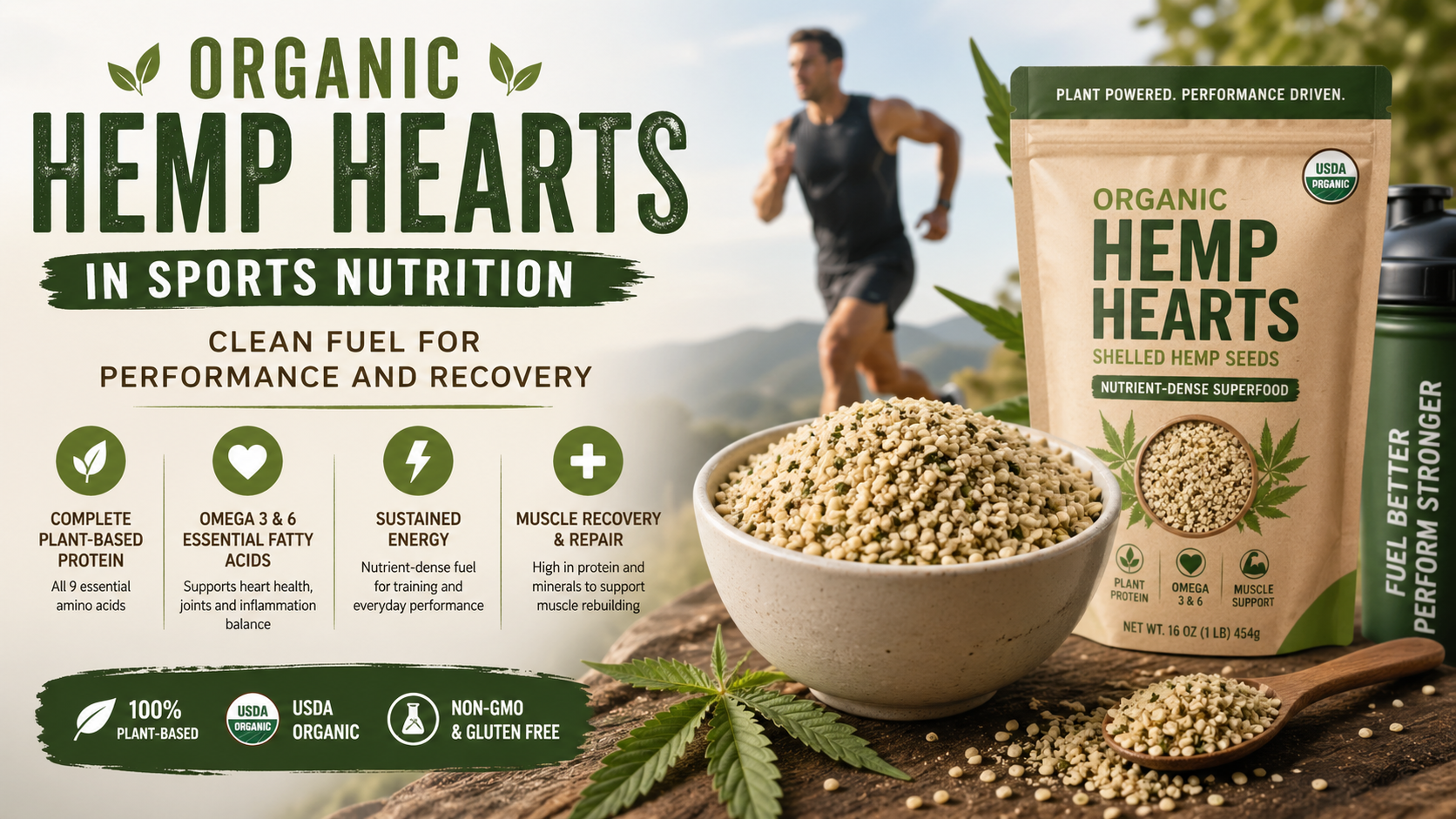
The Athletic Case for Hemp Hearts: A Nutritional Profile Built for Performance
A standard 30g serving (approximately 3 tablespoons) of organic hemp hearts provides:
| Nutrient | Per 30g serving | % Daily Value (Adult) | Athletic relevance |
|---|---|---|---|
| Complete protein | ~11g | ~20–22% | Muscle synthesis, repair |
| Total fat | ~14g | — | Sustained energy, hormone support |
| Omega-3 (ALA) | ~2.5g | — | Inflammation resolution, recovery |
| Omega-6 (LA + GLA) | ~7.5g | — | Hormonal balance, cell repair |
| Magnesium | ~120mg | ~28–30% | Muscle function, sleep, cramps |
| Zinc | ~1.8mg | ~16–20% | Testosterone, immunity, wound healing |
| Iron | ~2.5mg | ~14% | Oxygen transport, aerobic capacity |
| Phosphorus | ~380mg | ~30% | ATP energy production |
| Vitamin E | ~1mg | ~7% | Antioxidant recovery support |
| Fiber | ~1.2g | — | Gut health, sustained glucose |
No other single whole-food ingredient in the sports nutrition space delivers this complete spectrum of protein quality, essential fatty acids, and performance-critical minerals in a single serving.
6 Science-Backed Mechanisms: How Hemp Hearts Support Athletic Performance
1. Complete Protein with a Superior Amino Acid Profile for Muscle Synthesis
Protein is the foundation of every recovery and adaptation cycle in sport. But not all proteins are equal — protein quality is determined by both amino acid completeness and digestibility. The gold standard metrics are PDCAAS (Protein Digestibility Corrected Amino Acid Score) and DIAAS (Digestible Indispensable Amino Acid Score).
Hemp hearts score notably well by plant protein standards:
- PDCAAS: ~0.64–0.87 (varies by processing; cold-hulled hemp hearts score toward the higher end)
- DIAAS: ~0.60–0.75 for most protein fractions
- All 9 essential amino acids are present, with particularly high levels of methionine (often the limiting amino acid in plant proteins like pea and rice) and arginine
The two primary protein fractions in hemp:
- Edestin (~65%): A globulin-type protein structurally similar to human blood globulins. Highly digestible. Rich in arginine, glutamic acid, and methionine — all critical for nitrogen balance, muscle repair, and immune function during hard training blocks
- Albumin (~35%): Well-studied for high bioavailability. Rich in lysine (often limited in grain-based proteins) and cysteine (glutathione precursor, important for antioxidant defense in athletes)
A clinical study in the Journal of the International Society of Sports Nutrition (2020) found that plant protein blends including hemp protein supported muscle protein synthesis comparably to whey when leucine intake was matched — an important finding for plant-based athletes. Combining hemp hearts with leucine-dense foods (edamame, pea protein) optimizes the anabolic response.
Practical application: For post-workout muscle protein synthesis (MPS), consuming hemp hearts within 30–60 minutes of training (20–30g serving) delivers ~7–11g of high-quality plant protein to support muscle repair.
2. Omega-3 and GLA for Inflammation Management and Faster Recovery
Exercise-induced muscle damage (EIMD) triggers a cascade of inflammatory responses — including elevated IL-6, CRP, and creatine kinase (CK) — that are necessary for adaptation but can impair performance if chronic or excessive. Managing this inflammatory window is the key challenge of sports recovery nutrition.
Hemp hearts provide two complementary anti-inflammatory pathways:
Omega-3 ALA (Alpha-Linolenic Acid — ~2.5g/30g serving):
- Partially converted to EPA/DHA in the body (conversion rate 5–15%)
- EPA → Series 3 prostaglandins (PGE3) and thromboxane A3 — reduced platelet aggregation and less inflammatory signaling
- A 2019 meta-analysis in Nutrients across 30 RCTs found that omega-3 supplementation reduced exercise-induced muscle soreness (DOMS) by ~28% and CK levels by ~18% compared to placebo
GLA (Gamma-Linolenic Acid — ~0.5–0.7g/30g serving):
- Bypasses the pro-inflammatory arachidonic acid pathway
- Produces Series 1 prostaglandins (PGE1) → reduced joint inflammation, improved microvascular blood flow, and faster tissue repair
- GLA is particularly beneficial for athletes experiencing joint pain, tendon inflammation, or repetitive-use injuries — common in endurance and high-frequency training protocols
The combination of omega-3 and GLA in hemp hearts creates a dual anti-inflammatory system that addresses both the acute post-workout inflammatory cascade (omega-3) and chronic low-grade joint inflammation (GLA). This differentiates hemp hearts from standard fish oil supplements, which provide only the omega-3 pathway.
3. Magnesium: The Performance Mineral Athletes Most Commonly Lack
Magnesium is the most under-consumed performance mineral in the athletic population. Studies consistently find that 40–60% of athletes are magnesium-insufficient (serum Mg <0.85 mmol/L), primarily due to elevated urinary and sweat losses during training.
The consequences of magnesium insufficiency on athletic performance are significant:
- Muscle function: Magnesium acts as a calcium antagonist in muscle contraction — insufficient Mg leads to incomplete relaxation, cramps, and spasms
- Oxygen delivery: Magnesium is required for 2,3-diphosphoglycerate (2,3-DPG) synthesis, which regulates hemoglobin’s oxygen release to working muscles
- Energy metabolism: Magnesium is a cofactor for all ATP-producing enzymes (ATPase) — virtually every energy-producing reaction in muscle cells requires Mg
- Sleep quality: Magnesium regulates GABA receptors and melatonin synthesis, critical for recovery sleep depth and HGH secretion
- Protein synthesis: Magnesium is required for ribosomal translation — without adequate Mg, protein synthesis efficiency drops even when protein intake is high
At ~120mg magnesium per 30g serving (~30% of the RDA, higher in athletes requiring ~450–500mg/day), hemp hearts are among the most magnesium-dense whole foods available. A 2021 study in the Journal of the American Osteopathic Association found that athletes supplementing 350–450mg/day of magnesium saw significant improvements in resting testosterone levels, muscle strength, and grip force, independent of training variables.
4. Zinc for Testosterone, Immunity, and Training Adaptation
Zinc is integral to over 300 enzymatic reactions in the human body, with specific relevance to athletes:
- Testosterone synthesis: Zinc is a required cofactor for LH-stimulated androgen production in Leydig cells. Athletes with low zinc show significantly reduced testosterone levels — even when caloric intake is adequate
- Growth hormone axis: Zinc supports IGF-1 production and somatomedins that mediate tissue growth and repair responses to training
- Immune defense: Intense training temporarily suppresses immune function (the “open window” theory). Zinc maintains T-cell and NK-cell activity, reducing upper respiratory tract infection (URTI) incidence in hard training periods — a known limiting factor in athletic consistency
- Antioxidant function: Zinc is a structural component of superoxide dismutase (SOD), the primary intracellular antioxidant enzyme in muscle cells
Hemp hearts provide ~1.8mg zinc per 30g serving (~16–20% RDA). For male athletes requiring 11mg/day and female athletes 8mg/day, daily hemp heart consumption contributes meaningfully alongside dietary zinc from meat, legumes, and seeds.
A meta-analysis in the British Journal of Nutrition (2020) confirmed that zinc supplementation of 25–45mg/day increased free testosterone by 16–24% in zinc-insufficient male athletes, with corresponding improvements in muscle recovery markers.
5. Arginine for Nitric Oxide Production and Blood Flow
Hemp hearts are among the richest plant sources of L-arginine, providing approximately 2.5–3g of arginine per 30g serving (derived from both edestin and albumin fractions).
Arginine is the primary substrate for nitric oxide (NO) synthesis via endothelial nitric oxide synthase (eNOS):
- NO → vasodilation → increased blood flow to working muscles
- Improved oxygen and nutrient delivery during high-intensity intervals
- Accelerated clearance of lactate and metabolic byproducts post-exercise
- Enhanced muscle “pump” during resistance training (a proxy for cellular hydration and anabolism)
Research in Nutrition journal found that 3–6g/day of L-arginine improved time-to-exhaustion by 8–12% in endurance athletes and reduced rating of perceived exertion (RPE) at equivalent workloads. Hemp hearts can meaningfully contribute to daily arginine intake alongside citrulline-based pre-workout products — with the advantage of being a whole-food source rather than an isolated amino acid supplement.
6. Phosphorus and Iron for Energy Metabolism and Aerobic Capacity
Two often-overlooked minerals in sports nutrition — both well-represented in hemp hearts:
Phosphorus (~380mg/30g, ~30% RDA):
- Essential for ATP and ADP synthesis — without adequate phosphorus, cells cannot regenerate the energy currency needed for both aerobic and anaerobic work
- Required for creatine phosphate (PCr) resynthesis — the primary fuel for explosive, high-intensity efforts (sprints, lifts, jumps)
Iron (~2.5mg/30g, ~14% RDA):
- Component of hemoglobin and myoglobin — critical for oxygen transport to muscles and storage within muscle tissue
- Involved in the electron transport chain (ETC) for aerobic ATP production
- Iron deficiency without anemia (depleted ferritin stores) reduces aerobic capacity by up to 15% — a common and under-diagnosed issue in female endurance athletes
- Hemp hearts contain non-heme iron with enhanced bioavailability when paired with vitamin C-rich foods (pairing hemp hearts with citrus, bell peppers, or strawberries in meals/smoothies improves absorption by 2–3×)
Hemp Hearts vs. Conventional Sports Nutrition Proteins: An Honest Comparison
| Attribute | Organic Hemp Hearts | Whey Protein | Pea Protein | Casein Protein | Egg White Protein |
|---|---|---|---|---|---|
| Protein per 30g | ~11g | ~24g | ~22g | ~24g | ~26g |
| Complete protein | Yes | Yes | No (low Met) | Yes | Yes |
| PDCAAS | ~0.64–0.87 | 1.0 | 0.67–0.89 | 1.0 | 1.0 |
| Omega-3 (ALA) | ~2.5g | Negligible | Negligible | Negligible | Negligible |
| GLA (anti-inflammatory) | ~0.5–0.7g | None | None | None | None |
| Magnesium per serving | ~120mg | ~20mg | ~40mg | ~25mg | Negligible |
| Zinc per serving | ~1.8mg | ~1.5mg | ~0.8mg | ~1.2mg | ~0.6mg |
| Arginine per serving | ~2.5–3g | ~1.4g | ~1.6g | ~2.2g | ~1.0g |
| Vegan / plant-based | Yes | No | Yes | No | No |
| Allergen-free | Yes (nut/soy/gluten/dairy-free) | No (dairy) | Yes | No (dairy) | No (egg) |
| Drug test safe (athletes) | Yes (<0.01% THC) | Yes | Yes | Yes | Yes |
| Clean label (no additives) | Yes (whole food) | Usually added (sweeteners, emulsifiers) | Usually added | Usually added | Usually added |
| Digestive tolerance | Excellent | Variable (lactose) | Good | Slow (designed) | Good |
| Caloric density per serving | ~150kcal | ~110–120kcal | ~100–110kcal | ~110–120kcal | ~100–110kcal |
| Best timing | Pre/post/anytime | Post-workout | Post-workout | Pre-sleep | Post-workout |
Key takeaway: Hemp hearts are not the highest protein-per-gram option, but they are the only whole-food protein source that simultaneously delivers complete amino acids, omega-3, GLA, significant magnesium, and clean-label credentials — without any of the major allergens or additives found in most processed protein supplements.
Practical Sports Nutrition Guide: Timing and Usage
Pre-Workout (1–2 hours before training)
- Goal: Sustained energy, pre-loaded anti-inflammatory support
- Serving: 2–3 tbsp hemp hearts + 1 cup oats + banana
- Why it works: Complex carbohydrates provide glycogen substrate; hemp fats provide slow-burning fuel; arginine begins the NO priming process; magnesium pre-loads before sweat losses occur
Post-Workout (within 30–60 minutes after training)
- Goal: Muscle protein synthesis, inflammation resolution, glycogen reloading
- Serving: 3 tbsp hemp hearts in a smoothie with berries, banana, and a vitamin C source
- Why it works: Complete amino acids initiate MPS; GLA begins resolving EIMD inflammation; vitamin C from fruit enhances iron absorption from hemp; antioxidants begin quenching ROS from training
Rest Day / Recovery Day
- Goal: Systemic recovery, hormonal support, sleep quality
- Serving: 2 tbsp hemp hearts in yogurt or cottage cheese + mixed seeds
- Why it works: Magnesium and zinc support overnight recovery and HGH secretion; omega-3 continues systemic anti-inflammatory action during rest
In-Season High-Frequency Training
- Daily total: 4–5 tbsp hemp hearts spread across meals
- Key benefit: Consistent omega-3 and GLA intake reduces cumulative training inflammation; zinc supports immune function during back-to-back training days
B2B Formulation Applications
| Product type | Hemp heart format | Inclusion rate | Target claim |
|---|---|---|---|
| Plant-based protein powder | Hemp protein powder (50/60/70%) | 30–60% of blend | Complete plant protein |
| Pre-workout whole food bar | Whole hemp hearts | 15–25% of formula | Clean energy, arginine for pump |
| Post-workout recovery shake | Hemp protein concentrate | 20–40% of blend | Rapid recovery, anti-inflammatory |
| Endurance energy gel/bite | Hemp hearts + dates + cacao | 10–15% | Sustained energy, natural electrolytes |
| Sports granola / trail mix | Whole hemp hearts | 20–30% | High-protein, clean-label snack |
| Meal replacement (athlete) | Hemp protein + hemp hearts | 25–35% | Complete nutrition, clean label |
| Electrolyte recovery mix | Hemp protein + coconut water base | 15–25% | Mineral replenishment post-sweat |
Will Hemp Hearts Affect Drug Testing for Competitive Athletes?
This is the most common concern for competitive and elite athletes. The answer is clear:
Hemp hearts are safe for drug-tested athletes. Organic hemp hearts contain:
- THC (<0.01%, <100ppm) — far below any World Anti-Doping Agency (WADA) or USADA threshold
- No cannabidiol (CBD) at pharmacologically relevant levels — hemp hearts are a food, not a CBD product
- No stimulants, diuretics, or prohibited anabolic agents
Hemp hearts have been cleared by sports nutrition organizations as safe for consumption by Olympic and professional athletes. HEMPLAND’s products undergo third-party laboratory testing with COAs confirming THC levels well within safety margins.
Safety, Dosing, and Contraindications for Athletes
| Parameter | Recommendation |
|---|---|
| Standard daily serving | 2–4 tablespoons (20–40g) |
| Performance/recovery dose | 3–4 tablespoons (30–40g) |
| Maximum safe dose | No established upper limit for whole hemp hearts; >60g/day unnecessary |
| Timing | Pre- or post-workout (flexible — whole-food protein, not time-critical like whey) |
| Drug testing | Safe at any dose per WADA/USADA standards |
| Allergens | Free of the 9 major allergens (FDA list) |
| Digestive tolerance | Excellent; no bloating issues associated with lactose (whey) or oligosaccharides (pea) |
| Kidney health | No evidence of harm at standard athletic doses; consult nephrologist if pre-existing kidney conditions |
Hemp Hearts as a Foundation of Clean Performance Nutrition
Organic hemp hearts occupy a unique position in the sports nutrition landscape: they are a complete whole-food protein source that simultaneously delivers the minerals (magnesium, zinc, iron, phosphorus), essential fats (omega-3, GLA), and performance-specific amino acids (arginine, methionine, lysine) that athletes most critically need — without allergens, additives, artificial inputs, or drug-test risk.
They are not intended to replace high-concentration protein powders for athletes with acute protein targets of 40–50g per serving. But as a daily nutritional foundation and a functional ingredient in sports food formulations, hemp hearts offer performance nutrition advantages that no other single whole-food ingredient currently matches.
For competitive and recreational athletes alike, incorporating 3–4 tablespoons of organic hemp hearts daily into a periodized nutrition strategy is one of the simplest, most evidence-aligned upgrades available. For sports nutrition brands and functional food manufacturers, hemp hearts represent a premium, clean-label, multi-functional ingredient positioned at the intersection of performance science and consumer wellness trends.
Source premium organic hemp hearts from HEMPLAND — certified organic, non-GMO, allergen-free, and supplied with full third-party testing documentation to satisfy both regulatory and clean-label requirements in the sports nutrition market.
FAQ
1. Are hemp hearts a good source of protein for athletes?
Yes — hemp hearts are an excellent whole-food protein source for athletes, providing ~11g of complete plant protein per 30g serving with all nine essential amino acids. While the protein concentration is lower than isolated powders (whey or pea), the combination of complete amino acids, omega-3, GLA, magnesium, and zinc makes hemp hearts uniquely comprehensive. They work best as a dietary foundation (3–4 tbsp/day) complemented by higher-concentration protein sources when specific post-workout targets apply.
2. How do hemp hearts compare to whey protein for muscle recovery?
Hemp hearts and whey serve different but complementary roles. Whey is faster-digesting (ideal in the acute 30-min post-workout window) with a higher protein concentration and PDCAAS of 1.0. Hemp hearts are more nutrient-dense overall — they add omega-3/GLA for inflammation resolution, magnesium for muscle relaxation and sleep, and zinc for hormonal support. Many plant-based athletes combine hemp hearts as a daily whole-food base with a pea-rice protein blend for targeted post-workout dosing.
3. Can hemp hearts improve endurance performance?
Yes, through multiple mechanisms: (1) Arginine supports nitric oxide production and vasodilation, improving oxygen delivery during aerobic exercise; (2) Omega-3 reduces exercise-induced inflammation, supporting recovery between sessions; (3) Iron contributes to hemoglobin synthesis and oxygen transport capacity; (4) Magnesium is critical for the oxygen-releasing function of hemoglobin (2,3-DPG). Endurance athletes particularly benefit from the combined arginine + omega-3 + magnesium profile of hemp hearts.
4. Will eating hemp hearts cause me to fail a drug test?
No. Organic hemp hearts contain less than 0.01% THC — far below any threshold in WADA, USADA, NCAA, or workplace drug testing protocols (typically 50–150ng/ml in urine). Hemp hearts are classified as a food, not a CBD supplement, and have been cleared safe for competitive athletes. HEMPLAND products are third-party tested with COAs confirming compliance.
5. What is the best time to eat hemp hearts for athletic performance?
Hemp hearts are a whole food with moderate digestion speed — not time-critical in the same way whey is. The most effective timing: (1) 1–2 hours pre-workout in a balanced meal with complex carbs for sustained energy; (2) within 30–60 minutes post-workout in a smoothie for amino acid delivery and inflammation resolution; (3) before sleep to support overnight magnesium-driven HGH secretion and muscle repair. Daily consistency matters more than precise timing.
6. Can vegan and plant-based athletes use hemp hearts as their primary protein source?
Hemp hearts can be a central protein source in a plant-based athlete diet but work best combined with other high-protein plants to optimize total daily protein intake (1.6–2.2g/kg body weight for strength athletes, 1.2–1.6g/kg for endurance athletes). Pair hemp hearts with legumes (edamame, lentils, chickpeas) to supplement lysine; with pea or soy protein for post-workout leucine loading; and with quinoa or buckwheat for additional complete protein diversity. This combination creates a comprehensive plant-based amino acid profile equivalent to mixed omnivore diets.
7. Do hemp hearts reduce muscle soreness after training?
Yes — clinical evidence supports this. The omega-3 ALA in hemp hearts reduces pro-inflammatory prostaglandins (PGE2, LTB4) that drive delayed onset muscle soreness (DOMS). A 2019 meta-analysis in Nutrients found omega-3 supplementation reduced DOMS and creatine kinase (a muscle damage marker) by ~18–28% compared to placebo. GLA in hemp hearts also reduces the joint and tendon inflammation associated with high-volume training. Effects are cumulative — consistent daily intake over 4–6 weeks produces the most significant anti-inflammatory benefit.
8. How many hemp hearts should an athlete eat per day?
3–4 tablespoons (30–40g) daily is the optimal range for most athletes, spread across 2–3 meals for consistent amino acid and omega availability. This delivers ~11–15g complete protein, ~3–3.5g ALA omega-3, ~130–160mg magnesium, ~2–2.5mg zinc, and ~3–4g L-arginine per day. Athletes in heavy training blocks or those managing chronic inflammation can safely increase to 5 tablespoons (50g) — there is no established upper limit for whole hemp hearts as a food.