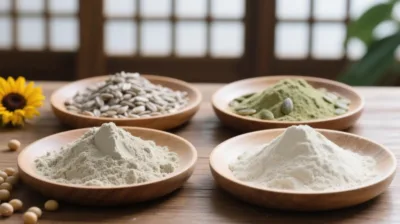
Hemp seed oil often comes up in parenting circles as a gentle, plant-based option for dry or delicate skin. Pressed from the seeds of the hemp plant, it is lightweight, absorbs quickly, and carries a fatty-acid profile that suits everyday care. Babies and young children are not simply small adults, though. Their skin barrier is still developing, and any new product deserves a cautious, unhurried approach. This guide covers where hemp seed oil genuinely fits, how to use it sparingly, the safety steps that matter most, and how to pick a product that is actually suitable for a child.
A gentle option for skin
Hemp oil for babies is sometimes picked as a light moisturizer for delicate skin. It is mild and sinks in without leaving a heavy film, which matters when you are dressing a wriggly baby and do not want grease transferred to clothes.
That light feel comes down to its fatty-acid profile. Hemp seed oil is rich in linoleic acid (an omega-6) and contains alpha-linolenic acid (an omega-3) in a ratio that formulators look for in products aimed at sensitive or easily irritated skin. It also carries a smaller amount of gamma-linolenic acid (GLA), which is part of why it appears so often in products positioned for dry or reactive skin.
It is worth being clear about what this oil is and is not. Hemp seed oil is a food-grade seed oil, not an essential oil. It does not contain the volatile aromatic compounds that make essential oils risky for infants, and it is not a psychoactive product. Reputable suppliers press it from food-grade seed and sell it as a culinary or cosmetic ingredient, and the two are often the same bottle.
Everyday skin care
A dab can be smoothed over dry patches after a bath. Infant skin is sensitive, so use very little and keep it away from the face and eyes unless a professional suggests otherwise.
Timing makes more difference than most parents expect. Applying a small amount to slightly damp skin, right after a bath while the skin is still warm, helps seal in moisture far better than rubbing oil into dry skin. Warm a drop or two between your palms first, then press it gently into the area rather than rubbing.
For most families, less is genuinely more. Two or three drops usually cover a small area, and a thin layer absorbs within a minute or two. If the skin still looks shiny after several minutes, you have used too much, and the excess can be blotted with a soft cloth.
- Patch test first
- Use a small amount
- Stop if irritation appears
A patch test is quick and worth the wait. Apply a tiny amount to a small area of the inner arm and leave it for 24 hours. If there is no redness, itching, or swelling, it is reasonable to try a little more widely.
For older kids
School-age children can use hemp seed oil in foods as part of a varied diet, much like other seed oils, in amounts that fit their meals.
Because the flavour is mild and slightly nutty, it works best in foods that are cold or only lightly warmed. Stir it into yoghurt, blend it into a smoothie, or whisk it into a salad dressing. It is a poor choice for frying: like most cold-pressed seed oils it has a low smoke point, and heat destroys the delicate character that makes it worth using.
Dietary amounts should stay modest and age-appropriate. A teaspoon drizzled over food is a sensible serving for an older child, and there is no reason to give more. If your child has a known seed allergy, or you are introducing it for the first time, check with your pediatrician first. Families looking for an easier way to add hemp to everyday meals often start with hemp hearts, which are simply hulled seeds and can be sprinkled over almost anything.
Safety steps for parents
Always check with a pediatrician before putting any new product on a baby or young child, especially for skin conditions or known allergies.
This matters most for babies under six months. Their skin barrier is still maturing, and they absorb proportionally more of whatever is applied to them than an adult would. It also matters if there is eczema, a history of allergic reactions, or broken skin. An oil should never go onto skin that is cracked, weeping, or infected.
A few practical guardrails help keep things simple:
- Introduce one new product at a time, so that if a reaction appears you know what caused it
- Never apply oil to the face, hands, or nappy area of a baby who is likely to put fingers in their mouth
- Keep bottles well out of reach, since an oil is slippery and easy to knock over
- Read the full label, because fragrance, essential oils, and preservatives cause far more reactions than the base oil itself
If you notice redness, hives, or swelling, or your child seems uncomfortable, wash the area gently with mild soap and water and stop using it. Seek medical advice promptly if the reaction spreads or your child has any difficulty breathing.
Choosing a safe product
Look for a pure, cold-pressed, food-grade oil in dark glass, and make sure it is meant for the use you have in mind.
The label should be short. Ideally it lists one ingredient: hemp seed oil, sometimes written as Cannabis sativa seed oil. Cold-pressed means the oil was extracted without solvents or high heat, which preserves the delicate fatty acids that make it worth buying. Dark glass is not a marketing flourish either, because the omega-3 content is sensitive to light and a clear bottle on a sunny shelf will turn rancid faster.
Certification is the other thing worth checking. An organic certification tells you the seed was grown without synthetic pesticides, a reasonable standard for anything going on or in a child. Reputable brands also publish a certificate of analysis showing the oil has been tested for contaminants.
For skin use specifically, a plain cold-pressed hemp seed oil sold as a food is often a safer bet than a heavily fragranced baby blend, simply because there is less in it that could irritate. Once opened, storage matters more than most people expect, so it is worth reading our guide on how to store hemp seed oil. A rancid oil should never go on a child’s skin.
Q: Can I use hemp seed oil on a newborn?
Talk to your pediatrician first. Newborn skin is very delicate and its barrier function is still developing, so professional guidance matters before anything goes on it. Many pediatricians prefer parents keep routines minimal for the first few weeks, often just warm water or a plain emollient the hospital or clinic recommended. If you do get the go-ahead, start with a single drop on a small patch of skin and watch it for 24 hours.
Q: Is it safe if kids ingest it?
In small food amounts it is generally treated like other seed oils, but ask your child’s doctor for advice that fits your situation. A teaspoon stirred into food is a reasonable serving for an older child. It is not a supplement or a medicine, and there is no reason to give it in larger quantities. Young children should not be given oil by the spoon, and babies under twelve months should only have it if your pediatrician has said it is fine.
Q: Where should I avoid applying it?
Keep it away from babies’ eyes and the inner face area, and stop if you notice any redness or irritation. Avoid the nappy area too, since oils can trap moisture against skin that is already prone to irritation. Do not apply it to broken, cracked, or infected skin, and avoid the hands of young babies who routinely put them in their mouths.
Recommended Products

Organic Hemp Seed Oil
Premium organic hemp seed oil — cold-pressed, virgin & extra virgin grades. Perfect 3:1…
Related Posts