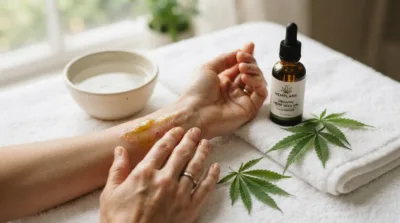
The skincare aisle is crowded with anti-aging products that promise to smooth fine lines, brighten uneven tone, and restore a youthful glow. Yet a growing number of consumers, and formulators, are returning to a single-ingredient solution that has been used for centuries: cold-pressed hemp seed oil.
Unlike heavier plant oils that sit on the skin’s surface, hemp seed oil has a remarkably light texture and a fatty acid composition that closely mirrors the skin’s own natural sebum. This makes it unusually compatible with human skin, allowing it to absorb quickly without clogging pores. For anyone researching hemp seed oil for wrinkles, the core questions are straightforward: does it actually work, what does the science say, and how do you use it correctly to see results?
Throughout this article, “hemp seed oil” refers to oil pressed solely from the seeds of the *Cannabis sativa* plant. It contains no CBD, no THC, and no psychoactive compounds. It is a food-grade, nutrient-dense oil that has been studied for both dietary and topical applications.
What causes wrinkles and dark spots?
Before examining how hemp seed oil interacts with aging skin, it helps to understand what drives wrinkle formation and hyperpigmentation in the first place.
Wrinkles develop through a combination of intrinsic and extrinsic aging. Intrinsic aging is genetically programmed and unavoidable; it gradually slows collagen and elastin production, causing skin to lose its structural scaffolding. Extrinsic aging, which accounts for the majority of visible skin aging, is driven by environmental factors, principally ultraviolet (UV) radiation, but also pollution, smoking, and poor diet. UV exposure generates reactive oxygen species (free radicals) that damage collagen fibers, degrade hyaluronic acid, and trigger chronic low-grade inflammation in the dermis. Over time, this cumulative damage shows up as fine lines, deeper creases, and a loss of firmness.
Dark spots, also called solar lentigines or age spots, result from an overproduction of melanin in localized areas. The primary trigger is again UV exposure, which stimulates melanocytes to produce excess pigment as a protective response. Hormonal changes, post-inflammatory hyperpigmentation from acne, and certain medications can also contribute. Once established, dark spots tend to persist because melanin can become trapped in the deeper epidermal layers.
An effective anti-aging ingredient needs to do more than temporarily hydrate the skin. Ideally, it should support the skin barrier, provide antioxidants that neutralize free radicals, supply building blocks the skin can use for repair, and help regulate processes like melanin production and inflammation. This is where hemp seed oil’s unique profile becomes relevant.
The fatty acid profile that fights aging
Hemp seed oil stands apart from most other plant oils because of its exceptional fatty acid balance. Roughly 75% to 80% of the oil consists of polyunsaturated fatty acids (PUFAs), with a ratio of omega-6 (linoleic acid) to omega-3 (alpha-linolenic acid) between 2:1 and 3:1. This ratio is considered optimal for human nutrition and skin health, as covered in our discussion of the science behind omega-3 and omega-6 balance in organic hemp seed oil.
Linoleic acid (omega-6) is the dominant fatty acid, typically making up 50% to 60% of the oil. It is essential for maintaining the skin’s lipid barrier, which controls water loss and blocks irritants from entering. Linoleic acid is also a precursor to ceramides, the lipids that act as mortar between skin cells. Research has long shown that individuals with acne-prone or aging skin tend to have lower levels of linoleic acid in their sebum. Replenishing it through topical application can reinforce barrier function and reduce transepidermal water loss, a key contributor to the appearance of fine lines.
Gamma-linolenic acid (GLA), present at about 2% to 4%, is a less common omega-6 fatty acid with distinct anti-inflammatory properties. Unlike linoleic acid, GLA is not widely available in dietary oils; evening primrose and borage oils are the only other significant natural sources. GLA has been studied for its ability to modulate inflammatory pathways in the skin, making it particularly relevant for conditions such as eczema, psoriasis, and rosacea.
Alpha-linolenic acid (ALA) (omega-3), at roughly 15% to 20%, adds another layer of anti-inflammatory support. Omega-3 fatty acids are known to reduce UV-induced inflammation and may help protect collagen from enzymatic breakdown.
Together, these fatty acids do three things that matter for aging skin: they strengthen the barrier to keep moisture in, they calm inflammation that accelerates collagen loss, and they supply lipids the skin can use directly for repair and renewal.
Does hemp seed oil get rid of wrinkles?
This is the question most readers arrive with: does hemp seed oil for wrinkles actually work?
Let us be precise. No topical oil can permanently “get rid of” established deep wrinkles, because those creases involve structural changes in the dermis, collagen fragmentation, elastin degradation, and volume loss. Surgical or medical interventions (laser resurfacing, injectable fillers, prescription retinoids) are required to reverse significant structural damage.
However, the evidence supports hemp seed oil as a meaningful tool for softening the appearance of fine lines and slowing the progression of new ones. Here is how the mechanisms translate into visible results.
Superficial hydration effect. When the skin’s outermost layer, the stratum corneum, is dehydrated, fine lines appear deeper and more pronounced. Hemp seed oil absorbs rapidly and forms a lightweight occlusive layer that reduces water loss. In a matter of hours, well-hydrated skin visibly plumps, making superficial lines less noticeable.
Antioxidant protection. Hemp seed oil contains vitamin E (tocopherols), phytosterols, and carotenoids, all of which function as antioxidants. Vitamin E, in particular, is one of the most well-studied topical antioxidants for photoprotection. By neutralizing free radicals generated by UV exposure, these compounds help prevent further collagen breakdown. While they cannot undo past collagen damage, consistent use reduces the rate of future damage.
Used in collagen-focused skincare formulations. Chronic low-grade inflammation accelerates collagen degradation through the activity of matrix metalloproteinases (MMPs), enzymes that break down extracellular matrix proteins. The GLA and ALA in hemp seed oil help modulate inflammatory responses, potentially reducing MMP activity and preserving existing collagen.
Direct lipid replenishment. Aging skin produces less sebum, which means less natural lipid protection. The linoleic acid in hemp seed oil directly replenishes this deficit, supporting ceramide synthesis and improving barrier integrity over time.
The practical takeaway: using hemp seed oil for wrinkles is best understood as a preventive and softening strategy, not a reversal treatment. Consistent application can make skin look smoother, plumper, and more resilient, and when incorporated into a broader routine that includes daily sunscreen, those improvements can be sustained long-term.
Can hemp seed oil fade dark spots?
The second major question concerns hyperpigmentation: can hemp seed oil fade dark spots?
The answer is more nuanced than for fine lines, and the evidence is indirect but worth examining.
Hemp seed oil does not contain traditional depigmenting agents such as kojic acid, arbutin, or vitamin C in meaningful concentrations. It is not a direct melanin inhibitor. However, several properties support a gradual brightening effect, particularly for post-inflammatory hyperpigmentation (PIH).
PIH has multiple contributing factors. Dark spots that follow acne, irritation, or injury are caused by melanocytes overproducing pigment in response to inflammation. By calming inflammatory pathways, thanks largely to GLA, hemp seed oil may reduce the intensity of the inflammatory response that triggers melanin deposition in the first place. For those with acne-prone skin, combining hemp seed oil with a targeted routine (see our guide on hemp seed oil for acne-prone skin) may help minimize post-breakout marks.
Barrier repair supports natural cell turnover. A healthy stratum corneum undergoes orderly desquamation (shedding of dead cells), which gradually moves pigmented cells to the surface and sloughs them away. When the barrier is compromised, this process slows. Linoleic acid supports barrier integrity, which indirectly promotes a more even, regular turnover cycle.
Vitamin E contributes mild antioxidant brightening. Vitamin E neutralizes oxidative stress that can worsen pigmentation and, over time, may contribute to a more uniform complexion. While this effect is subtle, it compounds with extended use.
For more stubborn sun-induced age spots, hemp seed oil should be viewed as a supportive component rather than the primary treatment. Pairing it with a vitamin C serum in the morning and a broad-spectrum sunscreen provides a more complete approach to visible dark spot reduction.
Leaving hemp seed oil on your face overnight: is it safe?
One of the most common questions about facial oil use is: can I leave hemp seed oil on my face overnight?
The short answer is yes, and overnight application is actually one of the most effective ways to use the oil.
During sleep, the skin enters a repair phase. Blood flow to the skin increases, cell proliferation peaks, and the skin’s permeability is slightly higher. This means active ingredients, including fatty acids, can penetrate more effectively. Leaving a thin layer of hemp seed oil on the face overnight provides hours of uninterrupted hydration and lipid replenishment at the time when the skin is most receptive.
Here is how to do it correctly:
- Cleanse thoroughly. Remove all makeup, sunscreen, and daily debris. The oil needs direct contact with clean skin to absorb properly.
- Apply to slightly damp skin. After cleansing, pat the face lightly with a towel so it is damp but not wet. Applying oil to damp skin helps lock in surface water and improves spreadability.
- Use 2 to 4 drops only. Dispense a few drops into your palm, rub your hands together to warm the oil, then press it gently into the face, neck, and around the eye area. Do not rub or pull. A small amount goes a long way; over-application can leave skin feeling greasy and may transfer to pillowcases.
- Wait 10 to 15 minutes before lying down. This allows the oil to absorb sufficiently so it does not immediately rub off on bedding.
For those wondering about the right technique for their skin type, we cover variations for dry, oily, combination, and sensitive skin in our practical guide to using hemp seed oil for skin by skin type.
Hemp seed oil has a comedogenic rating of 0 to 1, meaning it is unlikely to clog pores for most users. It is non-greasy compared to heavier oils like coconut or olive oil, and it rinses off easily in the morning. If you have very oily or congestion-prone skin, start with 2 drops every other night and monitor how your skin responds.
Can you wash your face with hemp seed oil?
A related question is: can you wash your face with hemp seed oil? The oil cleansing method (OCM) has gained popularity, and hemp seed oil is well-suited to the role.
The principle behind oil cleansing is that like dissolves like. Oil-based impurities, sebum, sunscreen, makeup, and environmental pollutants, are not effectively removed by water-based cleansers alone. A non-comedogenic oil gently dissolves these substances without stripping the skin’s natural protective barrier.
Hemp seed oil is a strong candidate for oil cleansing because:
- It has a low comedogenic rating and does not block pores.
- Its linoleic acid content helps dissolve hardened sebum plugs without causing irritation.
- It does not require harsh surfactants to rinse away, making it suitable for sensitive and reactive skin.
How to oil-cleanse with hemp seed oil:
- Dispense approximately one teaspoon of HEMPLAND organic hemp seed oil into dry hands.
- Massage it gently over a dry face for 60 to 90 seconds, focusing on areas with congestion or makeup.
- Soak a clean washcloth in warm (not hot) water, wring it out, and lay it over the face. Let the steam and warmth soften the pores for 30 seconds.
- Gently wipe away the oil with the cloth. Repeat if needed.
- If desired, follow with a gentle water-based cleanser (the double cleansing approach) to remove any remaining residue.
For most daily routines, a simple evening application, rather than full oil cleansing, is sufficient. Reserve the oil cleansing method for days when you wear heavy makeup, sunscreen, or simply want a deeper clean. To ensure your oil stays fresh and effective between uses, review our storage guide for hemp seed oil shelf life and best practices.
If you are new to facial oils, our hemp seed oil side effects guide walks through patch testing and the reactions to watch for.
Hemp seed oil for rosacea and sensitive skin
People with rosacea and sensitive skin conditions often struggle to find moisturizers that do not trigger flushing, stinging, or breakouts. The question of hemp seed oil for rosacea has attracted attention because the oil’s anti-inflammatory profile aligns with what rosacea-prone skin needs.
Rosacea is a chronic inflammatory condition characterized by facial redness, visible blood vessels, and sometimes papules and pustules. The exact cause is multifactorial, involving vascular dysregulation, immune responses, and a compromised skin barrier. Common triggers include heat, alcohol, spicy food, and stress.
Hemp seed oil supports rosacea-prone skin in several ways:
- Barrier repair: The linoleic acid in hemp seed oil reinforces the epidermal lipid barrier, which is often compromised in rosacea. A stronger barrier reduces transepidermal water loss and makes skin less reactive to environmental irritants.
- Anti-inflammatory activity: GLA and ALA help downregulate pro-inflammatory mediators. A 2005 study published in the Journal of Dermatological Treatment found that dietary hemp seed oil improved skin dryness and itching in patients with atopic dermatitis, a condition that shares inflammatory pathways with rosacea.
- Low irritant potential: Cold-pressed, unrefined hemp seed oil contains no added fragrance, preservatives, or emulsifiers, the most common triggers for sensitive-skin reactions. Its molecular profile is close to natural sebum, reducing the chance of an adverse response.
- Lightweight texture: Many richer oils and butters trap heat against the skin, a known rosacea trigger. Hemp seed oil’s thin consistency allows the skin to breathe.
For those with rosacea, patch-testing on a small area behind the ear or along the jawline for 48 hours is recommended before full facial application. Start with a single drop applied at night, and build up gradually based on tolerance.
7-day glow routine with hemp seed oil
Many readers arrive wondering how to get glowing skin in 7 days. While no product can permanently alter skin texture in a week, a structured routine built around hemp seed oil can produce visible improvements in hydration, brightness, and smoothness within seven days, particularly if the skin has been neglected or dehydrated.
Below is a straightforward 7-day plan. The key is consistency, not product overload.
Day 1: Reset and prep
- Morning: Rinse with lukewarm water. Apply a vitamin C serum if available, followed by sunscreen (SPF 30+).
- Evening: Wash with a gentle cleanser. On damp skin, apply 3 drops of hemp seed oil, pressing it in gently.
Day 2: Oil cleanse and treat
- Morning: Same gentle routine as Day 1.
- Evening: Perform a full oil cleanse with hemp seed oil (see instructions above), then follow with 3 drops pressed into damp skin.
Day 3: Exfoliate lightly
- Morning: Apply a mild chemical exfoliant (lactic acid or PHA) if your skin tolerates it. Follow with sunscreen.
- Evening: Apply hemp seed oil to damp skin. By now skin should feel smoother and more comfortable after cleansing.
Day 4: Hydration layering
- Morning: Layer a lightweight hydrating toner or essence under sunscreen.
- Evening: On damp skin, layer hemp seed oil over a hyaluronic acid serum. The oil seals in the humectant, amplifying hydration.
Day 5: Rest and evaluate
- Morning: Minimal routine, sunscreen only if possible. Observe any changes: fewer dry patches, less visible redness, softer texture.
- Evening: Cleanse and apply 3 drops of hemp seed oil. Take a photo for comparison.
Day 6: Deep nourishment
- Morning: Gentle cleanse, moisturizer, and sunscreen.
- Evening: After cleansing, apply a slightly thicker layer of hemp seed oil. Leave on for 20 minutes, then blot off any excess with a tissue. This mini-mask approach boosts overnight repair.
Day 7: Glow day
- Morning: Rinse with water only. You may notice skin that appears plumper, more even-toned, and naturally radiant. Apply sunscreen.
- Evening: Continue the evening oil application to maintain results.
The 7-day glow effect is largely attributable to restored hydration and reduced inflammation, two factors that, when addressed, make an immediate visual difference. Long-term anti-aging benefits require continued use over weeks and months.
Hemp seed oil for hair growth: a bonus benefit
While the focus of this article is skin, the question of hemp seed oil for hair growth deserves attention because it stems from the same underlying mechanisms.
Hair growth depends on scalp health, follicle nutrition, and circulation. Hemp seed oil supports all three.
Scalp barrier support. A dry, inflamed, or flaky scalp creates an unfavorable environment for healthy follicles. The linoleic acid and GLA in hemp seed oil help calm scalp inflammation, reduce flaking, and maintain the scalp’s lipid balance, creating a better foundation for growth.
Nutrient delivery. Hemp seed oil is rich in vitamin E, which supports capillary circulation in the scalp. Improved blood flow to follicles means better delivery of oxygen and nutrients. The oil also contains minerals including zinc, magnesium, and iron, all of which play roles in the hair growth cycle.
Direct hair shaft conditioning. Applied to the ends, hemp seed oil coats the hair shaft with light lipids that reduce moisture loss, minimize breakage, and add a healthy sheen without weighing fine hair down.
To use for hair and scalp, warm a few drops between your palms and massage into the scalp for 3 to 5 minutes before washing. Leave on for at least 20 minutes (or overnight with a towel over the pillow), then shampoo thoroughly. One application per week is a reasonable starting point.
Hemp seed oil has also been studied as a natural alternative to fish oil in vegan products, given its comparable omega-3 profile. Taken orally, it also supports cardiovascular wellness. This dual-use nature, effective both topically and nutritionally, is part of what makes it appealing to formulators developing holistic wellness products.
B2B perspective: hemp seed oil in cosmetic formulations
Beyond individual skincare routines, hemp seed oil has become a sought-after ingredient in commercial cosmetic and personal care formulations. A growing number of brands, from indie clean-beauty labels to mid-market personal care manufacturers, are incorporating it into facial serums, moisturizers, cleansing balms, and even hair care products.
Several factors are driving this shift:
Clean-label demand. Consumers increasingly scrutinize ingredient lists and favor products with recognizable, plant-derived components. Hemp seed oil fits the clean-beauty narrative without requiring complex marketing explanations.
Formulation compatibility. Cold-pressed hemp seed oil is lightweight, spreads well, and blends easily with other oils and emulsifiers. Refined grades offer a neutral color and odor for brands that prefer consistent aesthetics batch to batch. Many cosmetic manufacturers are now evaluating both cold-pressed and refined options, a comparison we explore in our article on cold-pressed vs. refined organic hemp seed oil.
Supply chain maturity. As the global hemp industry matures, reliable, certified-organic supply is becoming more accessible, reducing the procurement challenges that historically made hemp seed oil a niche choice. More cosmetic brands are now choosing refined hemp seed oil for its stability and sensory profile in skincare formulations, as discussed in our piece on why cosmetic brands choose refined hemp seed oil.
Cross-category appeal. Unlike ingredients that serve only one function, hemp seed oil can anchor messaging around anti-aging, hydration, calming, and clean formulation simultaneously, giving brands flexibility in product positioning.
For manufacturers and brand owners considering hemp seed oil as a featured ingredient, HEMPLAND offers organically certified, cold-pressed hemp seed oil in bulk and private-label quantities. Contact Us for specification sheets, samples, and pricing inquiries.
Conclusion
Hemp seed oil occupies an unusual position in the natural skincare landscape. It is not a single-mechanism active like retinol or vitamin C, yet its broad-spectrum profile, omega-3 and omega-6 fatty acids in a near-optimal 2:1 to 3:1 ratio, GLA for inflammation control, vitamin E for antioxidant protection, and barrier-supporting lipids, makes it useful across several skin concerns.
For wrinkles, the data points to softening, not erasing. Its 75% to 80% polyunsaturated content, dominated by linoleic acid at 50% to 60% with 2% to 4% GLA, hydrates the stratum corneum, calms MMP-driven collagen loss, and replenishes the lipids aging skin stops making. For dark spots, the effect is slower and indirect: GLA and linoleic acid ease the inflammation and barrier breakdown that let pigment linger, especially for post-acne marks. For overnight use, its 0 to 1 comedogenic rating lets it sit on skin for hours of repair without clogging pores. And for reactive conditions like rosacea, the anti-inflammatory and barrier-supportive properties make it one of the gentler oils available.
The results depend on consistency and correct application: a few drops, applied to damp skin, paired with daily sun protection. A 7-day routine can lift glow and texture through restored hydration; the longer-term anti-aging payoff builds with continued use.
Whether you are an individual building a simple skincare step or a brand evaluating ingredients for your next line, hemp seed oil for wrinkles is worth a serious look, not as a miracle cure, but as a well-supported, multi-functional natural option with a growing body of evidence behind it.
Disclaimer: This article provides general information and is not a substitute for professional medical advice. Always speak with a dermatologist or healthcare provider before starting any new skincare product, especially if you have a diagnosed skin condition, are pregnant, or are taking prescription medications.
Recommended Products
Organic Refined Hemp Seed Oil
100% Certified Organic • Non-GMO ingredient • Neutral Flavor • High Smoke Point 232°C
Related Posts