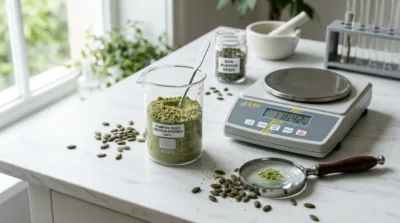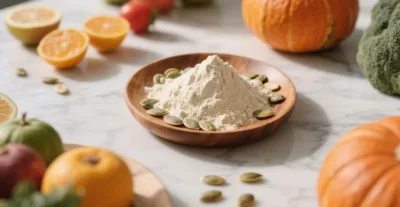
When plant-based proteins enter the conversation, one question dominates: is pumpkin seed protein a complete protein? For formulators, nutritionists, and consumers weighing plant proteins, the completeness of an amino acid profile decides whether a protein can stand alone or needs blending with complementary sources. That answer shapes product formulation, label claims, and dietary planning.
Pumpkin seed protein has gained real traction in the plant-based market, valued for its clean taste, digestibility, and mineral density, yet the completeness question follows it everywhere. This article gives a full amino acid analysis of pumpkin seed protein, examines its PDCAAS, compares it against egg and hemp protein, and looks at its unusual mineral strengths in zinc and magnesium.
What Makes a Protein Complete?
A protein is “complete” when it contains all nine essential amino acids in proportions that meet human physiological needs. Those nine are histidine, isoleucine, leucine, lysine, methionine, phenylalanine, threonine, tryptophan, and valine. The body cannot synthesize them, so they have to come from diet.
Protein quality rests on standardized scoring. The Protein Digestibility-Corrected Amino Acid Score (PDCAAS) compares a protein’s amino acid profile against a reference pattern and adjusts for fecal digestibility; a PDCAAS of 1.0 is the ceiling. The Digestible Indispensable Amino Acid Score (DIAAS) is a newer method that measures ileal rather than fecal digestibility for greater accuracy, though PDCAAS remains the regulatory standard in most jurisdictions, including the United States.
Under PDCAAS, a protein qualifies as complete only if every essential amino acid meets or exceeds the reference after digestibility correction. A single limiting amino acid below the threshold classifies the protein as incomplete, however strong the other eight are.
Pumpkin Seed Protein Amino Acid Profile: A Detailed Breakdown
To judge whether pumpkin seed protein clears the completeness threshold, the profile has to be examined in detail. Organic pumpkin seed protein powder, made by cold-pressing and mechanically milling *Cucurbita pepo* seeds, delivers roughly 60-70% protein by weight depending on method and variety.
The table below shows the essential amino acid composition in milligrams per gram of protein, drawn from published compositional analyses and USDA food composition databases, normalized to a representative defatted pumpkin seed protein concentrate.
| Essential Amino Acid | mg/g Protein (Approximate) | FAO/WHO Reference Pattern (mg/g) |
|---|---|---|
| Histidine | 22-25 | 16 |
| Isoleucine | 38-42 | 30 |
| Leucine | 65-72 | 61 |
| Lysine | 35-40 | 48 |
| Methionine + Cysteine | 20-24 | 23 |
| Phenylalanine + Tyrosine | 72-80 | 41 |
| Threonine | 28-32 | 25 |
| Tryptophan | 14-17 | 6.6 |
| Valine | 45-50 | 40 |
Most essential amino acids meet or beat the FAO/WHO reference. Leucine, phenylalanine plus tyrosine, and tryptophan are especially well represented, and isoleucine, valine, histidine, and threonine all clear their values.
Two amino acids draw attention: lysine and the combined sulfur amino acids (methionine plus cysteine). Lysine sits modestly below the reference at about 35-40 mg/g versus the required 48 mg/g. Methionine plus cysteine, the sulfur amino acids, sit near or just under the 23 mg/g reference, typically 20 to 24 mg/g depending on cultivar and processing.
That data is why the completeness question refuses a simple yes or no. For a deeper look at the broader nutritional composition, see our article on the nutritional profile of organic pumpkin seed protein powder.
The Limiting Amino Acid: Methionine and Cysteine in Pumpkin Protein
Methionine starts protein synthesis, contributes methyl groups to countless biochemical reactions, and is the precursor to cysteine, taurine, and glutathione, the body’s master antioxidant. Cysteine is conditionally essential and can be made from methionine when supplies are adequate, which is why the two are scored together.
Pumpkin seed protein typically holds about 10-14 mg of methionine and 8-12 mg of cysteine per gram of protein, for a combined sulfur value of 20-24 mg/g. The FAO/WHO adult reference is 23 mg/g. At the low end of that range, methionine plus cysteine become the primary limiting factor in pumpkin protein’s amino acid score.
Why does methionine matter so much? Beyond protein synthesis, it drives the methylation cycle, influences gene expression through epigenetic mechanisms, and supports liver detoxification. A steady undersupply can theoretically constrain those processes, though in practice mixed diets of grains, nuts, and legumes easily compensate.
The methionine limitation mirrors a broader pattern across legume and seed proteins. Soy, for comparison, delivers about 26 mg/g of methionine plus cysteine, comfortably above the reference. Hemp seed protein, discussed later, has a different limiting pattern but also shows methionine sufficiency.
For consumers and formulators, the methionine gap is the primary nutritional consideration, not an insurmountable deficit. Simple food combinations resolve it completely, as the complementation section below shows.
Leucine Content: How Pumpkin Protein Supports Muscle Building
Leucine is the primary anabolic trigger for muscle protein synthesis. It activates the mTOR complex 1 signaling pathway, which starts the translation of muscle mRNA into new contractile proteins. Without enough leucine, even a complete-profile protein cannot efficiently drive muscle repair and growth.
Pumpkin seed protein delivers about 65-72 mg of leucine per gram of protein, comfortably above the FAO/WHO reference of 61 mg/g, which puts it in a favorable spot among plant proteins for muscle building. In a standard 30-gram serving of pumpkin seed protein powder (roughly 20 grams of actual protein), leucine intake lands between 1,300 and 1,440 mg.
Research suggests a per-meal leucine threshold of about 2,000 to 3,000 mg optimally stimulates muscle protein synthesis in adults. A single pumpkin serving covers a substantial share of that threshold, though it may fall short of maximal signaling on its own for some people, a limitation it shares with most plant proteins, which run lower in leucine density than animal proteins such as whey (about 105 mg/g).
The practical takeaway is straightforward: pumpkin protein meaningfully supports leucine intake and muscle maintenance, especially as part of a varied diet or paired with other leucine sources. For the full picture, our article on whether pumpkin protein supports muscle building adds context and references.
PDCAAS Score for Pumpkin Seed Protein
The PDCAAS gives a standardized, digestibility-adjusted measure of protein quality. Based on the profile above and published digestibility data, pumpkin seed protein scores about 0.67 to 0.73, with variation from cultivar, processing, and analytical method.
The score breaks down as follows. PDCAAS equals the amino acid score of the most limiting essential amino acid multiplied by fecal true protein digestibility. For pumpkin, that score divides the most limiting amino acid (methionine plus cysteine) by the reference. At 20-24 mg/g versus a reference of 23 mg/g, the unadjusted sulfur amino acid score ranges from about 0.87 to 1.04.
Digestibility for pumpkin seed protein is generally reported at 85% to 90%, reflecting residual fiber and the structural integrity of storage proteins. Multiply the amino acid score by the digestibility coefficient and you get the 0.67 to 0.73 range. That falls below the threshold for a high-quality or complete protein under formal PDCAAS criteria, but it sits squarely in the range of nutritionally useful plant proteins.
For context, soy protein isolate scores 1.0, on par with animal proteins like egg and whey. Pea typically scores 0.69 to 0.89 depending on processing. Hemp protein scores about 0.63 to 0.66, with lysine as the limiter. Wheat gluten scores far lower at about 0.25. Pumpkin therefore occupies a respectable middle tier, beating wheat and competing with hemp and standard pea preparations.
One caveat worth keeping in mind: PDCAAS has known limits, including truncation at 1.0, which prevents distinguishing among high-quality proteins, and reliance on fecal rather than ileal digestibility. The newer DIAAS addresses these, though published DIAAS values for pumpkin seed protein remain limited.
Pumpkin Protein vs Egg Protein: Plant vs Animal Amino Acid Comparison
Egg protein is the gold-standard reference in nutrition science, with a PDCAAS of 1.0 and a DIAAS above 1.0. The comparison below shows how pumpkin measures up.
| Amino Acid | Pumpkin Seed Protein (mg/g) | Egg Protein (mg/g) | Reference (mg/g) |
|---|---|---|---|
| Histidine | 22-25 | 23-25 | 16 |
| Isoleucine | 38-42 | 54-57 | 30 |
| Leucine | 65-72 | 86-90 | 61 |
| Lysine | 35-40 | 70-74 | 48 |
| Methionine + Cysteine | 20-24 | 54-58 | 23 |
| Phenylalanine + Tyrosine | 72-80 | 93-98 | 41 |
| Threonine | 28-32 | 44-47 | 25 |
| Tryptophan | 14-17 | 15-17 | 6.6 |
| Valine | 45-50 | 64-68 | 40 |
Egg outpaces pumpkin most clearly in lysine (nearly double) and in methionine plus cysteine (more than twice the sulfur content). Leucine, isoleucine, and valine, the three BCAAs, are all substantially higher in egg.
Those gaps translate directly to function. Egg’s superior essential amino acid density makes it more efficient gram for gram at driving muscle protein synthesis and meeting daily requirements. Pumpkin, though, brings advantages egg cannot match: a rich mineral profile high in zinc and magnesium, dietary fiber, beneficial fatty acids from residual seed oil, and complete freedom from common allergens like egg, dairy, and soy.
From a formulation view, the choice between pumpkin and egg depends on the target consumer and positioning. Plant-based products that need allergen-free claims benefit from pumpkin. Products chasing maximum anabolic efficiency per gram may favor egg or blends.
Pumpkin Protein vs Hemp Protein: Seed-to-Seed Amino Acid Comparison
Both pumpkin and hemp proteins come from seeds and share processing steps, including cold-pressing to remove oil then milling into powders. Their amino acid profiles differ in ways that matter.
Hemp seed protein, from *Cannabis sativa*, contains all nine essential amino acids and is widely recognized for a balanced profile. Edestin and albumin, its two primary storage proteins, distribute essential amino acids favorably. Lysine tends to be hemp’s limiter, which contrasts with pumpkin protein, where methionine plus cysteine are the primary constraint.
That difference is practically useful. Hemp supplies methionine at levels that meet the reference, generally 25-28 mg/g combined, above the 23 mg/g mark. Pumpkin, conversely, provides lysine at about 35-40 mg/g, below the 48 mg/g reference but modestly higher than hemp’s typical 30-35 mg/g.
Formulators have noticed the complementarity. Blending pumpkin and hemp creates a more balanced profile than either alone, each covering the other’s weakness. Our article on what makes organic hemp seed protein powder a complete plant-based protein goes deeper on hemp’s composition.
For consumers choosing between the two, the decision often comes down to more than amino acids: taste (pumpkin is generally milder and less earthy than hemp), minerals (pumpkin offers more zinc and magnesium, hemp more iron), and what is available in their market.
Zinc and Magnesium: The Mineral Advantage of Pumpkin Seed Protein
The amino acid debate dominates the “complete protein” conversation, but pumpkin seed protein’s zinc and magnesium content are advantages that even high-PDCAAS animal proteins cannot match.
Pumpkin seed protein powder concentrates the minerals native to whole pumpkin seeds. A typical 30-gram serving of organic pumpkin seed protein powder delivers about 2.0 to 2.5 mg of zinc (18-23% of the adult recommended daily intake) and about 150 to 170 mg of magnesium (35-40% of the daily requirement). That positions pumpkin seed protein as a functionally meaningful dietary source of both minerals.
Zinc takes part in over 300 enzymatic reactions, supports immune function, contributes to DNA synthesis, and plays a role in protein synthesis itself, which dovetails with the amino acids in pumpkin protein. Magnesium acts as a cofactor for more than 600 enzymatic reactions, including energy production, muscle contraction, and nervous system regulation. The substantial magnesium content adds a dimension of value that reaches past the amino acid question.
For B2B buyers weighing specifications, the mineral density opens label-claim opportunities for zinc and magnesium, provided regulatory thresholds are met in the finished product. That mineral advantage complements the protein to build a more nutritionally complete ingredient.
Whole pumpkin seed kernels, the source of the powder, keep these minerals in their natural matrix. HEMPLAND organic pumpkin seed kernels give a whole-food alternative where texture and visual appeal matter alongside nutrition.
How to Complement Pumpkin Protein for Complete Amino Acid Intake
Given that the completeness question has a nuanced answer, the practical move is complementation: combining two or more protein sources with different limiting amino acids to build a complete profile.
The established strategies all pair pumpkin with a partner that covers its methionine. Grains, particularly oats and rice, supply adequate methionine while being lysine-limited themselves, which makes them near-perfect complements; a roughly 50:50 pumpkin-and-rice blend meets or exceeds every essential amino acid requirement. Legumes such as pea and lentil bring the lysine pumpkin lacks, while pumpkin returns the methionine legumes tend to miss, which is why pea-and-pumpkin blends are among the most popular plant combinations on the market. Hemp seed protein, as noted earlier, adds complementary methionine while pumpkin contributes lysine, so the two reinforce each other. Nuts and seeds eaten alongside pumpkin, especially almonds and sunflower seeds, add yet more methionine across the day.
For individual consumers, the simplest approach is variety across the day. The body keeps an amino acid pool that buffers short-term fluctuations, so methionine at breakfast can complement lysine at lunch. That metabolic reality makes the “complete protein at every meal” rule far less rigid than it once sounded.
For B2B formulators, understanding these pairings supports multi-source blends that achieve complete profiles while keeping pumpkin’s clean taste and mineral edge.
B2B Perspective: Why Complete Protein Matters for Product Claims
From a business standpoint, whether pumpkin seed protein is complete translates directly into product positioning, label claims, and regulatory compliance.
In the United States, the FDA regulates protein content claims under 21 CFR 101.9, requiring PDCAAS methodology for quality assessment. An “excellent source of protein” claim needs at least 10 grams of protein per serving with a PDCAAS-corrected value meeting that threshold. Because pumpkin seed protein scores 0.67 to 0.73, a manufacturer would need enough protein by weight that the corrected amount clears the bar, roughly 14 to 15 grams of pumpkin protein to deliver the equivalent of 10 grams of corrected protein.
In the European Union, protein claims fall under Regulation (EC) No 1924/2006, which requires a “source of protein” claim to be backed by protein contributing at least 12% of the food’s energy value, and a “high protein” claim by at least 20%. PDCAAS is not universally mandated across all member states, though DIAAS is gaining traction within EFSA.
For finished-goods manufacturers, the amino acid data supports transparent labeling. Marketing pumpkin as a standalone “complete protein” under strict PDCAAS would be inaccurate, but positioning it as a “high-quality plant protein with a strong essential amino acid profile” reflects the science. Blended products that combine pumpkin with complementary sources can legitimately claim complete status when the combined profile meets all requirements.
The clean-label appeal of pumpkin seed protein, derived through mechanical processing without chemical solvents, adds value beyond amino acid metrics. HEMPLAND organic pumpkin seed protein powder is processed without hexane or other solvents, preserving both protein integrity and the natural mineral profile.
One group to flag: people with seed allergies or specific digestive sensitivities should evaluate their own tolerance before committing.
The Bottom Line
Grounded in the amino acid analysis, pumpkin seed protein falls short of formal completeness under PDCAAS because of insufficient methionine plus cysteine in most preparations, with lysine as a secondary limitation. Its PDCAAS of about 0.67 to 0.73 places it among the more capable plant proteins, beating wheat and competing with hemp and standard pea isolates.
The nutritional value reaches well past the “complete” versus “incomplete” binary. Its leucine content of 65-72 mg/g supports muscle protein synthesis, its mineral profile delivers meaningful zinc (2.0-2.5 mg per 30 g) and magnesium (150-170 mg per 30 g), and its sulfur amino acid limitation is easily fixed through simple complementation with grains or legumes. Against egg, pumpkin trades amino acid density for allergen freedom and mineral richness, a trade-off that fits specific positioning strategies.
For consumers, pumpkin seed protein is a valuable plant protein that, as part of a varied diet, fully contributes to essential amino acid needs. For B2B buyers and formulators, its clean taste, mechanical processing, and dual protein-plus-mineral value make it a compelling ingredient in the growing plant-based market. Explore HEMPLAND organic pumpkin seed protein powder to evaluate it for your next formulation.
*Disclaimer: This article provides general information and is not a substitute for professional medical advice.*
Is Pumpkin Seed Protein Complete? Amino-Acid Spec Sheet
| Amino Acid | Level | Note |
|---|---|---|
| Lysine | Moderate-high | Rare strength among seeds |
| Arginine | ~10-12% of protein | Performance angle |
| Methionine/Cystine | Limiting | Blend with cereal/grain |
| Threonine | Moderate | Second limiting |
| Tryptophan | High | Mood/sleep positioning |
| PDCAAS | ~0.6-0.8 (est.) | Below soy (1.0) |
*Source: published amino-acid profiles; PDCAAS varies by assay.*
Blending and Formulation Notes
Pumpkin seed protein has all nine essentials and unusually high lysine, but methionine/cystine limit its score. Blend 60:40 with a cereal or hemp (arginine-rich) to lift the limiting amino acid, then validate with a third-party amino assay before any “complete” claim. For the hemp side see pea vs hemp protein and hemp peptide powder.
Frequently Asked Questions
Q: So is it complete or not? A: It contains all nine essential amino acids and is lysine-strong, but methionine/cystine are limiting, so on its own it is “near-complete.” A grain or hemp blend reaches a balanced score.
Q: What should I blend it with? A: Cereal grains (rice, oat) for methionine, or hemp for arginine synergy. Validate the combined PDCAAS with lab data before labeling.
Q: How does it compare to soy? A: Soy is fully complete (PDCAAS 1.0) but a major allergen; pumpkin offers a clean-label near-complete alternative when blended, as shown in hemp vs sunflower vs soy.
Related Reading
Recommended Products

Organic Pumpkin Seed Kernel
Premium Whole Seed Nutrition for Food, Snack & Oil Applications
Hemp Peptide Powder
Highly bioavailable, easily digestible plant protein with functional benefits from organic hemp.
Related Posts