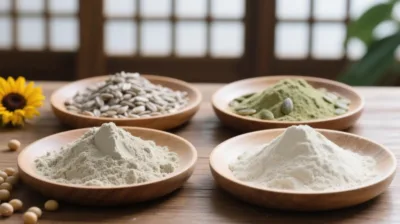
Three seed-based proteins, sunflower, hemp, and pumpkin, have drawn attention for their clean nutritional profiles, functional versatility, and fit for consumers with food sensitivities. When you face the choice between them, which one fits?
This article puts sunflower protein and hemp protein side by side with pumpkin protein. We look at protein percentages, amino acid completeness, allergen risk, taste, solubility, and real-world use cases. We also cover how sunflower stacks up against pea, soy, and whey, and which option suits a sensitive stomach. By the end you will have a clear framework for the decision, whether you formulate for a brand or just pick a powder for your own kitchen.
Quick comparison table
| Feature | Sunflower Protein | Hemp Protein | Pumpkin Protein |
|---|---|---|---|
| Protein Concentration | 60-70% | 45-55% | 50-60% |
| Complete Protein | Yes (all 9 EAAs) | Yes (all 9 EAAs) | Near-complete (PDCAAS ~0.85-0.90) |
| Limiting Amino Acid | Lysine (moderate) | Lysine (moderate) | Lysine (moderate); methionine adequate |
| Primary Allergen Risk | Very low | Very low | Very low |
| Taste Profile | Mild, slightly nutty | Earthy, nutty | Mild, subtle nutty, slight green note |
| Solubility / Mixability | Moderate; blender recommended | Moderate; slightly gritty | Moderate; fine particle size helps dispersion |
| Best For | Clean-label formulations, sensitive diets | Omega-3 balance, sustainability focus | Mineral density, sleep and mood support |
Protein content and amino acid profiles
Protein concentration varies meaningfully across these three sources, and the amino acid distribution matters as much as total weight.
Sunflower protein typically delivers 60 to 70 percent protein by weight. A 30-gram serving gives roughly 18 to 20 grams of protein with all nine essential amino acids. Its lysine level, while modest next to animal sources, runs higher than many other seed proteins. Methionine holds up well through low-temperature processing, and BCAAs, leucine, isoleucine, and valine, appear at levels that support muscle protein synthesis for most buyers. Sunflower also keeps naturally occurring vitamin E, selenium, and phenolic compounds such as chlorogenic acid. For the deeper look, see our guide on organic sunflower seed protein powder and its science-backed benefits.
Hemp protein generally provides 45 to 55 percent protein by weight, below sunflower and pumpkin on concentration. But concentration alone does not tell the story. Hemp owes much of its value to its protein fractions, roughly two-thirds edestin and one-third albumin, both highly digestible and naturally free of common anti-nutritional factors. It delivers all nine essential amino acids and brings a 3:1 omega-6 to omega-3 ratio that is rare among protein powders, alongside dietary fiber, magnesium, iron, and zinc. Our breakdown of what makes organic hemp seed protein a complete plant-based protein covers the full amino acid detail.
Pumpkin protein falls at 50 to 60 percent protein by weight, with a 30-gram portion giving about 15 to 17 grams of protein and a PDCAAS of 0.85 to 0.90. Its digestibility mirrors sunflower and hemp at 85 to 90 percent. Pumpkin stands apart on tryptophan, roughly 1.7 grams per 100 grams of protein, well above most competing plant proteins. That makes it relevant not just for muscle maintenance but for buyers interested in sleep quality and mood. It is also rich in zinc (2.5 to 3.0 mg per serving), magnesium (80 to 100 mg), and potassium (200 to 250 mg). For the full profile, see our guide on the nutritional profile of organic pumpkin seed protein powder.
Amino acid comparison table (per 100g protein, approximate)
| Amino Acid | Sunflower Protein | Hemp Protein | Pumpkin Protein |
|---|---|---|---|
| Leucine (BCAA) | 6.2-6.8 g | 5.8-6.5 g | 6.5 g |
| Isoleucine (BCAA) | 3.8-4.5 g | 3.5-4.0 g | 4.2 g |
| Valine (BCAA) | 4.8-5.5 g | 4.5-5.2 g | 5.2 g |
| Lysine | 3.5-4.2 g | 3.2-3.8 g | 4.5 g |
| Methionine | 1.8-2.3 g | 2.0-2.5 g | 1.9 g |
| Tryptophan | 1.2-1.5 g | 1.0-1.3 g | 1.7 g |
| Phenylalanine | 4.2-4.8 g | 3.8-4.5 g | 4.6 g |
Allergen-friendliness: which is safest for sensitive diets?
All three seed proteins share a critical advantage: none sits in the major allergen categories that dominate the plant protein market. That matters especially when weighing sunflower vs pumpkin protein allergy risk alongside hemp.
Soy is a top-eight food allergen in many regulatory frameworks. Pea, generally well tolerated, has seen more sensitivity reports as its market grows, with some buyers getting bloating and digestive discomfort from its legume origin. Sunflower, hemp, and pumpkin all fall outside those high-risk categories.
Sunflower seeds are botanically distinct from tree nuts, so most people with nut allergies tolerate sunflower protein without issue, and cross-reactivity is rare. Pumpkin seeds carry minimal allergenic potential, and hemp seeds have no established link to common food allergies. All three are naturally free from soy, dairy, and gluten.
For product developers, that collective advantage means simpler allergen statements, cleaner labels, and access to the growing free-from segment. For people with multiple food sensitivities, these proteins open doors that soy, dairy, and even pea often close. Our article on finding the perfect protein for your sensitive diet goes deeper on selection criteria.
Taste and texture comparison
Taste is one of the most underrated decision factors in protein selection, and these three differ enough to shape both formulation and daily use.
Sunflower protein offers a mild, slightly nutty flavor with no bitter aftertaste. It blends with chocolate, vanilla, berry, and coffee profiles and needs no aggressive masking. Its neutral position on the flavor spectrum makes it the most versatile of the three in commercial formulations, as explored in our piece on how sunflower protein powder can enhance your clean-label strategy.
Hemp protein has a more pronounced earthy, nutty character. Some buyers note a slight grassiness that works in savory applications, soups, dips, grain bowls, but can clash with fruit smoothies if not balanced with stronger ingredients like cacao or nut butter. Texture can lean slightly gritty depending on processing.
Pumpkin protein carries the mildest flavor, with a subtle nuttiness and a faint green note from residual chlorophyll. Its natural pale green color can be either a differentiator or a formulation challenge. Finely milled pumpkin disperses well and avoids the chalkiness associated with pea protein.
For taste neutrality, sunflower is the safest starting point. For earthy, whole-food character, hemp feels more substantial. Pumpkin offers a middle path, unobtrusive enough for smoothies yet distinctive enough for bars and baked goods.
Solubility and functional properties
None of these three reaches the instant solubility of whey isolate. All three do better blended than shaken, and mix best when liquid goes in first, then powder. The differences still matter, though.
Sunflower protein disperses moderately well and gives a smooth mouthfeel when blended. Its mild flavor and relatively fine particle size make it the most formulation-friendly for RTD beverages and protein shakes, with good heat stability for baked applications. Hemp protein keeps more insoluble fiber, which adds a slightly grainier texture but useful bulk for bars and baked goods. Its higher residual fat from natural seed oils can affect shelf stability in some formats, though antioxidant compounds help limit rancidity. Pumpkin protein, finely milled, disperses well and performs reliably in baking, with water-holding capacity slightly above sunflower that improves moisture retention in bars and muffins. Formulators working sports nutrition will find useful detail in our guide to organic sunflower seed protein powder in sports nutrition.
Sunflower protein vs pea protein vs soy protein: where each fits
Many plant protein buyers start their search with pea or soy, the two dominant players. Knowing where sunflower fits clarifies the sunflower vs hemp decision too.
Sunflower vs pea: Pea boasts higher protein concentration (80 to 90 percent) and a stronger BCAA profile, particularly leucine. Its earthy, sometimes bitter flavor needs heavier masking, though, and its legume origin can trigger digestive sensitivity in some buyers. Sunflower, at 60 to 70 percent protein, trades some leucine for superior taste neutrality and a lower sensitivity profile. Pea fits high-protein bars for athletes prioritizing leucine numbers; sunflower fits clean-label products where ingredient simplicity and allergen-friendliness lead the value proposition.
Sunflower vs soy: Soy isolate reaches 90 percent-plus protein with an excellent amino acid profile at an economy price. But soy is a major allergen, faces persistent concern over GMO status and phytoestrogens, and has lost ground in the clean-label movement. Sunflower is allergen-friendly, naturally non-GMO, and carries none of soy’s perception problems. Our analysis of why formulators are leaving soy for organic sunflower seed protein covers the shift.
When you set sunflower vs hemp inside this wider set, both seed proteins occupy the same premium, clean-label space that pea and soy struggle to reach, but sunflower edges ahead on taste neutrality while hemp differentiates on omega content and sustainability.
Sunflower protein vs whey protein: plant vs animal
For buyers moving from animal to plant protein, the sunflower vs whey comparison is practical and common.
Whey delivers the gold-standard amino acid profile for muscle protein synthesis: roughly 25 grams of protein per 30-gram scoop, leucine at 2.5 to 3 grams per serving, and fast digestion kinetics. It mixes instantly and has a neutral dairy taste. Those traits explain whey’s decades of dominance in sports nutrition.
Sunflower gives 15 to 20 grams of protein per serving with lower, but meaningful, leucine. Its moderate digestion speed creates a sustained amino acid release that may support satiety and longer-duration muscle protein synthesis. The trade-off: whey wins on raw anabolic potential, sunflower wins on digestibility for lactose-sensitive buyers, allergen profile, and plant-based alignment.
From a formulation view, whey needs dairy allergen labeling and draws sustainability scrutiny over livestock agriculture. Sunflower supports vegan, dairy-free, and environmentally conscious positioning. Hemp enters the same space with an even stronger sustainability story; our piece on the sustainable protein champion details the environmental case.
Best plant protein for sensitive stomach
Digestive comfort has become a top reason buyers switch proteins, and it is where seed proteins clearly separate themselves.
Several factors drive stomach sensitivity from powders: lactose (in whey concentrates), FODMAP carbohydrates (in some pea and legume proteins), anti-nutritional factors (lectins, trypsin inhibitors in raw soy), and artificial sweeteners or sugar alcohols. When you search for the best plant protein for sensitive stomach, the candidate list shrinks fast.
All three seed proteins score well on digestibility, each at 85 to 90 percent, competitive with refined plant sources. None contains lactose. None is a legume, which removes the FODMAP concerns that make some pea blends problematic for IBS-sensitive buyers. All three are made through mechanical cold-pressing and milling rather than chemical extraction, which preserves natural protein structure without leaving processing residues.
Among the three, sunflower carries the strongest low-FODMAP profile, with minimal fermentable oligosaccharides. Pumpkin is often reported as the gentlest on the stomach in buyer feedback, and its zinc and magnesium may indirectly support digestive enzyme function. Hemp’s fiber, while nutritionally useful, means extremely sensitive buyers might start with sunflower or pumpkin.
For buyers who have fought whey bloating, soy discomfort, or pea grittiness, these three seed proteins bring real relief. If stomach sensitivity is your main concern, start with organic pumpkin seed protein or organic sunflower protein, then add organic hemp seed protein once you have established baseline tolerance.
How to choose: decision framework by use case
The sunflower vs hemp vs pumpkin comparison does not produce a single “winner.” It produces a framework for matching the right protein to the right person or product. Use the guide below to narrow your choice.
Pick sunflower when taste neutrality leads. Its mild flavor needs no heavy masking, it keeps a complete amino acid profile, and its low allergen and low-FODMAP profile suit sensitive consumers. It also retains naturally occurring vitamin E and phenolic antioxidants, and it is the premium, allergen-friendly exit from soy. Start with our organic sunflower protein product page.
Pick hemp when omega-3 and omega-6 balance matters alongside protein intake. Sustainability credentials (low water use, a carbon-friendly crop, soil regeneration) should weigh on your buying or formulation decision. You prefer a robust, earthy flavor that works in both sweet and savory applications. Fiber content and mineral density (magnesium, iron, zinc) add value to your nutrition goals. Start with our organic hemp seed protein product page and our guide on hemp protein as an alternative to whey.
Pick pumpkin when sleep quality and mood support matter alongside muscle maintenance (its high tryptophan content). Contains zinc and magnesium. You want the mildest possible flavor with minimal formulation impact. Sensitive digestion is a known concern, since pumpkin is widely regarded as one of the gentlest plant proteins available. Start with our organic pumpkin seed protein product page.
Stack or rotate all three. Many experienced plant-based buyers rotate between these proteins or blend them. Combining sunflower and hemp rounds out the amino acid profile while balancing flavor and texture. Pumpkin can be cycled in during evening hours for its tryptophan. The category has matured enough that loyalty to a single source is no longer necessary.
For a broader overview of picking the right plant protein, see our guide on choosing your perfect plant protein.
Conclusion
These three proteins are not rivals so much as different tools. Sunflower leads on taste neutrality, allergen safety, and clean-label formulation, the easiest foundation for products and daily routines that prize simplicity. Hemp differentiates on omega fatty acid balance (that rare ~3:1 ratio in a protein powder), sustainability, and its edestin-albumin structure that digests easily. Pumpkin carves out the highest tryptophan (1.7 g per 100 g protein), dense minerals (zinc 2.5 to 3.0 mg, magnesium 80 to 100 mg per serving), and exceptional gentleness for sensitive stomachs.
The sunflower vs hemp question is not about crowning one champion. It is about matching the tool to the job, whether you are a formulator choosing a source for a new line, an athlete managing digestion while chasing performance, or a first-time buyer in the plant-based aisle. All three are available certified organic from HEMPLAND, which leaves the one variable that matters most, quality, in your control.
*Disclaimer: This article provides general information and is not a substitute for professional medical advice.*
Related Posts