
Athletes and active individuals have more protein options than ever. Whey and soy owned sports nutrition for decades, but plant-based alternatives keep gaining serious traction, and sunflower protein is emerging as one of the most practical choices in the space. Sunflower protein in sports nutrition is not about replacing every supplement in your cabinet; it is about adding a versatile, allergen-friendly protein that slots cleanly into real training protocols.
HEMPLAND’s organic sunflower seed protein provides a minimally processed, cold-pressed powder built for athletes who want clean ingredients without common allergens.
The protein demands of training: why quantity and quality both matter
The International Society of Sports Nutrition (ISSN) recommends 1.4 to 2.0 grams of protein per kilogram of body weight per day for active individuals, scaled to training intensity and goals. For a 75 kg athlete, that means 105 to 150 grams daily, a range that takes deliberate planning across meals and supplements.
Muscle tissue does not treat all proteins equally. Protein quality comes down to digestibility, amino acid completeness, and leucine content. Leucine, a branched-chain amino acid (BCAA), is the primary trigger for muscle protein synthesis (MPS), and research published in the Journal of Nutrition established that approximately 2 to 3 grams of leucine per meal is needed to maximally stimulate MPS in younger adults.
This is where plant proteins get more complicated. Most single-source plant proteins carry lower leucine concentrations than whey, so athletes relying on them need sharper attention to total protein per serving and complementary food combinations.
Sunflower protein amino acid profile: how it stacks up
Sunflower seed protein contains all nine essential amino acids, though like many plant proteins it runs relatively low in lysine compared to animal sources. Per 100 grams of protein, here is the comparison:
| Amino Acid | Sunflower | Whey | Soy | Pea |
|---|---|---|---|---|
| Leucine (g) | 5.8 | 10.2 | 6.5 | 7.4 |
| Lysine (g) | 3.3 | 8.8 | 5.5 | 7.0 |
| Isoleucine (g) | 4.1 | 6.0 | 4.5 | 4.5 |
| Valine (g) | 5.0 | 6.5 | 4.8 | 4.8 |
| Methionine + Cysteine (g) | 3.9 | 4.5 | 2.5 | 2.2 |
Data compiled from USDA FoodData Central entries for sunflower seed flour, whey protein concentrate, soy protein isolate, and pea protein isolate.
At 5.8 g of leucine per 100 g of protein, sunflower trails whey but holds its own against many plant alternatives. Hitting the 2-3 gram leucine threshold for MPS stimulation takes approximately 35-50 grams of sunflower protein per serving, achievable with a standard scoop-and-a-half shake.
The quiet advantage sits with sulfur-containing amino acids (methionine plus cysteine), where sunflower outperforms both soy and pea. These amino acids feed glutathione production, the body’s primary intracellular antioxidant, which matters for athletes absorbing heavy oxidative stress from intense training.
Pre-workout protein: fueling performance
Protein before training does two jobs: amino acids circulate during the session, and muscle protein breakdown during exercise drops. A 2018 meta-analysis in the British Journal of Nutrition found that pre-exercise protein intake (20-30 grams, consumed 1-2 hours before training) contributed to improved muscle retention and performance, particularly in fasted or semi-fasted states.
Sunflower suits the pre-workout slot well:
- Digestive comfort: dairy-free and generally well-tolerated, unlike whey, which can bloat lactose-sensitive athletes
- Mild flavor: the neutral, slightly nutty taste mixes into pre-workout shakes without clashing with anything
- Moderate digestion rate: faster than casein but slower than whey, releasing amino acids steadily across the 1-2 hour pre-workout window
A practical pre-workout shake might blend 30 grams of organic sunflower seed protein with a banana, a tablespoon of peanut butter, and oat milk. That combination delivers roughly 25 grams of protein plus carbohydrates for glycogen support.
Post-workout recovery: the critical window
Post-exercise protein is one of the most heavily studied corners of sports nutrition. The widely cited “anabolic window,” the period immediately after training when muscle tissue responds fastest to protein, has been refined by newer research: a 2017 systematic review in the Journal of the International Society of Sports Nutrition concluded that total daily protein intake matters more than precise timing, though consuming protein within two hours post-exercise remains sensible practice, especially for athletes training multiple times a day.
Recovery comes down to muscle protein synthesis outpacing muscle protein breakdown. Sunflower protein consumed in adequate quantities (30-40 grams post-workout) supplies the amino acid substrate MPS needs. Athletes chasing a bigger leucine spike can pair it with a leucine-rich companion: adding a scoop of hemp protein or blending in a tablespoon of hemp seeds raises leucine content while contributing omega-3 fatty acids that support anti-inflammatory recovery.
As we explored in our guide on organic sunflower seed protein nutrition and applications, HEMPLAND’s cold-pressed processing preserves amino acid integrity better than high-heat or solvent-based extraction, which can denature proteins and cut bioavailability.
Sunflower protein vs. other sports protein sources
Whey remains the most researched sports protein, with the highest leucine content and fastest absorption. Dairy allergens and lactose rule it out for some athletes, and plenty of users report digestive discomfort besides.
Soy carries a complete amino acid profile and a deep research base in athletic populations. Phytoestrogen concerns are largely unfounded at moderate intakes according to a 2018 review in the Journal of the Academy of Nutrition and Dietetics, but soy still counts as one of the nine major allergens, which limits its use for sensitive individuals. Our article on the soy-free solution for sensitive formulations digs into that problem in depth.
Pea protein has earned its popularity with favorable leucine content for a plant source, but some users find the taste less than neutral, and FODMAP-sensitive people report digestive discomfort from it.
Sunflower takes the middle ground: free from the top nine allergens, neutral in flavor, moderate in digestion speed, strong in sulfur amino acids. Its honest limitation is lower leucine, solved by larger servings or strategic blending with complementary proteins.
Research on plant protein and athletic recovery
The evidence base on plant proteins in athletic populations has grown fast. A 2021 randomized controlled trial published in Nutrients compared pea protein to whey in 66 men undergoing 12 weeks of resistance training. Both groups showed similar improvements in muscle thickness and force production, with no statistically significant difference once total protein intake was equated.
Specific clinical trials on sunflower protein and athletic recovery remain limited. The broader principle from the literature stands clear anyway: when total daily protein intake and leucine thresholds are met, the source matters less than once assumed. A 2019 position stand from the Academy of Nutrition and Dietetics, Dietitians of Canada, and the American College of Sports Medicine affirmed that vegetarian athletes can meet protein needs entirely from plants with appropriate planning.
Sunflower fits that framework as a credible component of a well-planned plant-based strategy, and its allergen-friendly profile makes it especially valuable for athletes who cannot use whey, soy, or pea at all.
Practical supplementation strategies
Three approaches work for folding sunflower protein into a plan:
Strategy 1: Single-source simplicity. Make sunflower your primary supplement at 35-40 grams per serving to hit the leucine threshold for MPS. This suits athletes who prefer one product and stay under roughly 120 grams of supplemental protein daily.
Strategy 2: Blended plant protein. Combine sunflower with other plant proteins for a rounder amino acid profile. A 50/50 sunflower-pea blend increases lysine and leucine while staying allergen-friendly; a 50/50 sunflower-hemp blend adds omega fatty acids and fiber.
Strategy 3: Food-first with supplemental support. Treat sunflower as a gap-filler between meals rather than the main event: 20-25 grams stirred into oatmeal, smoothies, or baking boosts regular meals while legumes, grains, and nuts carry most of the amino acid load.
Athletes interested in broader market movement will find our coverage of consumer trends and market demand for organic pumpkin seed protein relevant: performance-driven consumers are pulling allergen-free options into the mainstream.
Hydration and nutrient synergies
Protein never works alone. Three synergies deserve attention when using sunflower protein:
Vitamin C enhances absorption of plant-based iron. Sunflower seeds contain non-heme iron, so pairing a shake with vitamin C-rich fruits such as berries, citrus, or kiwi improves iron uptake.
Magnesium governs muscle function and recovery. Sunflower seeds are naturally rich in it, and one serving of sunflower protein powder retains part of that mineral, supporting muscle relaxation and reducing cramping risk.
Carbohydrates after training drive glycogen replenishment and strengthen the muscle-building response to protein. A post-workout meal or shake combining sunflower protein with fruit, oats, or rice recovers better than protein alone.
Considerations for endurance vs. strength athletes
Strength athletes typically need protein at the higher end of the ISSN range (1.6-2.0 g/kg/day) and benefit from leucine-rich servings spread across 4-5 meals. For them, sunflower works best combined with a higher-leucine partner or in larger servings.
Endurance athletes often have moderate protein needs (1.2-1.6 g/kg/day) but higher carbohydrate requirements, which makes sunflower easier to integrate: the neutral flavor works in carbohydrate-heavy recovery drinks, the moderate digestion rate sustains amino acid availability through long training blocks, and the sulfur amino acid content supports glutathione production under sustained oxidative stress.
Addressing common concerns about plant protein in sports
“Plant proteins are inferior for building muscle.” The claim fails against current evidence. When protein intake is equated and leucine thresholds are met, plant and animal proteins produce similar results for muscle accretion in most studies. Quantity and distribution decide outcomes, not source.
“You need to combine plant proteins at every meal.” The “protein combining” theory from the 1970s has been largely discredited. The body maintains an amino acid pool, and as long as overall daily intake covers all essential amino acids, no specific pairing is required at every meal. Spreading a lysine-rich source such as legumes across the day still keeps intake balanced.
“Sunflower protein is not a complete protein.” Inaccurate. It contains all nine essential amino acids. Lysine runs lower than in some sources, a matter of proportion rather than absence, and adequate total protein throughout the day compensates easily.
Conclusion
Sunflower protein hands athletes a clean, allergen-friendly option with a credible amino acid profile, moderate digestion rate, and real practical advantages around both pre- and post-workout nutrition. Less leucine than whey is a manageable limitation, handled with slightly larger servings or strategic blending.
For athletes navigating food sensitivities, seeking dairy-free options, or simply diversifying their protein sources, HEMPLAND’s organic sunflower seed protein provides a reliable foundation. The sports nutrition conversation has moved beyond hunting for a single “best” protein toward matching the right protein to your body, your goals, and your dietary needs. Sunflower earns a seat at that table.
Questions about incorporating sunflower protein into your training nutrition plan? Contact us for product specifications, bulk pricing, and formulation guidance.
Recommended Products
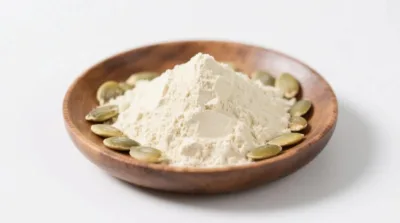
Organic Pumpkin Seed Protein Powder
Organic pumpkin seed protein powder offers ≥60% protein with high magnesium, zinc, and iron…
Related Posts


