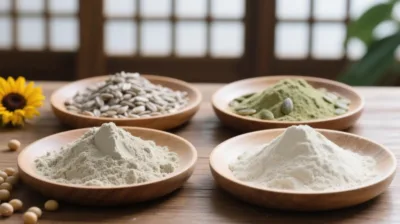
Sunflower seed kernels, the hulled interior of sunflower seeds (Helianthus annuus), have been a dietary staple for centuries, with roots in Native American agricultural traditions. Today they are produced globally, with major growing regions in Ukraine, Russia, Argentina, and the United States. What started as a garden crop has become an international commodity, valued for both oil production and direct eating.
The term “kernel” separates the edible interior from the striped black-and-white hull that wraps it. Whole sunflower seeds with hulls intact are usually sold as bird feed or for sprouting. For people, the hulled kernel is the standard form, ready to eat, cook, or bake without the labor (and dental work) of shelling individual seeds.
Organic certification addresses specific concerns with sunflower cultivation. Sunflowers pull minerals from soil efficiently, a trait that also lets them absorb heavy metals when those are present. Organic growing standards, paired with soil testing, help ensure that organic sunflower seed kernels from reputable suppliers stay within established safety thresholds for cadmium, lead, and other potential contaminants.
Complete nutritional profile based on USDA data
USDA FoodData Central gives standardized reference values that show the nutritional density of sunflower seed kernels. A 28-gram (one ounce) serving of dried sunflower seed kernels contains:
- Protein: 5.8 grams, with all essential amino acids present and particularly good levels of the sulfur-containing amino acids methionine and cysteine
- Total fat: 15.6 grams, mostly polyunsaturated (about 9 grams) and monounsaturated (about 5 grams), with only about 1.5 grams of saturated fat
- Carbohydrate: 5.6 grams, of which roughly 2.4 grams is dietary fiber
- Calories: 165, mostly from fat, in line with the energy density of most nuts and seeds
The micronutrient profile is what sets sunflower kernels apart from other seeds and nuts:
- Vitamin E: 10.2 milligrams as alpha-tocopherol, about 68 percent of the daily value, the standout nutrient that puts sunflower kernels among the richest dietary sources of vitamin E
- Selenium: 22.5 micrograms, roughly 41 percent of the daily value, though levels shift with the soil selenium where they are grown; sunflower kernels consistently rank as a good source
- Magnesium: 92 milligrams, about 22 percent of the daily value
- Phosphorus: 184 milligrams, about 15 percent of the daily value
- Copper: 0.5 milligrams, roughly 56 percent of the daily value
- Manganese: 0.6 milligrams, around 26 percent of the daily value
- Thiamin (B1): 0.4 milligrams, about 35 percent of the daily value, notable for a seed source
- Niacin (B3): 2.3 milligrams, about 14 percent of the daily value
- Folate: 64 micrograms, about 16 percent of the daily value
- Iron: 1.5 milligrams, about 8 percent of the daily value
Packing vitamin E, selenium, magnesium, and B vitamins into a single food makes sunflower kernels nutritionally versatile, covering several dietary needs at once rather than excelling at just one nutrient.
Vitamin e: the standout antioxidant in sunflower kernels
Vitamin E content is the defining nutritional feature of sunflower seed kernels, and the biochemistry behind it is worth a look.
Vitamin E is not one compound but a family of eight fat-soluble molecules: four tocopherols (alpha, beta, gamma, delta) and four tocotrienols. Alpha-tocopherol is the form the body actively maintains in blood and the form used to set dietary recommendations. Sunflower kernels are dominated by alpha-tocopherol, which makes them especially relevant for hitting established intake targets.
The main job of vitamin E in the body is as a lipid-soluble antioxidant. Cell membranes are built from fatty acids, and polyunsaturated fatty acids are especially vulnerable to oxidative damage from free radicals, the reactive molecules generated by normal metabolism and environmental exposure. Vitamin E sits inside cell membranes, positioned to intercept free radicals before they start the chain reaction of lipid peroxidation that damages membrane structure and function.
Epidemiological research has studied the link between vitamin E intake and various health outcomes. Observational studies have found associations between higher dietary vitamin E intake and lower risk of certain chronic conditions, including cardiovascular disease and age-related cognitive decline. Randomized controlled trials using high-dose vitamin E supplements, though, have produced mixed results, some show benefit, others none, and a few suggest potential harm at very high supplemental doses.
The takeaway from that research lines up with broader nutrition science: vitamin E from food, eaten at levels achievable through diet, appears beneficial. Megadoses from supplements do not reliably reproduce those benefits and may introduce risks that food-based intake does not carry. Sunflower seed kernels are a food-based source that fits this pattern.
Selenium, magnesium, and additional micronutrients
Beyond vitamin E, sunflower seed kernels bring other micronutrients that matter for daily requirements.
Selenium is a component of selenoproteins, a family of about 25 human proteins that need selenium to function. The best characterized are the glutathione peroxidases, antioxidant enzymes that reduce hydrogen peroxide and lipid hydroperoxides, complementing vitamin E’s direct antioxidant role. Other selenoproteins take part in normal thyroid function.
Selenium content in sunflower kernels tracks the soil selenium level where they are grown, which creates variation across sources. A study in the Journal of Agricultural and Food Chemistry documented this geographic variation, finding that selenium levels in sunflower seeds correlated with soil selenium concentration at the growing site. That variability is neither good nor bad, it simply means sunflower kernels from different regions contribute different amounts of selenium.
Magnesium, at 92 milligrams per ounce, contributes meaningfully to daily needs but less than pumpkin seed kernels provide. Magnesium takes part in energy metabolism (ATP exists in cells mainly as a magnesium-ATP complex), nerve transmission, muscle contraction, and bone structure. Observational studies have linked suboptimal magnesium intake with higher risk of hypertension, type 2 diabetes, and osteoporosis, though these are associations rather than proven cause-and-effect.
Copper deserves a mention because, while deficiency is uncommon in generally healthy people, it can cause anemia and neurological symptoms when it occurs. Sunflower kernels supply over half the daily value in a single ounce, a contribution that matters more for people whose diets might otherwise run low in copper-rich foods.
Antioxidant properties: vitamin e and beyond
The antioxidant capacity of sunflower seed kernels goes past vitamin E alone. The seed matrix carries several compounds that defend against oxidation through different mechanisms.
Phenolic compounds, including chlorogenic acid, caffeic acid, and various flavonoids, are present in sunflower kernels and show antioxidant activity in laboratory assays. A 2017 study in the journal Food Chemistry analyzed the phenolic profile of sunflower seeds and measured antioxidant capacity through several standard laboratory methods. These compounds work mainly in the aqueous phase, the watery space inside and between cells, which complements vitamin E’s lipid-phase activity.
The practical meaning of food antioxidant capacity, as distinct from specific nutrient content, is still debated in science. Laboratory measurements of a food’s ability to neutralize free radicals do not always translate to measurable effects in humans, where absorption, metabolism, and excretion change how food compounds behave once eaten. The reasonable read is that antioxidant-rich foods are generally healthful, but the mechanisms may be more complex than simple free-radical neutralization.
Phytosterols, plant compounds shaped like cholesterol, are present in sunflower kernels at about 150 milligrams per ounce. Phytosterols compete with cholesterol for absorption in the intestine, producing modest reductions in blood cholesterol when eaten in sufficient amounts. The FDA has authorized a health claim linking phytosterols to reduced risk of coronary heart disease, though reaching the effective intake, about 2 grams daily, requires concentrated phytosterol products rather than whole foods alone.
Everyday ways to eat sunflower seed kernels
The mild, slightly sweet flavor and tender-crisp texture make sunflower seed kernels among the most versatile seeds for everyday eating. Their neutral profile complements other ingredients instead of competing with them, which widens where they fit across meals.
As a direct snack, sunflower kernels work roasted or raw. A light dry toast in a skillet for two to three minutes intensifies the flavor without added oil. A small pinch of salt is enough seasoning, the kernels carry enough flavor that heavy seasoning is unnecessary. Pre-portioned small containers make easy grab-and-go snacks.
Salad uses are simple. Sunflower kernels add texture to green salads, grain-based salads, and slaws. They pair naturally with lemon-based dressings, roasted vegetables, dried cranberries, and soft cheeses. Unlike croutons, which add calories without much nutrition, sunflower kernels bring protein, vitamins, and minerals along with the crunch.
Breakfast needs almost no effort. Sprinkle sunflower kernels over oatmeal, cold cereal, yogurt, or smoothie bowls. Stir them into pancake or waffle batter for added texture and nutrition. Add them to homemade granola or muesli, their high oil content helps them toast evenly alongside oats and nuts.
Baking uses are extensive. Sunflower kernels can be folded into bread dough, sprinkled as a topping on loaves and rolls, mixed into cookie and muffin batters, or used as a decorative, flavorful coating on baked goods. They keep their texture through baking without turning tough or losing their character.
Homemade sunflower seed butter is an allergen-friendly alternative to peanut and tree nut butters. Process roasted sunflower kernels in a food processor for eight to ten minutes, scraping occasionally, and you get a smooth, spreadable butter with a distinctive greenish-grey color from the chlorogenic acid reacting slightly during processing. The color is natural and does not affect flavor or safety.
For sunflower seed protein enthusiasts, the kernels themselves are the starting material for a protein powder used in sports nutrition and functional foods, but that is a different product category from the whole kernel and is covered elsewhere on the HEMPLAND site.
Sunflower kernels vs. other seeds
Placing sunflower seed kernels next to their seed counterparts clarifies their nutritional niche and culinary role.
Compared to pumpkin seed kernels, sunflower kernels provide more vitamin E (an order of magnitude more), more selenium, and more thiamin. Pumpkin kernels answer with more zinc, more iron, and more magnesium. The two are nutritionally complementary rather than directly competitive, eating both gives a broader nutrient spectrum than either alone.
Compared to hemp seeds, sunflower kernels offer more vitamin E and selenium, while hemp seeds provide more protein, more omega-3 fatty acids, and a more favorable omega-6 to omega-3 ratio. Hemp seeds also tend to have a stronger, more distinctive flavor that some consumers find limiting in certain dishes.
Compared to flax seeds, sunflower kernels hold their own in practical terms. Flax provides more fiber and dramatically more omega-3 (as alpha-linolenic acid), but it requires grinding to release its nutrients, whole flax passes through the digestive system largely intact. Sunflower kernels are immediately bioavailable without grinding and have a flavor most people find more approachable than flax’s sometimes hay-like notes.
Compared to chia seeds, the difference is one of eating occasion. Chia forms gels when mixed with liquid, which makes it useful for puddings, thickeners, and egg replacement in baking. Sunflower kernels keep their individual texture in every preparation. The two serve different culinary functions and can sit side by side in the same pantry without redundancy.
Buying and storing organic sunflower seed kernels
Choosing quality sunflower seed kernels follows principles similar to other seeds, with a few specific points.
Appearance gives the first quality signal. Fresh sunflower kernels should be uniform in color, a consistent grey-green to grey-tan, without dark spots or discoloration. Noticeable color variation within a single batch can mean mixing of product from different sources or quality grades.
Aroma is especially informative because the high polyunsaturated fat content makes kernels prone to rancidity. Fresh kernels smell clean, mild, and slightly nutty. Any sharp, bitter, or paint-like odor means oxidation has advanced, and the product should be discarded or returned.
Storage reflects the high oil content. Sunflower kernels are about 50 percent fat by weight, and most of that fat is polyunsaturated, the type most vulnerable to oxidation. Keep kernels in an airtight container in a cool, dark place. Refrigeration suits quantities used over more than a few weeks. Freezing extends shelf life to a year or more with minimal quality loss.
Purchase quantities should match how fast you eat them. Buying more than you can use within two to three months of pantry storage (or six months refrigerated) raises the odds of quality loss before the product is finished. Portion bulk purchases into smaller containers, with the excess frozen until needed.
For commercial buyers and formulators, HEMPLAND’s organic sunflower seed kernels come with batch-specific testing covering pesticide residues, heavy metals, microbiological parameters, and nutritional composition. Contact Us for current specifications, pricing, and sample availability for product development evaluation.
Conclusion
Organic sunflower seed kernels earn their place among nutrient-dense everyday foods first through vitamin E, few commonly eaten foods provide more of that antioxidant per serving. The supporting cast of selenium, magnesium, B vitamins, and healthy fats rounds out a nutritional profile that is broad rather than narrow.
Their culinary versatility, the ability to move between snack, salad, baking, and breakfast without special prep, means they are more likely to be eaten regularly than foods that demand recipe changes or acquired tastes. That practical edge matters at the population level, where dietary advice only works when it turns into actual eating behavior.
For consumers who want a straightforward way to raise vitamin E intake, add texture and nutrition to meals without overhauling their diet, or simply replace less nutritious snacks, sunflower seed kernels are a practical choice backed by solid USDA data.
For food industry professionals, the kernels serve as both a direct consumer product and the raw material for sunflower protein ingredients finding growing use in plant-based formulations. The whole-kernel and protein forms serve different markets but share the same agricultural foundation.
Disclaimer: Nutritional values cited are from USDA FoodData Central reference data as of the most recent update and represent typical analyses. Individual batch results may vary. This information is general and should not be interpreted as medical or dietary advice for specific health conditions.
Recommended Products

Organic Sunflower Seed Kernels
Premium, hulled kernels from organically grown sunflowers, offering a deliciously mild, nutty flavor and…
Related Posts